The Return of 'Ugly American' Diplomacy
Donald Trump has dramatically revived America's reputation as a bullying, imperialistic nation through his aggressive interference in other countries' internal affairs. The former president has repeatedly used United States power to pressure foreign governments, treating sovereign nations as vassal states that must bow to his demands or face severe economic consequences.
Case Studies in International Bullying
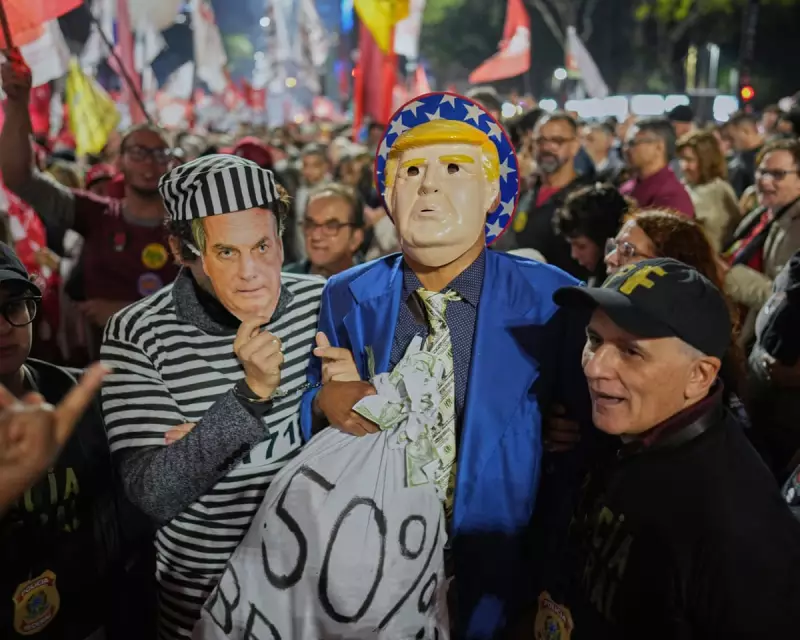
The most striking example emerged in Brazil, where Trump attempted to intervene in the judicial process involving his political ally Jair Bolsonaro. When Brazilian authorities refused to drop their prosecution of the right-wing former president for conspiring to stage a coup, and subsequently convicted and sentenced Bolsonaro to 27 years in prison, Trump retaliated by imposing a 50% tariff on Brazilian goods.
This pattern of aggressive diplomacy extends across multiple continents. Trump recently targeted Canada with additional economic penalties after seeing an Ontario-sponsored television advertisement featuring Ronald Reagan criticising tariffs. The 10% tariff on Canadian goods compounded existing tensions sparked by Trump's suggestion that Canada should become the 51st US state.

In South America, Trump threatened to cut off aid to Colombia after its president Gustavo Petro complained about a US military operation that killed a Colombian fisher during anti-drug operations. Using undiplomatic language, Trump labelled Colombia's elected leader an "illegal drug leader".
Global Consequences and International Backlash
European nations have also felt Trump's heavy-handed approach. The European Union faced threats of tariffs and visa restrictions after implementing its Digital Services Act, which requires social media platforms to combat disinformation. Trump claimed the legislation unfairly targeted American technology companies.
Perhaps most alarmingly, Trump has made on-again, off-again threats of military action against Venezuela, recalling Washington's most imperialistic interventions in Vietnam, Granada and Iran. While acknowledging Venezuela's president Nicolás Maduro as corrupt and authoritarian, military intervention would represent a return to the worst excesses of American foreign policy.
The diplomatic interference extends to direct political meddling. Trump offered Argentina a $40 billion bailout while explicitly warning that the money depended on right-wing president Javier Milei's party winning legislative elections. When Milei's party succeeded on October 26, Trump claimed credit, stating: "He had a lot of help from us."
Damage to America's Global Standing
Trump's approach has generated significant international backlash. According to Pew Research, foreign favourability ratings of the United States have plummeted, while a Le Grand Continent/Cluster 17 survey found that 51% of Europeans view Trump as an enemy of Europe.
The consequences extend beyond public opinion. Vietnam has increasingly turned to Russia as a strategic partner due to dissatisfaction with Trump's tariff policies. Similarly, India has accelerated efforts to improve relations with China for comparable reasons.
Trump's refugee policies have also drawn sharp criticism from human rights organisations. By slashing annual refugee quotas from 125,000 to just 7,500 while showing preference for white Afrikaners from South Africa, Amnesty International condemned the "blatantly racist" policy that abandons refugees worldwide.
Despite occasional positive actions, such as eventually pressuring Israel's Benjamin Netanyahu to agree to a ceasefire and imposing some sanctions on Russia, Trump's overall diplomatic approach has damaged America's international relationships, slowed global economic growth, and empowered authoritarian regimes in Russia and China to act more aggressively.