

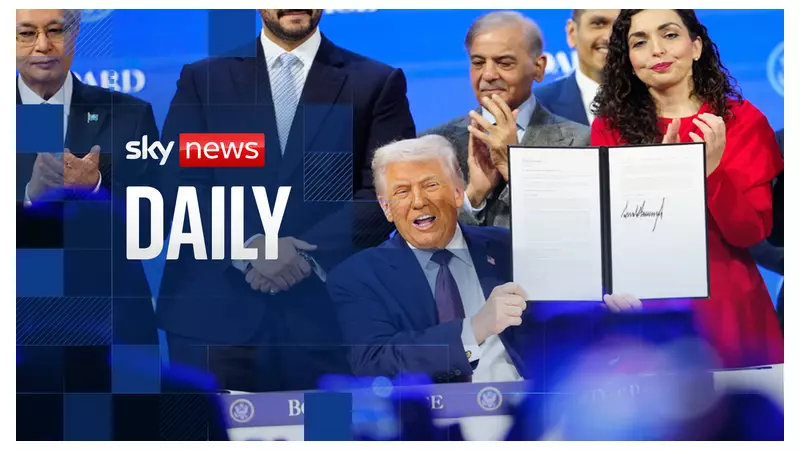
In a move that has sparked global intrigue and scepticism, former US President Donald Trump has launched an initiative dubbed the "Board of Peace," inviting nations to join despite recent aggressive actions on the international stage. This development comes in the same month that saw Trump order strikes on Venezuela and threaten to seize Greenland, raising eyebrows about the board's authenticity and underlying motives.
Analysing the Board's Charter and Gaza Focus
Trump has publicly framed the Board of Peace as a mechanism aimed at rebuilding Gaza, a region long plagued by conflict and humanitarian crises. However, a closer examination of the board's charter reveals a significant omission: it does not explicitly mention Gaza at all. This discrepancy has led experts and observers to question whether the initiative is genuinely focused on peacebuilding or serves as a strategic tool for Trump's broader geopolitical ambitions.
Invitations to Conflict Zones
Adding to the controversy, Russia has been invited to participate in the Board of Peace while continuing its war on Ukraine. This inclusion of a nation actively engaged in military aggression has fuelled debates about the board's credibility and whether it can effectively address complex issues like the Palestinian conflict. Critics argue that such moves undermine the board's stated peace objectives, suggesting it may be more about consolidating influence than fostering genuine dialogue.

Potential Implications for Global Institutions
One of the most pressing questions surrounding the Board of Peace is whether Trump is attempting to position it as a rival to the United Nations. By creating an alternative forum for international diplomacy, Trump could be seeking to bypass traditional multilateral bodies, potentially reshaping global governance structures. This aligns with his history of challenging established norms and institutions during his presidency.
Expert Insights from Sky News
In a recent episode of the Sky News Daily podcast, host Niall delved into these issues with Sky's Middle East correspondent, Adam Parsons. Their discussion explored the board's feasibility in achieving a lasting solution for Palestine, considering the ongoing tensions and historical complexities in the region. Parsons highlighted the need for transparency and concrete actions, rather than symbolic gestures, to build trust among affected communities.
The podcast, produced by Tom Gillespie and edited by Mike Bovill, provides an in-depth analysis of Trump's latest diplomatic venture. As the world watches, the Board of Peace remains a topic of intense scrutiny, with its success or failure likely to have significant repercussions for international relations and conflict resolution efforts.






