

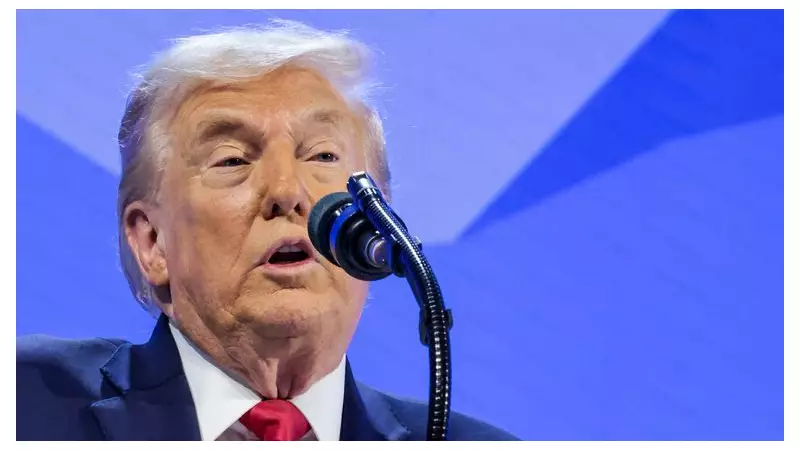
Trump's Davos Address: A Focus on Greenland, NATO, and European Relations
In a highly anticipated speech at the World Economic Forum in Davos, US President Donald Trump delivered over 70 minutes of remarks that ranged from conciliatory to confrontational. Opening with a warm greeting, he expressed his pleasure at returning to "beautiful Davos" and addressing an audience of business leaders, friends, and what he termed "a few enemies." However, the tone quickly shifted as he targeted Europe, Greenland, and the United Kingdom with pointed criticisms and policy declarations.
Greenland: A Pledge Against Military Force
One of the most significant moments of the speech came when Trump appeared to formally rule out using military intervention to acquire Greenland. This statement follows weeks of escalating tensions over US interest in the territory. "We probably won't get anything unless I decide to use excessive strength and force," Trump remarked, adding that while the US military would be "unstoppable," he has no intention of deploying it for this purpose. He emphasised, "I don't have to use force, I don't want to use force, I won't use force." This clarification marks a departure from previous ambiguous statements, potentially easing diplomatic strains.
Historical Justifications and NATO Criticisms
Trump elaborated on his rationale for US claims to Greenland by invoking World War II history. He argued that America deserves the territory because it defended Greenland after Denmark's invasion by Germany, stating, "We saved Greenland and successfully prevented our enemies from gaining a foothold in our hemisphere." In a provocative aside, he claimed, "Without us, right now, you'd all be speaking German and a little Japanese, perhaps." He also reiterated his long-standing critique of NATO, asserting that the US is treated unfairly by the alliance. "We give so much and we get so little in return," he said, while paradoxically claiming to have done more to support NATO than any previous president.

Tariff Threats and European Relations
The speech included warnings of tariffs on European countries, including Denmark, Norway, Sweden, France, Germany, the UK, the Netherlands, and Finland, unless the US can purchase Greenland. Trump has proposed a 10% tariff starting 1 February, escalating to 25% by 1 June if no deal is reached. Despite this, he insisted, "We're not looking to destroy them," and expressed a desire to work collaboratively. He also commented on Europe's direction, saying, "I love Europe and I want to see Europe go good, but it's not heading in the right direction." This reflects ongoing trade tensions and geopolitical disagreements.
UK Energy Policy and Other Targets
Trump took aim at the UK's energy policies, particularly criticising Sir Keir Starmer's approach to North Sea oil and gas. He argued that the UK is underutilising its resources, leading to high energy prices and low production. "The United Kingdom produces just one third of the total energy from all sources that it did in 1999," he noted, blaming green energy initiatives. Additionally, he targeted Canada, suggesting it benefits from US support and should be "grateful," and made light-hearted remarks about French President Emmanuel Macron's sunglasses, which went viral on social media.
Overall, Trump's Davos speech highlighted key foreign policy stances, blending historical references with contemporary economic and political challenges, and setting the stage for further international discussions.






