

The political landscape of Latin America is undergoing a profound and jarring transformation during the first year of Donald Trump's second term. The region, long defined by a fragile stability and a collective defence of sovereignty, is now experiencing a stark shift towards direct US intervention, facing remarkably little coordinated resistance.
A New Era of Transactional Imperial Power
Washington's influence no longer relies on the narratives of a 'greater good' that once justified American actions. Instead, analysts observe that Trump has enacted an imperial restoration under a so-called 'Donroe doctrine'. This approach is openly transactional, punitive, and disciplinary, perfectly aligning with recent political shifts across the hemisphere.
Trump's dominance is now so pronounced that his endorsement can make or break elections. In Honduras, his support for candidate Nasry Asfura and threats to cut aid became central to the presidential race, mirroring his earlier interference in Argentina's midterms. Such moves, which would once have sparked regional uproar, now pass with routine acceptance.

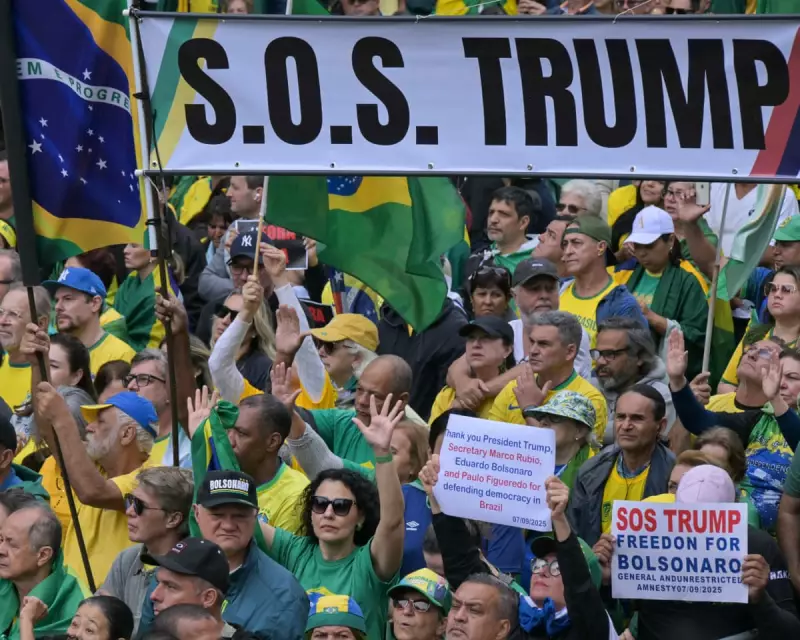
The administration's method fuses volatility with reward. Alongside more than 100 people killed in US maritime strikes described by experts as extrajudicial executions, there are abrupt concessions. Tariffs on Brazil were lifted after it failed to influence courts handling Jair Bolsonaro's cases. This calculated inconsistency fractures regional coordination, creates dependency, and forces governments into isolated, reactive decision-making.
The Hollowing Out of Regional Diplomacy
A powerful tool has been the expansion of 'exceptions'—zones where ordinary rules are suspended. This began with migrants stripped of protections, extended to deportees sent to third countries, and now includes alleged narco-traffickers killed extraterritorially and the targeting of Venezuela's isolated regime. With few willing to defend Nicolás Maduro, the muted response to dozens of deaths has effectively redrawn the limits of what norms Washington can violate.
Consequently, a stark dichotomy defines the region: obedient allies versus ideological enemies. Leaders like Nayib Bukele of El Salvador, Javier Milei of Argentina, and Daniel Noboa of Ecuador have aligned tightly with Washington, receiving financing, security cooperation, and diplomatic favour in return. Paraguay and Bolivia are seeking to follow suit, while Caribbean and Central American nations barter migration enforcement or military access to stay in Washington's good graces.
Meanwhile, the institutions that once supported regional diplomacy have been hollowed out. Efforts to negotiate a Venezuelan transition have repeatedly collapsed. A Celac summit with the EU in November avoided condemning US strikes. The Summit of the Americas was cancelled. Mexican President Claudia Sheinbaum's recent appeal for UN action underscored the weakness of multilateral bodies in the current climate.
Resistance Falters as the Left Loses Its Voice
The most effective resistance to Trump's policies has been national and pragmatic, not regional. Brazil and Mexico, under Luiz Inácio Lula da Silva and Claudia Sheinbaum, practise a form of pragmatic resistance—avoiding open rupture but refusing alignment. After failing to sway Brazil's judiciary over Bolsonaro, Trump was forced to negotiate with Lula and backtrack on tariffs. Sheinbaum acts as a 'Trump whisperer', cooperating on migration while firmly rejecting interference in Mexican sovereignty.
This contrasts sharply with the sterile confrontation pursued by Colombia's Gustavo Petro, whose head-on resistance has invited punitive measures without altering US behaviour. Trump has even singled out Colombia as a potential new front in his war against 'narcoterrorism', a flexible label that could justify further military action.

The fundamental shift, however, is ideological. The Latin American left, once the moral counterweight to US power and the force behind the 'pink tide', has lost its bearings. Its unifying language of nationalism, social inclusion, and anti-imperialism has fractured. In a recent poll, 53% of Latin Americans said they would support US military intervention to remove Maduro, a stark indicator that the collective narrative constraining Washington has evaporated.
Trump's revived imperial posture is succeeding not just due to US coercive power, but because the region's left no longer persuades. His influence draws as much from the left's ideological exhaustion as from Washington's strength, allowing him to quickly consolidate a new political terrain where resistance is isolated and norms are being rewritten.





