

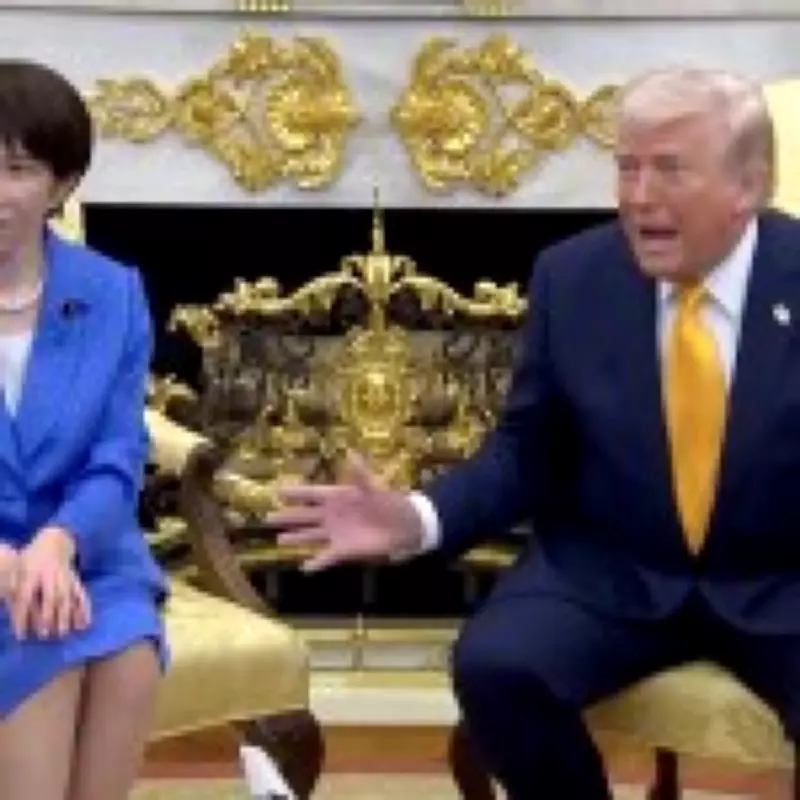
Trump's Ill-Timed Pearl Harbor Quip Leaves Japanese Leader Squirming
In a moment of profound diplomatic discomfort, US President Donald Trump made a shocking joke referencing the Pearl Harbor attack while seated beside Japanese Prime Minister Sanae Takaichi in the Oval Office. The incident, which triggered audible groans from assembled reporters, occurred during a discussion about military strategy and surprise tactics.
From Military Strategy to Historical Insensitivity
The conversation began with a journalist questioning why the United States did not warn allies before launching strikes against Iran last month. Trump responded with expected military logic, stating, "Well, one thing, you don't want to signal too much. You know, when we go in, we went in very hard, and we didn't tell anybody about it because we wanted...surprise."
That final word apparently ignited an inappropriate connection in the President's mind as Prime Minister Takaichi visibly shifted in her seat. Trump then asked the room, "Who knows better about surprise than Japan?" eliciting some strained chuckles from off-camera staff.

The Crushing Punchline
Undeterred by the already awkward atmosphere, Trump pressed further, directly addressing a Japanese reporter with the question, "Why didn't you tell me about Pearl Harbor?" The query prompted shocked reactions throughout the press pool, with Takaichi's facial expression becoming a study in diplomatic composure under extreme pressure.
The President continued his ill-conceived analogy, stating, "You believe in surprise I think much more so than us. And we had a surprise...and because of that surprise we probably knocked out 50% of what we did and much more than we anticipated doing."
Historical Weight of the Reference
The surprise Japanese attack on US warships at Pearl Harbor, Hawaii, on December 7, 1941, resulted in the deaths of 2,390 Americans. The following day, President Franklin D. Roosevelt declared war on Japan, famously calling the date "a date which will live in infamy." This event triggered a brutal four-year conflict across Asia that concluded with Japanese surrender in August 1945 after the United States deployed atomic bombs on Hiroshima and Nagasaki.
Strained Alliance Amid Global Tensions
The awkward exchange comes during a period of increased tension in the US-Japan relationship following the start of American and Israeli military actions against Iran. Trump had previously demanded that Japan and other nations help secure the vital Strait of Hormuz to protect oil shipments from Iranian attacks, a request that received only lukewarm support from Tokyo.
This led the President to post on social media that the United States did "NOT NEED THE HELP OF ANYONE!" However, in a joint statement released today with the UK, France, Germany, Italy, and the Netherlands, Japan expressed shared "readiness to contribute appropriate efforts to ensure safe passage" through the strategic waterway.
Diplomatic Praise Amid the Awkwardness
Despite the uncomfortable moment, Prime Minister Takaichi, who recently won a decisive election victory in Japan, maintained diplomatic decorum. She has cultivated a close relationship with Trump since taking office, with the President's visit to Japan last October being widely interpreted as ushering in a new "golden age" for bilateral ties.
Following the cringe-inducing exchange, Takaichi offered generous praise to her host, stating, "I firmly believe that it is only you, Donald, who can achieve peace across the world. I am ready to reach out to many of the partners in the international community to achieve our objective together."
The incident highlights the unpredictable nature of diplomatic exchanges under the current administration and raises questions about historical sensitivity in international relations.






