

A poignant letter from a UK citizen has voiced strong solidarity with residents of Tehran, Iran, following recent military strikes attributed to Israel and the United States. The correspondence responds directly to a first-hand account published earlier this month detailing the harrowing daily reality for civilians in the Iranian capital.
Response to Tehran Life Account
Desmond Hewitt, writing from Marlborough in Wiltshire, addressed an anonymous article titled 'Don't die: the two words that sum up our lives in Tehran now' published on March 7. The original piece described the psychological and physical toll of living under constant threat in a city recently targeted by military action.
"The poignancy of the anonymous author's article describing life in Tehran is almost too much to bear," Hewitt wrote, expressing emotional resonance with the account of citizens whose primary concern has become basic survival.

Condemnation of Military Justifications
The letter strongly criticizes what Hewitt describes as "oxymoronic dictatorial democratic narrative" used to justify continued military engagement in the Middle East. Particular scorn is reserved for what he characterizes as hypocritical foreign policy approaches.
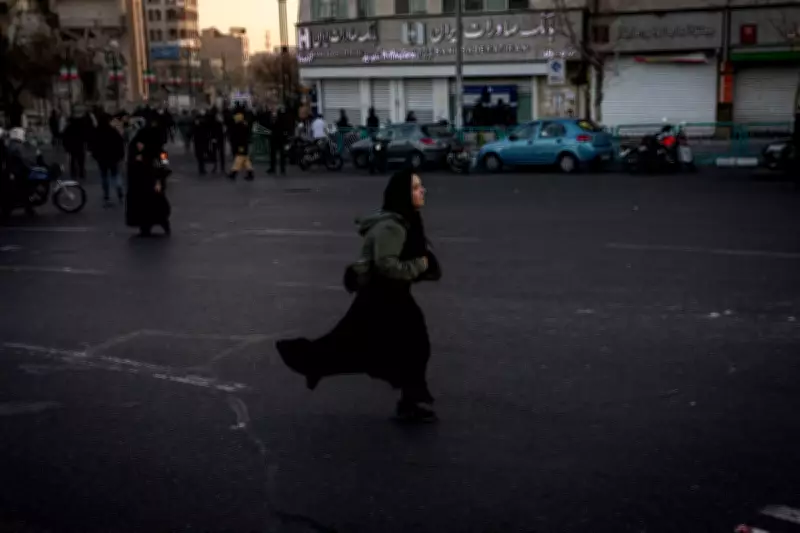
"The Alice Through the Looking Glass prism that the government of the world's so-called largest democracy uses as its justification for the bombing of your country is sickening," Hewitt asserted, referencing the March 3 strike on a Tehran police station that prompted images of civilians fleeing through damaged streets.
Broader Geopolitical Context
Hewitt's critique extends beyond the immediate Iran conflict to encompass wider regional dynamics. The letter draws parallels between different conflict zones while maintaining focus on the Tehran experience.
"One could cite Ukraine," Hewitt noted before emphasizing, "but the US's active support for Israel militarily and diplomatically in the wholesale destruction of Gaza and its people perfectly underscore your point on the hypocritical, meaningless cliches employed to justify their latest atrocity."
From Complicity to Direct Action
A significant portion of the letter analyzes what Hewitt perceives as an escalation in military involvement patterns. "No longer are they just complicit, as they were in Gaza, but transparent now in their very own murderous mission," he wrote, suggesting a shift from indirect support to direct military action.
The correspondence maintains that the justifications offered for strikes like those witnessed in Tehran on March 3 represent what the author considers dangerous geopolitical narratives.
Message of Hope and Solidarity
Despite the strong political critique, the letter concludes with a personal message of support for the anonymous Tehran author and fellow residents. "I hope you do stay alive," Hewitt wrote directly, adding that many in the UK share concern for civilian welfare amidst the conflict.
The response letter emphasizes that beyond geopolitical analysis, the human dimension of conflict remains paramount. Hewitt specifically acknowledges the anonymous author's friends and all those in Tehran who "simply want to stay alive" as legitimate concerns that transcend political divisions.
This correspondence adds to growing international discourse about civilian experiences in conflict zones, particularly as military actions in the Middle East continue to draw global attention and varied responses from observers worldwide.






