

The United States and Ukraine have agreed on a revised 20-point plan for peace, unveiled on Wednesday 24 December 2025, as tensions escalated with a second deadly bombing in Moscow in three days.
Key Points of the Revised Peace Framework
The newly publicised plan, which follows recent high-level talks in Miami, outlines a potential path to end the conflict. It includes robust, NATO Article 5-like security guarantees designed to protect Ukraine from future aggression. Furthermore, the proposal explicitly supports Ukraine's future membership of the European Union.
A significant military provision allows Ukraine to maintain a standing army of 800,000 personnel. On the contentious issue of the eastern Donbas region, currently partially occupied by Russian forces, the plan suggests a novel solution. President Volodymyr Zelenskyy indicated that a "demilitarised zone or a free economic zone" could be a "potential option" to break the stalemate.

Such zones typically operate under different laws, with benefits like reduced taxation and relaxed customs regulations. However, President Zelenskyy stressed that any agreement on sovereignty would require approval via a national referendum. He acknowledged that while most negotiating positions have been brought closer, consensus on territorial issues remains elusive.
Moscow Attacks and Diplomatic Manoeuvres
The details of the peace plan emerged against a backdrop of renewed violence in the Russian capital. On Wednesday, two police officers were killed in a bombing in Moscow, just days after a Russian general was assassinated on Monday. Ukraine has not officially claimed responsibility for these specific incidents, but has admitted to similar operations in the past.
Analysts suggest these attacks could be a tactical move by Kyiv to demonstrate its continued offensive capability and to shift dynamics at the negotiating table. Sky News Moscow correspondent Ivor Bennett noted the bombings may be aimed at showing Ukraine can still strike within Russia itself.
President Zelenskyy has now called for direct talks with US President Donald Trump, stating that "sensitive issues" need to be "discussed at leaders' level." Another major unresolved point is the future of the Zaporizhzhia nuclear power plant, Europe's largest. The US has proposed a consortium with Ukraine and Russia, with America acting as a partner and chief manager.
Regional Reactions and Ongoing Conflict
The Kremlin stated it would formulate its official position based on a report from envoy Kirill Dmitriev, who met US officials in Florida over the weekend. This follows earlier talks in December between a US delegation, including special envoy Steve Witkoff, and President Vladimir Putin, which yielded no breakthrough.
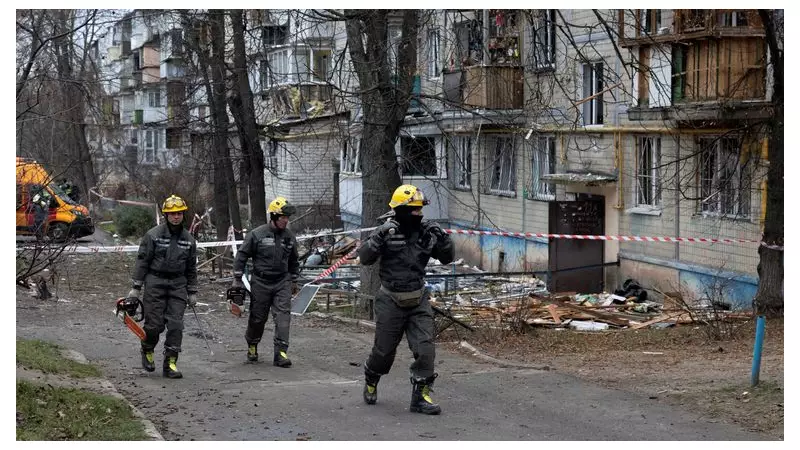
Meanwhile, the war continues to inflict suffering. Ukraine endured one of the largest aerial bombardments of the nearly four-year conflict this week, with over 600 drones and several dozen missiles launched. While most were intercepted, the attacks killed at least three people, including a child, and caused widespread power outages.
In a Christmas message released on Wednesday, President Zelenskyy emphasised Ukrainian resilience and unity. "Despite all the suffering that Russia has brought, it is not capable of occupying or bombing what matters most. That is our Ukrainian heart, our faith in one another, and our unity," he said in a video address.






