

The United States and Ukraine have moved significantly closer to a jointly agreed framework to end the ongoing war, although Moscow's response remains shrouded in uncertainty and several critical issues are yet to be resolved.
Key Concessions and a Revised Draft
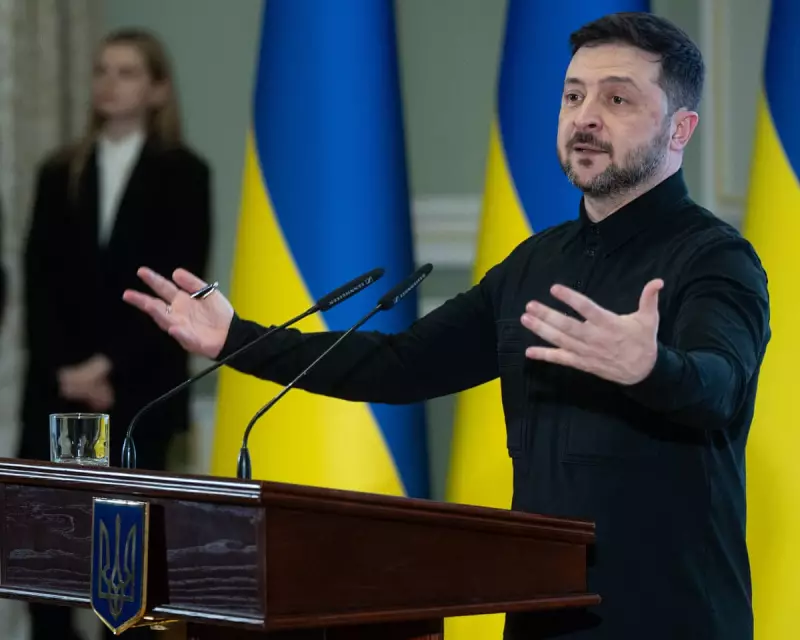
Following intense negotiations with a US team, Ukrainian President Volodymyr Zelenskyy has secured several important revisions to an earlier, slimmed-down peace plan brokered by Washington. This new version represents a diplomatic success for Kyiv, which had heavily criticised an initial US draft as being too favourable to the Kremlin.
Zelenskyy indicated that US negotiators are expected to contact the Kremlin to discuss the proposals. The core of the latest plan sees Ukraine accepting the principle of a demilitarised zone in its eastern regions, a long-standing point of contention. However, this concession is conditional on Russia making a comparable pullback of its own forces from Ukrainian territory.

Uncomfortable Compromises and Security Guarantees
The complex negotiation choreography requires Ukraine to make several difficult compromises. These reportedly include a withdrawal of some Ukrainian troops from areas they currently hold on the eastern frontline.
In a major strategic shift, Kyiv appears ready to formally renounce its ambition for NATO membership. In exchange, it seeks security guarantees from the US and Europe that would mirror the collective defence clause of NATO's Article 5. The precise nature of these guarantees remains publicly undefined.
Further details of the plan call for the withdrawal of Russian forces from the regions of Dnipropetrovsk, Mykolaiv, Sumy, and Kharkiv. International troops would then be stationed along the contact line to monitor compliance.
Zelenskyy's Strategic Calculus and Kremlin Silence
During a detailed briefing, President Zelenskyy argued the proposals strengthen Ukraine's position. He suggested that if Moscow rejects the plan, it risks triggering a substantial increase in US arms supplies to Kyiv and a further escalation of sanctions.
"[Moscow] cannot tell President Trump: 'Look, we are against a peaceful settlement,'" Zelenskyy stated. "That is, if they try to obstruct everything, then President Trump would have to arm us heavily, while imposing all possible sanctions against them."
He also clarified that any plan involving a Ukrainian troop withdrawal would require approval via a national referendum.
On the Russian side, the proposals have been delivered to President Vladimir Putin by his envoy, Kirill Dmitriev. Kremlin spokesperson Dmitry Peskov confirmed Moscow is formulating its response but refused to comment publicly, stating all main parameters of Russia's position are known to Washington. Putin's stated conditions for peace include Ukraine ceding about 5,000 sq km of Donbas it still controls and formally renouncing NATO aspirations.
The war, triggered by Russia's full-scale invasion in 2022, has resulted in tens of thousands of deaths, devastated eastern Ukraine, and displaced millions. As diplomatic efforts continue, Russian forces maintain pressure with nightly missile and drone attacks on cities and energy infrastructure.






