

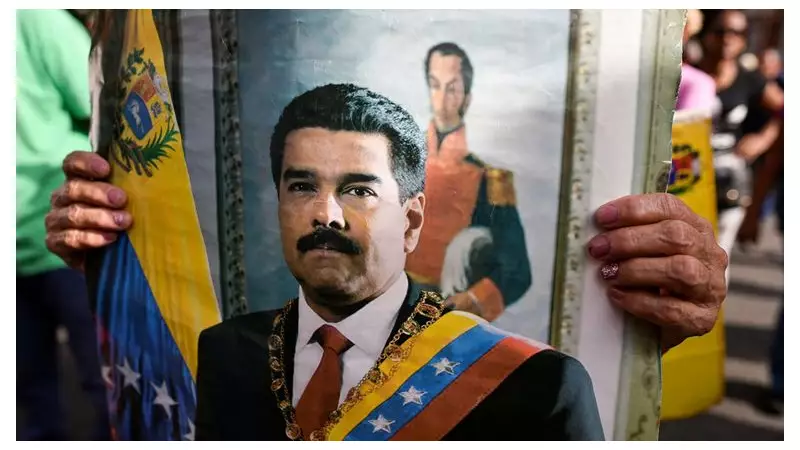
While the world witnessed celebrations in some quarters following the dramatic capture of Venezuelan leader Nicolas Maduro, the mood in the nation's capital is one of profound anxiety and uncertainty.
A Capital Living 'In A Cave'
Caracas-based journalist Rosali Hernandez, speaking to Sky News on Sunday 4 January 2026, described a population gripped by fear. "Nobody is celebrating, everyone feels so afraid about what is going to happen next," she reported. This starkly contrasts with scenes of jubilation in cities like Santiago, Chile, and London.
Hernandez explained that Venezuelans are effectively cut off from reliable information, "living like they're in a cave." This followed the shutdown of three television channels, leaving the state-run Corporacion Venezolana de Television as the sole broadcast option, airing a continuous stream of old Maduro speeches.

The aftermath of the US military operation on Saturday has brought tangible hardship. Residents in parts of Caracas have suffered power cuts, internet blackouts, and water shortages. Hernandez cited reports of damaged infrastructure, including exploded substations and a stricken antenna on the city's El Volcan hill.
The Dangerous Power Vacuum
Twenty-four hours after the strike, Caracas remained eerily quiet, with most businesses closed and a notable absence of official Venezuelan Guard or military personnel. "No one is taking control of the situation," Hernandez observed, leading to long queues at the few open markets, pharmacies, and petrol stations as people scramble for essentials.
This vacuum has heightened the threat from irregular armed groups. Paramilitary units and gangs, known as colectivos, are dispersed around the capital. "They create a dangerous situation because the colectivos operate outside of the official forces, so situations can escalate quickly," Hernandez warned. The city is further fractured by municipal police checkpoints that create "border"-like divisions between neighbourhoods.
Maduro Was 'The Weakest Pillar'
Critically, Hernandez argued that Maduro's capture alone is insufficient for meaningful change. She described his regime as a "system with many hands, like an octopus." In a striking assessment, she stated, "Nicolas Maduro wasn't the strongest pillar of that government network; he was the weakest, he didn't have as much power as others."
She pointed to figures like Jorge Rodriguez, head of Venezuela's National Assembly, and Diosdado Cabello Rondon, First Vice President of the ruling socialist party, as key pillars of the enduring structure. Hernandez estimated that around 10 such figures would need to be captured for any real shift to occur.
This analysis aligns with the complex political reality now facing the US. Secretary of State Marco Rubio has spoken of a "holistic transition," while former President Donald Trump's apparent dismissal of opposition figure Maria Corina Machado suggests a strategy of engaging with remaining regime elements.
The conclusion from Caracas is sobering: until those accused of torture and repression are removed, Venezuelans will not feel free. The octopus government, as Hernandez described it, may well live on—even after the removal of its Nicolas Maduro arm.






