

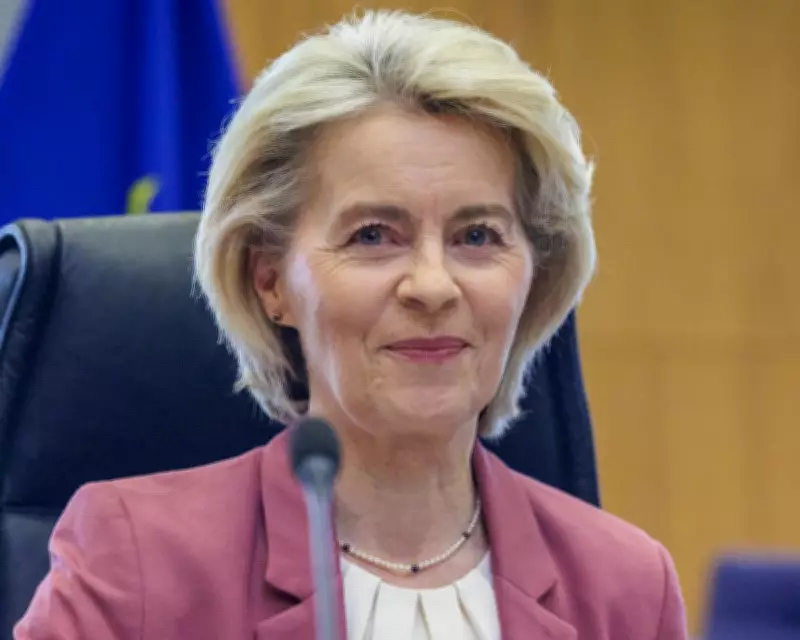
Von der Leyen Advocates for a More Realistic EU Foreign Policy Approach
European Commission President Ursula von der Leyen has issued a stark call for the European Union to adopt a more realistic and interest-driven foreign policy, questioning whether the bloc's postwar institutions remain effective on the world stage. Speaking to an audience of EU ambassadors on Monday, von der Leyen emphasized that Europe can no longer serve as a custodian for the old-world order and must adapt to rapidly changing global dynamics.
Rethinking the Rules-Based System
Von der Leyen asserted that while the EU will always defend the rules-based international system, it can no longer rely on it to protect European interests or shield the continent from emerging threats. She urged a critical reflection on whether the union's doctrine, institutions, and decision-making processes, designed in an era of stability and multilateralism, have kept pace with contemporary challenges.
"We urgently need to reflect on whether our doctrine, our institutions and our decision making – all designed in a postwar world of stability and multilateralism – have kept pace with the speed of change around us," von der Leyen stated. "Whether the system that we built – with all of its well-intentioned attempts at consensus and compromise – is more a help or a hindrance to our credibility as a geopolitical actor."

Context of the Iran War and Diplomatic Criticism
These remarks come amid heightened scrutiny of von der Leyen's handling of the Iran war, with recent criticism from prominent figures such as MEP and former French minister Nathalie Loiseau. Loiseau chided von der Leyen for her telephone diplomacy with Gulf leaders following US and Israeli strikes on Iran, accusing her of usurping the role of EU foreign policy chief Kaja Kallas.
Notably, in the early days of the conflict, von der Leyen called for "a credible transition in Iran," going further than Kallas's statements. On Monday, she avoided direct criticism of the US and Israel, dismissing debates over whether the war was a "war of choice or a war of necessity" as partly missing the point. She highlighted Iran's regional destabilization, referencing a crackdown that independent experts believe killed over 17,000 young people.
Regional Impacts and Humanitarian Concerns
Von der Leyen also addressed the broader regional conflict, noting its "unintended consequences" on energy, finance, trade, and transport, as well as causing mass displacement. In a separate announcement, she pledged EU humanitarian aid for 130,000 people in Lebanon, expressing concern over the impact on Israel's northern neighbor, where half a million have been made homeless due to Israeli bombing and evacuation orders.
Additionally, von der Leyen and European Council President António Costa held video talks with leaders from 13 Middle Eastern and North African countries, including Armenia, Bahrain, Egypt, and Turkey, in a show of solidarity. They expressed openness to enhancing maritime defensive operations Aspides and Atalanta, aimed at protecting waterways and supply chains in the Red Sea and Horn of Africa.
Broader Implications for EU Geopolitical Strategy
This push for a more pragmatic foreign policy aligns with von der Leyen's 2019 pledge to lead a "geopolitical" commission. As global tensions escalate, her call underscores a pivotal moment for the EU to reassess its institutional frameworks and strategic priorities, ensuring they are equipped to navigate an increasingly complex and volatile international landscape.






