

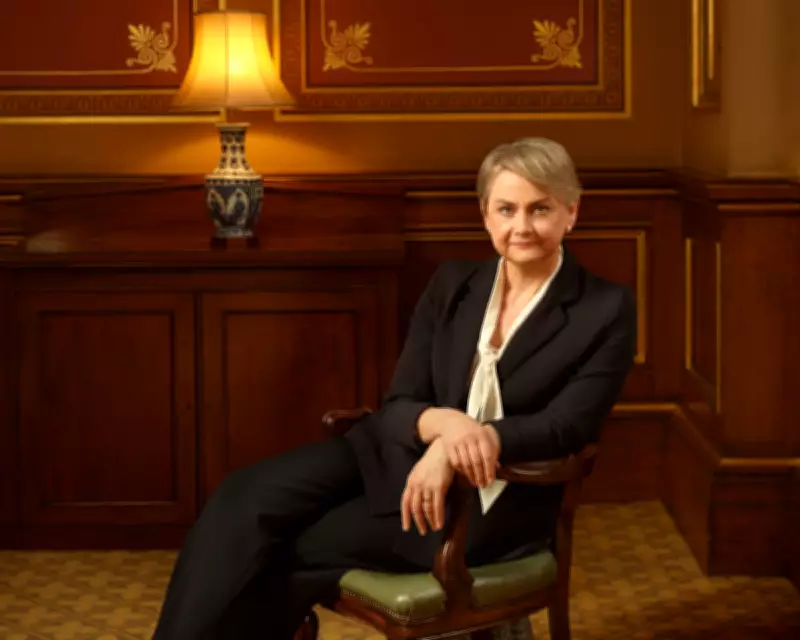
Foreign Secretary Yvette Cooper: Navigating Global Crises and UK Independence
In the ornate surroundings of the Foreign Office, with anti-shrapnel curtains drawn against potential threats, Foreign Secretary Yvette Cooper reflects on one of the most challenging periods in recent diplomatic history. The joint US-Israeli bombardment of Iran continues to reshape Middle Eastern geopolitics, with oil facilities and desalination plants ablaze across the region. More than 1,800 people have been killed, including 175 schoolgirls and staff in Minab, south Iran, in what a New York Times investigation suggests was a US precision strike.
A Delicate Diplomatic Dance
Cooper, who assumed the role of foreign secretary in September, has been fielding calls from "shocked and angry" Gulf allies while coordinating the evacuation of British citizens from affected areas. The situation represents a critical test for the UK's foreign policy independence, particularly as former US President Donald Trump continues to criticize Prime Minister Keir Starmer for refusing to allow US troops to use British bases for initial strikes.
"Making decisions based on what the US do or say doesn't feel like sensible foreign policy," Cooper states firmly. "In the end, we have to make decisions about what is in the UK's interest and what reflects the UK's values, not anybody else's. That's our guiding force."

Washington Meetings and Unanswered Questions
The foreign secretary's recent trip to Washington DC took on new significance following the strikes on Tehran. During her visit on February 20, Cooper and US Secretary of State Marco Rubio broke away from scheduled meetings for a private conversation that lasted an hour longer than planned. Until the strikes, the two ministers had maintained an "excellent" working relationship, communicating almost daily on the encrypted messaging app Signal.
When asked whether the Americans provided forewarning of the strikes, Cooper responds cautiously: "Obviously, we have lots of discussions with allies over a long period of time... many discussions about a whole series of things." She acknowledges discussing Iran and the Middle East but declines to reveal specifics, stating, "You wouldn't expect me to talk about the detail of conversations."
International Law and Military Action
Cooper emphasizes that UK foreign policy remains anchored in international law and the rules-based order. This principle informed Starmer's initial refusal to join US military operations in Iran, though the government later permitted "limited defensive operations" from British bases after RAF Akrotiri in Cyprus was hit by a drone from what Cooper describes as an "Iranian proxy."
"We are clear that we have a legal basis for all decisions we're taking," she asserts. When questioned about the legality of the US bombing campaign, Cooper responds diplomatically: "What we don't do is comment on the legal approach of other governments, particularly allies. That is for them. They have to explain."
De-escalation and Regional Stability
The foreign secretary expresses concern about the objectives of the military action. "One of the issues of concern for us is actually, 'What is the objective and purpose [of the strikes]?'" she says. "The British government doesn't see how military action helps regional stability or security."
Her priority remains de-escalation and diplomatic solutions. "For us that's the issue... It's why we pursue the diplomatic route," Cooper explains. She places responsibility for escalation squarely on Iran, accusing the regime of "deliberately trying to escalate this into a much wider regional conflict, which is just really dangerous."
Learning from Past Mistakes
The shadow of the Iraq war looms large in Labour's foreign policy considerations. "Yes. [We] learn lessons from things that went wrong in the past," Cooper acknowledges. "That's why there's a sense of this being about both our principles and our interests. You have to deal with the world as it is, not as you want it to be."
This pragmatic approach includes flexibility to respond if British citizens face threats. "Threats to hotels in Dubai, for example, or threats to UK personnel," she notes, while emphasizing that any response would be "simply to provide defensive protection."

Internal Party Dynamics and Leadership
The interview reveals tensions within the Labour Party, particularly regarding the controversial appointment of Peter Mandelson as US ambassador. Cooper describes the promotion as an "own goal" and expresses frustration with the "boysy culture" that has persisted in Westminster politics.
"Peter Mandelson should never have been appointed as ambassador to the US," she states unequivocally. "The prime minister has apologised about that." Sources indicate Mandelson was woken at 5am to receive a call from Starmer informing him of his dismissal, though Cooper declines to discuss specifics of their conversation.
Personal Reflections and Political Future
Cooper admits to disappointment at leaving the Home Office before completing key domestic policies, including strategies on violence against women and girls and policing reform. Her decision to proscribe Palestine Action as a terrorist organization remains contentious, with the High Court ruling the move unlawful.
When asked if the proscription was a mistake, Cooper defends her position: "I was given a whole set of evidence and advice and recommendations... When you're the home secretary, you take very seriously advice that you're given."
Regarding her political positioning, Cooper describes herself as "in the middle" of a "centre-left" party. "There have been times when the party has moved to one side of me," she reflects. "Then there's times it's moved to the other." She identifies as Brownite but notes that the label "feels out of date for new 21st-century challenges."
Family Life and Personal Challenges
Beyond the political arena, Cooper shares insights into her family life with husband Ed Balls and their three adult children. The couple's schedules often conflict dramatically, with Cooper noting, "I can go a week at a time and not actually see Ed awake."
She reveals that Balls, who starts his TV days at 3:45am, has programmed himself to leap from bed just before their Teasmade beeps to avoid waking her. "He has his cup of tea then resets it for when I wake up at seven," she explains with a smile.
Escalating Crisis and Future Uncertainties
As the Middle East situation intensifies, many fear the world stands on the brink of wider conflict. UN humanitarian chief Tom Fletcher has described this as "a moment of grave, grave peril." Cooper expresses concern about security risks as Iran continues to target countries not involved in the original airstrikes.
"[It is] a deliberate attempt to escalate and widen the conflict," she warns. "Our partners in the Gulf... are shocked and angry to have been dragged into this conflict by Iran."
The foreign secretary reiterates the UK's commitment to pursuing negotiated settlements while maintaining the right to defend allies and British interests. When asked whether she would rule out offensive action alongside the US and Israel, or whether she would consider resigning over the issue, she offers no direct answer.
As the interview concludes and Cooper returns to managing the escalating crisis, the fundamental question remains: Can the UK maintain its independent foreign policy course while navigating one of the most dangerous geopolitical situations in decades? The foreign secretary's measured responses suggest a government walking a diplomatic tightrope, balancing principles, alliances, and the harsh realities of international conflict.





