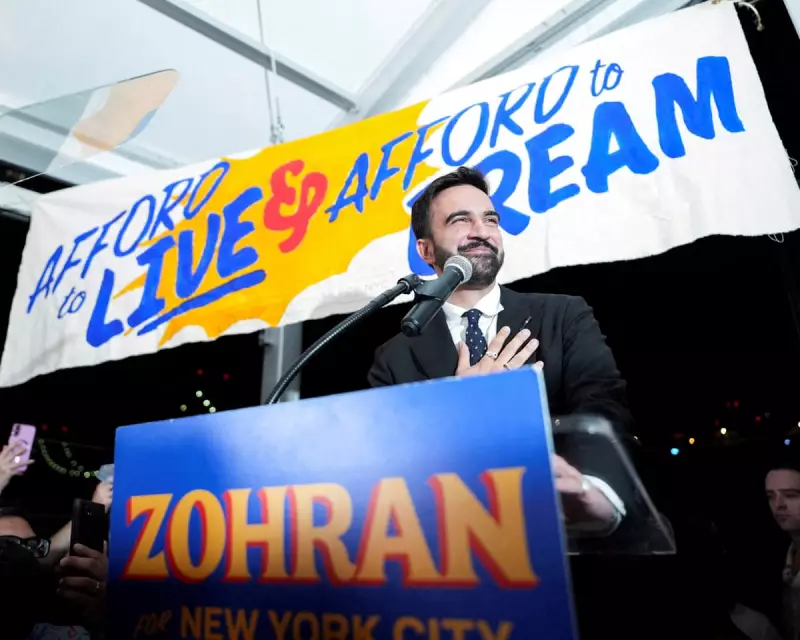
Progressive Victory in New York Mayoral Race
Zohran Mamdani has demonstrated how to successfully practice identity politics in modern elections, securing his position as New York City's newly elected mayor through a campaign that rooted itself in personal experience while ironically exemplifying the American 'melting pot' tradition.
Redefining Identity Politics
The term identity politics has increasingly taken on negative connotations, often viewed as a shallow appeal to race or other identity markers disconnected from material reality. However, Mamdani's campaign returned to the original concept pioneered by the Black feminist socialist organisation the Combahee River Collective in 1977.
Rather than focusing solely on representation, Mamdani tapped into what the collective described as the simultaneous experience of different forms of oppression. He anchored his campaign firmly in the shared experience of being a New Yorker, addressing how the city needed to become more affordable before expanding to include all the ways diverse communities live that reality.

Multilingual Economic Messaging
Mamdani's approach included releasing campaign videos in Urdu, Hindi, Spanish and Arabic, consistently linking these communications to concrete economic policies. His platform emphasised rent freezes, free buses, universal childcare, and making New York a place where families could raise children and build small businesses.
He masterfully combined policy with personal touches, such as joking in his Arabic message that his belief that knafeh - an Arab dessert - tastes better on Steinway Street in Queens than in New Jersey was more controversial than his political stance. This approach created genuine connection while maintaining focus on substantive issues.
Building Cross-Community Coalitions
During his victory speech, Mamdani quoted the Arabic phrase ana minkum wa alaikum - "I am of you and for you" - and specifically named those forgotten by city politics, including Yemeni bodega owners, Mexican abuelas, Senegalese taxi drivers, Uzbek nurses, Trinidadian line cooks and Ethiopian aunties.
He combined this inclusive approach with visible presence in working-class spaces, visiting taxi ranks and late-night shift workers to forge a powerful metaphor of a city sustained by those labouring in darkness. As a Muslim who grew up under Islamophobia's shadow and faced a racist campaign against him, Mamdani refused to downplay his identity for political convenience.
His response to being heckled about his position on Gaza contrasted sharply with establishment Democrat approaches. Where Kamala Harris famously said "I'm speaking" when interrupted, Mamdani smiled and responded: "I want you to be able to afford this city too, my brother."
Universal Lessons from a Local Victory
While New York possesses specific demographic and economic characteristics that don't directly translate elsewhere, Mamdani's success offers broader political lessons. His politics emerged from marginalised spaces but sought collective escape rather than individual advancement.
By viewing economic, racial and political margins as spaces where majorities could mobilise around justice rather than victimhood, Mamdani built coalitions that revealed how exclusionary systems affect diverse groups. His message resonated with college-educated white parents struggling with childcare costs and immigrant taxi drivers facing rental pressures alike.
Ultimately, Mamdani's victory against opposition from both the right and his own party demonstrates that American liberal politics has strayed from its ideals in service to capital. His win reminds us that people across all identities want leaders who genuinely represent and work for them, proving that authentic identity politics, when properly executed, can build powerful winning coalitions.