

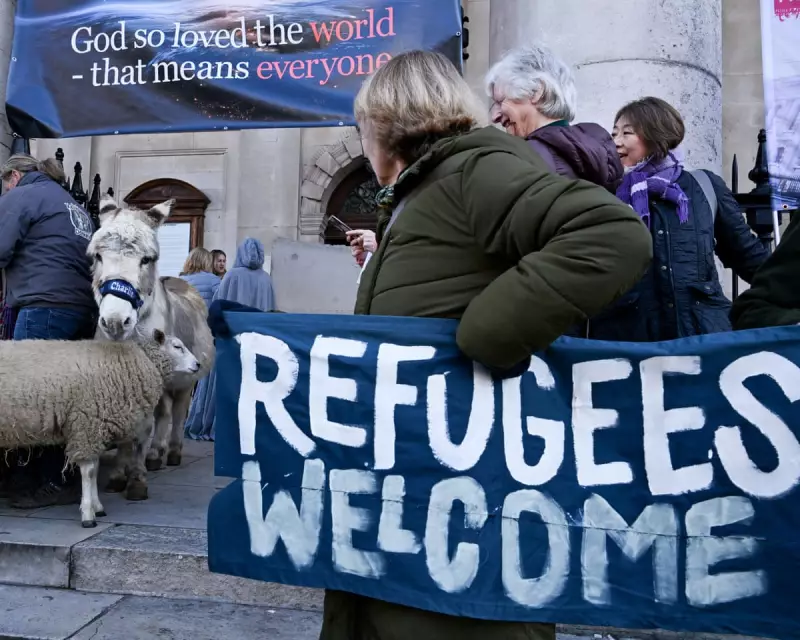
A pro-refugee demonstration took place outside St Martin-in-the-Fields church near Trafalgar Square in London on 13 December 2025, a visual reminder of the enduring tensions surrounding migration in Europe. This scene encapsulates a continent that has remained in a state of perpetual migration crisis for ten years, a condition that has reshaped politics and borders.
The Political Economy of a Manufactured Crisis
Since 2015, when one million people sought refuge in Europe, the narrative of crisis has become entrenched. This state of emergency, however, reflects not an inability to cope but a reality where many profit from sustaining fear. The concept of a perpetual crisis has driven a profound transformation in Europe's border architecture, creating a booming border-industrial complex.
The EU border agency Frontex has seen its budget explode from €90 million in 2014 to over €1 billion in 2025, despite facing repeated allegations of human rights violations, which it denies. Private defence and security companies have secured lucrative contracts, further militarising Europe's frontiers. This political economy of fear has provided fertile ground for conservative and far-right forces across the continent, who have successfully mainstreamed anti-migrant sentiment and racist conspiracy theories like the 'great replacement'.

Centrist Complicity and the Rise of the Hard Right
The alarming growth of the far-right is not happening in a vacuum. Analysts argue it is significantly enabled by the cynical strategies of centrist parties attempting to outflank the right on migration. Germany presents a stark case study. The far-right Alternative for Germany (AfD) entered parliament in 2017 by exploiting the 2015 crisis.
In response, the leader of the Christian Democratic Union (CDU), Friedrich Merz, has steered his party sharply rightwards. Since becoming chancellor in May 2025, Merz has pursued an aggressive anti-migration agenda, suggesting in October that solving Germany's "problem in the cityscape" might require "large-scale deportations". This copycat politics has backfired spectacularly; the AfD has surged from around 5% to 26% in polls, now level with Merz's own CDU.
A parallel dynamic is unfolding in the United Kingdom. Under pressure from the hard-right Reform UK party and suffering poor popularity, the Labour government announced what it called "the most sweeping asylum reforms in modern times" in November 2025. The draconian plans will make refugee status temporary, cut benefits, and risk tearing families apart. Rather than containing the right, this approach emboldened it, with Reform UK and far-right activist Tommy Robinson both celebrating the policy shift.
The Next Decade: Fortification or Resistance?
The European Union's chosen path appears set on further fortification. The EU Pact on Migration and Asylum comes into full force in 2026, a milestone that critics warn will normalise emergency measures. The pact allows states to accelerate border procedures, extend detention, and limit asylum rights during vaguely defined "mass influx" situations. Amnesty International cautions these exceptions may apply regularly, creating a permanent state of exception.
In a world of war, climate breakdown, and economic disparity, heightened border security and a politics of cruelty will not stop human mobility. Instead, these policies erode democratic norms, deepen social divides, and amplify racist hostility. With figures like Donald Trump's administration calling to end the "era of mass migration" to prevent Europe's "civilisational erasure", the ideological battle lines are clear.
The conclusion drawn by observers is that resistance must form precisely around the issue of migration. From civil rescue operations in the Mediterranean to disrupting deportation flights and fostering solidarity in cities, defending fellow human beings is framed as the frontline in the fight against growing authoritarianism. The character of the next decade, from 2026 to 2035, is presented not as inevitable, but as a choice resting in the hands of European citizens and activists.






