

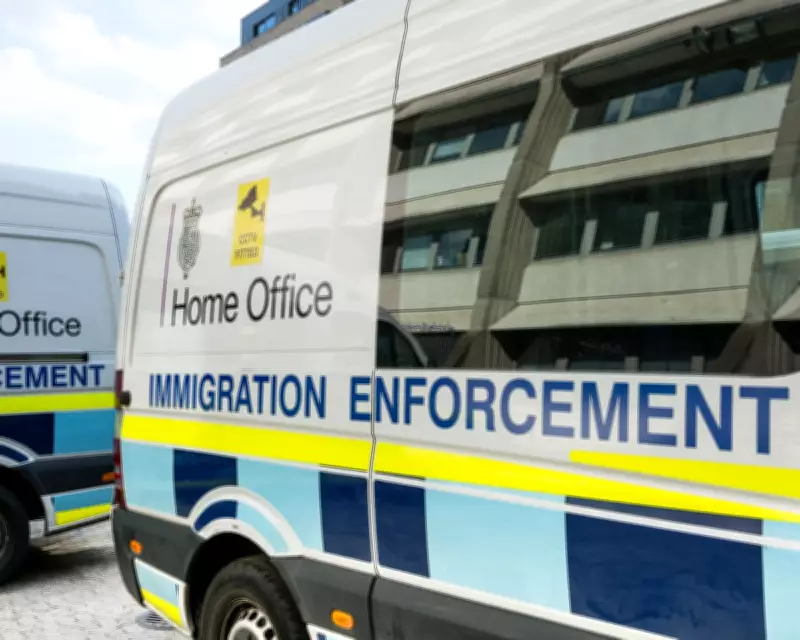
Home Office Announces Significant Increase in Migrant Removals Since 2024 Election
The Home Office has disclosed that nearly 60,000 individuals classified as unauthorised migrants or convicted foreign national offenders have been removed from the United Kingdom or departed voluntarily since the Labour government assumed office following the 2024 general election. This announcement has sparked considerable debate, with critics accusing the administration of perpetuating damaging stereotypes by linking migration with criminal behaviour.
Breakdown of Removal Figures
According to official statistics, the total comprises two main groups. Firstly, 15,200 people who were residing in the UK without legal authorisation have been formally removed since the election. This represents a substantial 45% increase compared to the preceding 19-month period. Secondly, a further 43,000 individuals chose to leave the country voluntarily after being informed of their unlawful status.
In addition, deportations of foreign national offenders have risen by 32%, with more than 8,700 such individuals deported under the current Labour administration. The Home Office has emphasised that this overall figure marks the highest number of removals recorded in a decade.

Government Stance and Policy Direction
Home Secretary Shabana Mahmood has been vocal about her commitment to intensifying deportation efforts. In a recent statement, she asserted, "I vowed to scale up removals of illegal migrants – and we have. However, we must go further to remove those that have no right to be in our country. I will do whatever it takes to restore order and control." This rhetoric aligns with the government's broader pledges to enhance deportation rates, terminate the use of hotels for asylum accommodation, and reduce the influx of small boat crossings across the English Channel.
It is noteworthy that since Keir Starmer became Prime Minister, over 65,000 people have arrived in the UK via Channel crossings. The government, currently trailing behind both Reform UK and the Conservatives in recent opinion polls, is preparing to introduce legislative measures aimed at preventing individuals facing removal from exploiting legal loopholes. Specifically, the Home Office plans to restrict unauthorised migrants to a single avenue of appeal and address perceived abuses of the European Convention on Human Rights (ECHR), particularly concerning Article 3 protections against inhuman treatment and Article 8 rights to family life.
Accommodation Strategy and Charitable Criticism
Concurrently, the government has reiterated its commitment to phasing out the use of hotels for housing asylum seekers by the conclusion of this parliamentary term. Officials report that fewer than 200 asylum accommodation hotels remain operational, a significant reduction from a peak of approximately 400 under the previous administration. The intention is to transition to more basic accommodation options, such as repurposed military sites.
However, the Home Office's announcement has drawn sharp criticism from migrant advocacy groups. Minnie Rahman, Chief Executive of the charity Praxis, condemned the government's approach, stating, "Many of those labelled 'foreign national offenders' have lived in the UK for most of their lives and have a legitimate right to be here. Yet, while the government has still not implemented key lessons from the Windrush lessons learned review, it continues to promote harmful and racist stereotypes that equate migration with criminality. This is unjust, divisive, and deeply damaging."
Echoing these concerns, Griff Ferris, a spokesperson for the Joint Council for the Welfare of Immigrants, described the policies as "cruelty and violence" driven by a desire to appeal to far-right sentiments. He warned, "Behind these numbers are real people who have had their lives torn apart. We need a compassionate system that puts people first." Furthermore, Natasha Tsangarides, a director at Freedom from Torture, cautioned against undermining ECHR protections, arguing that eroding Article 3 safeguards could have global repercussions and inadvertently support repressive regimes abroad.

The release of these figures, accompanied by footage from a recent removals flight showing blurred-face detainees being escorted onto an aircraft bound for Eastern Europe, underscores the heightened focus on immigration enforcement under the current government. As debates over human rights, stereotyping, and deportation policies continue to unfold, the Home Office's actions remain a pivotal and contentious aspect of the UK's political landscape.





