

British Expats in Dubai Navigate Tensions as Iran Conflict Escalates
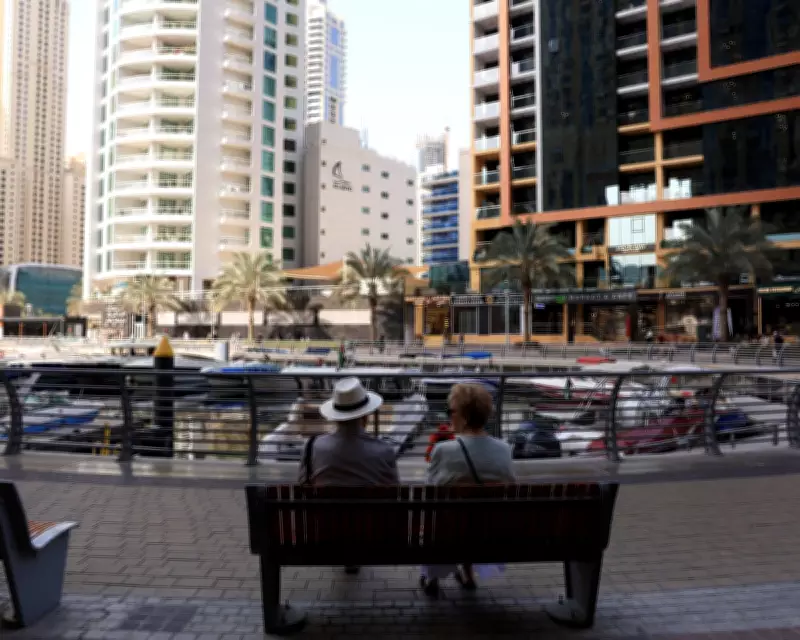
Two individuals were observed sitting on a bench at Dubai Marina on Tuesday, a scene of apparent normalcy as the US-Israeli conflict with Iran intensifies, with significant repercussions anticipated across the entire region. This moment captures the complex reality for the estimated 250,000 British nationals residing in the United Arab Emirates.
Royal Gestures and Public Confidence
In a notable display aimed at bolstering public morale, Sheikh Mohamed bin Zayed al-Nahyan, President of the UAE and ruler of Abu Dhabi, alongside Dubai's Crown Prince Sheikh Mohammed bin Rashid al-Maktoum, conducted a walkthrough at a prominent Dubai mall on Monday. They engaged with the public and occupied seating at a visible cafe, a move drawing historical parallels and social media commentary regarding its intent to project stability.
The Immediate Impact and Expat Reactions
The conflict has had direct consequences, with reports confirming at least three expatriate workers from Pakistan, Nepal, and Bangladesh killed, and up to 68 injured due to falling debris from intercepted Iranian airstrikes targeting Gulf states since Saturday. A dramatic explosion at the world-renowned Fairmont hotel in Dubai further highlighted the tangible risks.

For the diverse British community in Dubai—encompassing fintech entrepreneurs, the ultra-wealthy, beauty industry workers, retirees, and young professionals attracted by the UAE's zero percent income tax and perennial sunshine—the events have triggered a spectrum of responses. One British expat working in financial services described the dual shock of hearing the impacts and then being advised by colleagues to delete a shared BBC video, referencing UAE warnings against disseminating unverified content, an offense punishable by imprisonment.
"I can imagine some might find that oppressive," he remarked. "I think some Brits might have been reaching for the map for the first time to see exactly where they were living."Schadenfreude from Home and Political Commentary
While sympathy exists in the UK for those affected, a undercurrent of schadenfreude has surfaced. Media headlines have mocked terrified social media influencers, and in the House of Commons, Liberal Democrat leader Ed Davey referenced "tax exiles," suggesting British nationals in the UAE should contribute taxes to support UK armed forces if seeking protection. This critique indirectly pointed to figures like journalist Isabel Oakeshott, partner of Reform UK's deputy leader.
Practical disruptions have ensued: airspace closures temporarily trapped some, leading to border crossings into Oman for flights out. Over 100,000 British nationals in the Gulf have registered with the Foreign Office. Prestigious private schools, including Repton Dubai and Dubai International Academy, have closed indefinitely, and many professionals are working remotely on official advice.
Insistence on Normalcy and Long-Term Outlook
Despite the turmoil, many expats assert that life continues largely uninterrupted. Justin Harper, editor of CEO Middle East and a former Daily Mail journalist, was traveling near the Iranian border during the strikes but expressed confidence in UAE authorities. "I don't want to sound blase but it's business as usual for me," he stated, noting a quick return to routine and home-schooling arrangements for his children.
Harper emphasized resilience among long-term residents: "Having spoken to colleagues and a lot of Brits who've been here for 20 years-plus, they have lived through many scares and tensions and you just kind of ride it out... I think the smart money is on that nothing materially will change."
Economic Resilience and Diverse Expatriate Communities
The business landscape appears robust. Natasha Hatherall, a 16-year Dubai resident running a major marketing agency, reported signing a new contract amidst the crisis, reflecting sustained commercial activity. She highlighted a prevailing sentiment of safety among her networks.

Katharine Budd, a fintech entrepreneur splitting time between Dubai and Austria, noted the UAE's appeal extends beyond Britons. "All the big companies – MasterCard, Visa – all the big law firms just relocated all of their staff from Russia and Ukraine at the start of the war," she explained, pointing to a significant Russian and Ukrainian presence that has integrated deeply into Dubai's social and commercial fabric. She suggested a potential softening in the property market might attract returning British expats disillusioned with life in the UK.
Recovery Projections and Future Confidence
With flights resuming, economic analysts like Azad Zangana from Oxford Economics anticipate a one-to-two-year recovery period for the tourism sector. However, confidence persists in the UAE's long-term prospects, bolstered by upcoming projects like a Disneyland theme park in Abu Dhabi planned for the 2030s and the enduring global demand for oil. The prevailing expectation is that Iran will seek a truce, minimizing broader economic disruption.
The narrative from Dubai's British expatriate community is one of dichotomy: between immediate fear and steadfast adaptation, between external criticism and internal assurance. As the region navigates this volatile chapter, the commitment of many to their Dubai dream remains, for now, unshaken.





