

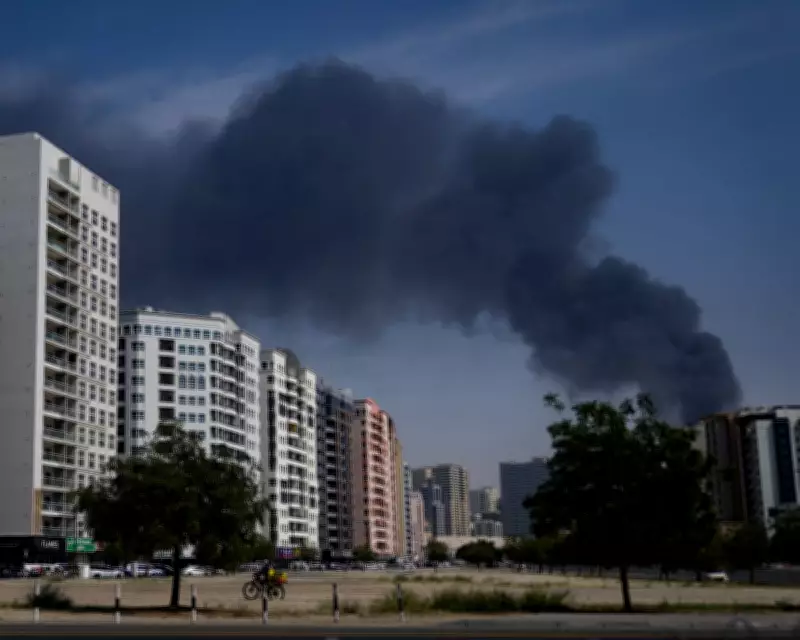
Britons Caught in Middle East Conflict Describe Constant Anxiety and Travel Disruption
British citizens living in or traveling through the Middle East are facing severe uncertainty and fear as missile strikes and drone attacks continue following the recent US-Israel military action against Iran. With flights canceled and airspace disrupted, many are struggling to decide whether to stay or attempt dangerous journeys home.
Families Seek Shelter as Attacks Intensify
Frankie, a 37-year-old educator originally from Leeds, has been living with her husband and three young children in the underground car park of their apartment building in Muharraq, Bahrain since Saturday's attack. "We have been sleeping on the floor and trying to keep our children occupied as we hear sirens and explosions," she says. The family hears missiles and drones being intercepted above them and can only briefly return to their apartment for bathroom breaks and supplies between alerts.
"We're getting very little sleep, feeling trapped, and the kids are nervous," Frankie explains. "It's been hard to explain to them what's happening, but we've been teaching them charades and playing leapfrog." Despite having visas arranged for Saudi Arabia and registering with the British embassy, the family doubts they can leave due to canceled flights. "We don't want to leave Bahrain, but living like this is unsustainable," she adds.

Panic Buying and Airport Chaos Spread Across Region
In Dubai, Lucy (name changed), a 45-year-old educator from the Midlands, describes scenes reminiscent of the Covid-19 pandemic. "Once news broke, friends were saying there were queues for petrol," she says. "The shelves of our local supermarket were clear – there was no pasta, no milk and the meat aisle was empty." Schools across the region have moved to online learning as streets empty of people.
Lucy, who lives near an airbase with her husband and two sons, says her youngest child must wear noise-cancelling earphones due to constant interceptions. "We are living in a constant state of anxiety," she admits. While some expats consider leaving once airspace reopens, Lucy believes staying put is safer than traveling. "We have a 'grab bag' by the door just in case, but we are trusting that we are safe and the government is doing an incredible job protecting its people."
Travel Nightmares and Soaring Transportation Costs
Saif, a 40-year-old museum professional who has lived in Saudi Arabia for 12 years, found himself stranded in Dubai with his parents and 11-year-old son when attacks began. He endured an 18-hour coach journey back to Riyadh while his family remained behind. "I am trying to get my parents and son booked on another coach so they can join me in Riyadh," he says. "Since yesterday, the fares have slightly increased."
Saif notes that Dubai remained "very calm" despite the tension. "You can hear everything, feel the vibrations, even if you don't see an explosion," he describes. "It's very scary, but it's also very much under control. Everyone is being looked after." His family was scheduled to travel to Manchester for Eid celebrations on March 12, but those plans now hang in the balance.
Tourists Stranded as Flights Remain Limited
Heleyne Hammersley, a 60-year-old supply teacher from Carlisle, found her return from a Malaysian holiday unexpectedly extended when her connecting flight through Dubai was canceled. "We circled Dubai airport on Saturday morning for about an hour before we were allowed to land, and then discovered that everything was canceled," she recounts.
After initial chaos, Emirates airlines organized hotel accommodations for stranded passengers. "We've heard the odd explosion and seen smoke, but there's no real sense of panic among the people staying in the hotel," Hammersley observes. "People are frustrated, fed up and tired, but I'm not getting any sense that anybody's been especially panicky."
She has booked a flight to Newcastle for Thursday, though uncertainty remains about whether airspace will reopen. "The hotel is OK, we're being fed, but we really just want to get home," she says simply.

Limited Flight Resumption Offers Glimmer of Hope
Dubai Airports announced that "limited" flights would resume on Monday evening, three days after widespread cancellations. This development offers some hope to the thousands of travelers stranded across the region, though capacity remains severely restricted.
As the conflict enters its third day, British citizens throughout the Middle East continue to navigate an unpredictable situation, balancing safety concerns with the practical challenges of disrupted transportation and daily life. Many echo Saif's reflection on the broader human cost: "This whole situation shows us to a tiny degree what it must be like for the people of Gaza and Palestine, Ukraine and in conflict zones around the world."





