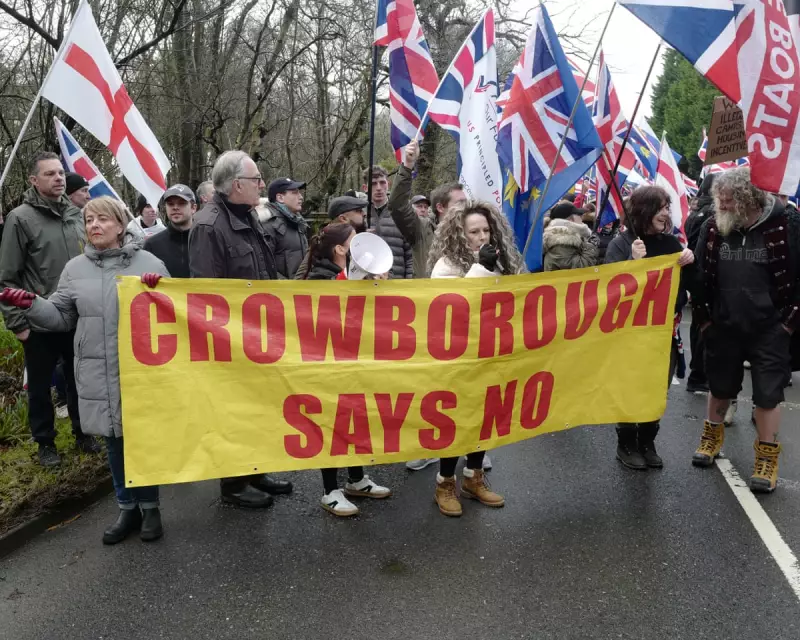
Mass Demonstration in East Sussex Town Over Asylum Accommodation
Thousands of demonstrators have marched through the East Sussex market town of Crowborough in a significant protest against UK government proposals to accommodate asylum seekers at a former military site. The substantial turnout represents the latest and largest public demonstration of its kind in the region, highlighting deep-seated community concerns over the Home Office's plans to house up to 500 male asylum seekers at the disused base.
Local Opposition Meets National Political Tensions
While the march attracted numerous residents from Crowborough and surrounding areas, the event also drew participation from far-right activists and groups travelling from other parts of England. This convergence created a complex dynamic, with genuine local concerns about the asylum accommodation plans intersecting with broader national political movements. Protesters carried union jacks and Saint George's flags as they processed from the former military base into the town centre.
The demonstration followed the recent arrival of approximately 27 men at the camp last week, marking the beginning of what the government describes as a test case for its emerging policy to reduce reliance on hotels for asylum accommodation. Crowborough represents one of two former military sites selected for this purpose, alongside Cameron Barracks in Inverness, Highlands.

Community Voices and Legal Challenges
Among those participating was Lynn Hall, a self-described "ordinary concerned mother of two" from another part of Sussex, who expressed emotional distress about the displacement of young cadets who previously used the site. "People have real concerns here about this and it's about the unaccompanied young men who will be living here," she explained, while emphasising she did not consider herself "hardline" or particularly political.
The protest saw involvement from Crowborough Shield, a voluntary residents' group describing itself as non-political, which is spearheading legal action against the accommodation plans. The organisation has accused Home Secretary Shabana Mahmood of "threatening" Crowborough and similar sites nationwide with asylum housing proposals.
Political Symbolism and Police Response
Marchers followed behind banners bearing right-wing slogans and images referencing recent tragedies, while some participants chanted political slogans directed at Labour leader Keir Starmer. The presence of individuals associated with far-right groups including Advance UK, Homeland party, and Operation Raise the Colours movement added layers of political symbolism to the event.
Sussex Police reported no arrests during Sunday's march, though three individuals were arrested on Saturday following disorder outside the Crowborough camp. Chief Superintendent James Collis acknowledged community concerns while emphasising increased police presence to provide public reassurance. "We know that the use of the Crowborough training camp for asylum accommodation has caused concern within the community," he stated.
Government Stance and Local Representation
Local residents Helen and John Tate, the latter a former senior Home Office civil servant, observed the march from their home along the route. While supportive of demonstrating local opposition, they expressed concerns that far-right involvement could "aggravate" the situation. John Tate noted that despite efforts by local MP Nusrat Ghani to organise meetings, the community felt it had "no say in the matter" regarding Home Office decisions.
During a visit to Crowborough last Thursday, Home Secretary Shabana Mahmood vowed to defend any legal challenge "vigorously" while acknowledging community concerns. She maintained that ending hotel use for asylum accommodation remained "absolutely crucial for the country," describing previous reliance on hotels as inappropriate for housing what she termed "illegal migrants."
The demonstration represents a significant moment in the ongoing national debate about asylum accommodation, with Crowborough becoming a focal point for both local community activism and broader political tensions surrounding immigration policy in the United Kingdom.