California Superintendent Demands Return of Deaf Boy Deported by ICE
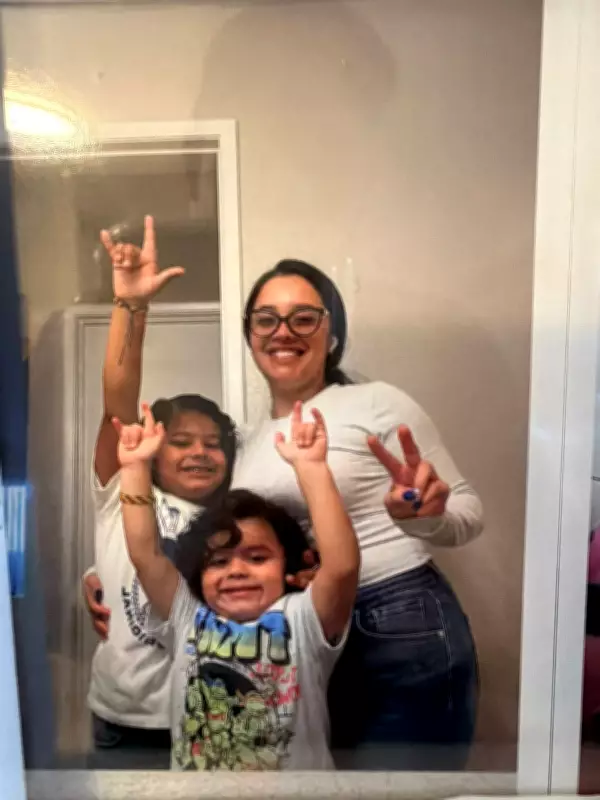
California's state superintendent of public instruction, Tony Thurmond, is urgently calling for the federal government to return a hearing-impaired six-year-old boy to the United States after he, his mother, and his five-year-old sibling were detained and deported to Colombia by U.S. Immigration and Customs Enforcement (ICE). The family was arrested on Tuesday, March 3, 2026, during a routine check-in at an ICE office in San Francisco, according to the Alameda County Immigration Legal and Education Partnership (ACILEP).
Family Detained During ICE Check-In, Assistive Devices Denied
Lesly Rodriguez Gutierrez and her two young sons were taken into custody while reporting to the Intensive Supervision Appearance Program (Isap), a monitoring system for immigrants. A relative waiting outside the ICE office was unable to hand over the critical assistive devices necessary for the six-year-old, who is deaf and relies on a cochlear implant and American Sign Language (ASL) for communication. "No child should be ripped from their home community and hidden in a detention center, especially not a Deaf child who is being deprived of the ability to communicate and understand what is happening to him," Thurmond stated in a forceful public declaration on Friday. "I am calling on the federal government to return our student to his school community now. These inhumane and illegal attacks on our families must end."
Legal Chaos and Intentional Confusion Alleged
Immigration attorneys representing Gutierrez and her family allege that ICE provided misleading information about the family's whereabouts, hindering efforts to file legal petitions to contest the deportation. Nikolas De Bremaeker, managing attorney for ACILEP, reported that ICE initially informed the family they were being sent to a detention center in Louisiana, then changed the destination to Phoenix, Arizona, and later mentioned Washington state. "It very much feels intentional," De Bremaeker asserted regarding the lack of transparency. "And it's chaotic and irresponsible at best and intentional and deceptive at worst." The family was ultimately transported to a detention facility in Phoenix before being deported to Colombia. De Bremaeker argues this confusion was a deliberate tactic to prevent attorneys from filing habeas petitions in the correct jurisdictions.

Asylum Application and Educational Impact
Gutierrez and her sons arrived in the United States in 2022, with Gutierrez filing an asylum application the following year. Although a judge initially ordered her removal, she appealed and was placed under a supervision order requiring monthly check-ins at Isap and weekly app check-ins. Since the deportation, educators and administrators at the six-year-old's school have pleaded with authorities to allow his return, emphasizing that his development depends on access to specialized support services and ASL instruction. "Because of this, remaining in an environment where ASL is the primary language of instruction is essential for his continued language development and academic progress and overall well-being," Thurmond wrote in a March 5 letter. A teacher specialist at the school expressed deep concern, noting that detention is traumatic for any individual, but particularly for a deaf child whose sole access to the world is through ASL, a language he has only recently begun to learn.

Political Appeals and Broader Implications
During a press conference on Tuesday, Thurmond also called on newly appointed Department of Homeland Security secretary Markwayne Mullin to intervene, urging him to contact former President Donald Trump to secure the boy's release and return. "Senator Mullin, you've shown that you're a tough guy. If you're a tough guy get on the damn phone, call Donald Trump and have this student released and returned so that we can continue to provide care for this young man," Thurmond declared. This case highlights ongoing tensions between state officials and federal immigration enforcement, raising serious questions about humanitarian safeguards and the treatment of vulnerable individuals, including children with disabilities, within the U.S. immigration system. ICE has not responded to requests for comment on Gutierrez's specific case, leaving many to criticize the agency's handling of such sensitive situations.