

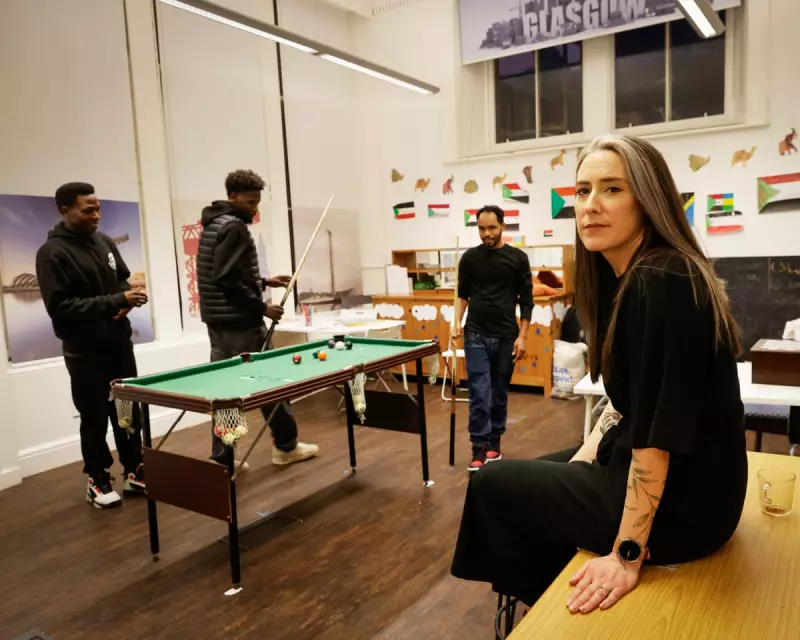
In a quiet office adorned with paper pineapples – the international symbol of hospitality – Selina Hales reflects on a decade of welcoming strangers to Glasgow. The founder of the charity Refuweegee, she has witnessed the city's celebrated generosity firsthand. Yet, as she speaks, a palpable sense of unease hangs in the air. A significant shift in Scottish public sentiment is challenging the very ethos her organisation represents.
A Frightening Moment for a Welcoming City
Over the past ten years, Refuweegee – a portmanteau of 'refugee' and local slang 'Weegee' for a Glaswegian – has grown from a simple idea of providing welcome packs into a vital operation supporting hundreds of asylum seekers and refugees daily. Its core has always been those handwritten letters from residents, embodying the city's open arms.
This spirit is woven into Glasgow's fabric: from the Glasgow Girls campaign to the community blockade of an immigration van on Kenmure Street. However, the past year has marked a turning point. Nigel Farage's Reform UK party secured 26% of the vote in its first Scottish parliament by-election, while protests outside asylum hotels and flag-waving demonstrations have become more common in cities including Glasgow.

"Over the past 10 years I've always felt we were moving towards something positive," Hales states. "But this is a frightening moment." At Refuweegee's city-centre hub, which serves 200-300 people daily, visitors report feeling markedly less safe, with increased racial abuse and intimidation linked to the emboldening effect of such political rhetoric.
The Political Storm and a Perfect Housing Crisis
Reform UK, with polling suggesting it could win a number of seats in the Scottish Parliament, has Glasgow firmly in its sights. Farage has repeatedly attacked the city, claiming the SNP cares "more about Gaza than Glasgow" and falsely stating that one in three schoolchildren do not speak English as a first language – a statistic he called the "cultural smashing" of the city.
These claims land amidst a severe and long-building housing emergency. An unhappy alignment of UK and Scottish government policies – with Holyrood's homelessness duty clashing with the Home Office rushing people out of hotels – has created unsustainable pressure. Glasgow City Council leader Susan Aitken warns that an estimated half of all homeless applications are now from refugees, contributing to a projected overspend of more than £40m this financial year.
The political blame game is fierce. Labour MPs accuse the SNP of "virtue signalling," while the SNP points to UK funding failures. Refugee agencies argue migrants are drawn to Glasgow's established communities and support networks, a reputation for safety that persists. Yet, the reality for many, like refugee Omar who lives with his family in a single hotel room after receiving his status, is a system failing at multiple levels.
Community Tensions and the Resilience of Welcome
In communities like Milton, saltire flags on lampposts signal frustration, not just nationalism. Community activist Alex O'Kane explains the "genuine tension" over housing, where locals see migrant families moving in while their own children wait for social housing. "It's not racism," he insists. "It's genuine frustration over a lack of housing stock."
Meanwhile, in St Andrew's Secondary School, where pupils hail from over 50 countries, teacher Lee Ahmed and her multilingual students directly counter Farage's narrative. Pupils like Maria and Jiyan speak of bilingualism as a cognitive gift and a tool for connection. Official data reveals that of the 27.8% of Glasgow pupils classified as bilingual learners, only 16.4% are "new to English" – the vast majority are conversationally fluent or advanced.
Ahmed calls Farage's "cultural smashing" claims "outrageous," but students acknowledge a changing atmosphere. Aisha, from Iraq, notes that while Glasgow remains welcoming, some have become "more against immigrants," citing a friend who was assaulted and told to leave.

Despite these sharpening frustrations, those on the frontline reject the idea that the city is at "boiling point," as Reform councillor Thomas Kerr claimed. Back at Refuweegee, Selina Hales' perspective has evolved from protest placards to pragmatic support, but her faith in the city's core character is unbroken. "If there's an increase in tensions, Glasgow rallies," she says. The enduring response, she observes, is not hostility but a question: "What can I do? How can I share?" In the face of division, she concludes, that community impulse remains "a beautiful thing."





