

ICE Concludes Maine Enforcement Surge as Border Czar Commits to Minnesota Operation
Federal immigration authorities have officially terminated their enhanced enforcement operation in the state of Maine, according to a statement from a Republican senator. This development comes as Tom Homan, appointed as border czar by the Trump administration, has publicly affirmed that the significantly larger and more contentious operation in Minnesota will persist.
Maine's 'Operation Catch of the Day' Wrapped Up
Senator Susan Collins, a Republican, confirmed on Thursday that the "enhanced operation" in her home state of Maine has been concluded. She cited a direct conversation with Homeland Security Secretary Kristi Noem as her source. The operation, informally dubbed "Operation Catch of the Day", had been actively targeting communities in Portland and Lewiston.
Since its initiation last week, this surge led to the detention of more than 200 individuals. Most of those detained have already been transferred out of the state, raising significant concerns among family members and legal representatives. These advocates fear that removal proceedings conducted outside of Maine could severely disadvantage the detainees.

"There are currently no ongoing or planned large-scale ICE operations here," Collins stated in a social media post. She added that she had been "urging" the agency to reconsider its enforcement tactics and that standard operations by Immigration and Customs Enforcement (ICE) and US Customs and Border Protection would continue.
Legal observers in Maine have noted a sharp decline in enforcement activities. Jenny Beverly, an attorney with Haven Immigration Law, reported, "We have noticed a dramatic downswing of enforcement [in Maine] since the week started." Her firm has been inundated with requests for legal aid since the surge began.
Minnesota Operation Continues Amid National Scrutiny
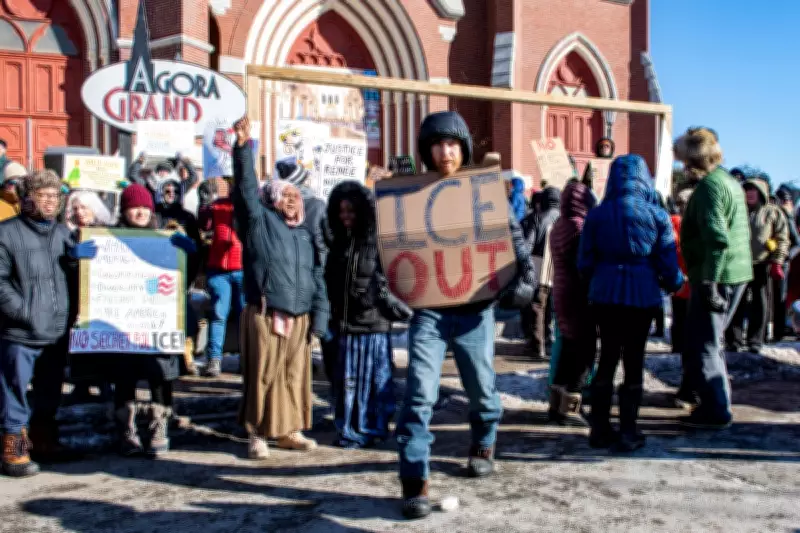
While the Maine operation winds down, the administration's focus appears to be intensifying in Minnesota. The decision to end the Maine push coincides with a broader reassessment of immigration enforcement activity nationwide. This reassessment follows substantial public criticism from lawmakers on both sides of the aisle, including calls for Secretary Noem's impeachment from 160 officials, and large-scale protests against ICE in cities like Minneapolis, Philadelphia, and New York.
In a move seen as an attempt to manage the escalating public relations crisis, the Trump administration recently removed border patrol commander Gregory Bovino from his post in Minneapolis. Tom Homan has now assumed direct command of this high-profile enforcement campaign.
Speaking at a press conference in Minneapolis, Homan acknowledged shortcomings. "I'm not here because the federal government has carried this mission out perfectly," he said. This admission follows the fatal shootings of two American citizens, Renee Good and Alex Pretti, by federal agents within a two-week period, incidents that have provoked nationwide outrage.
Homan stated, "President Trump and I, along with others in the administration, have recognized that certain improvements could and should be made. That's exactly what I'm doing here." He pledged to remain in Minnesota "until the problem's gone," though he provided no specific details on what these improvements would entail or how success would be measured.
Bipartisan Backlash and Political Fallout
The enforcement campaigns have triggered a notable bipartisan backlash, influencing political careers in Minnesota. At least two state lawmakers have announced they will not seek re-election. Notably, Chris Madel, a leading Republican candidate for governor, declared on Monday that he could not support what he described as "stated retribution on the citizens of our state," and could no longer align himself with a party that would pursue such actions.

On the Democratic side, Senator Amy Klobuchar announced her candidacy for governor on Thursday. This move followed incumbent Governor Tim Walz's statement that he would not run for any elected office again, a decision made amidst the intense political climate surrounding the immigration operations.
The contrasting fates of the operations in Maine and Minnesota highlight the complex and evolving landscape of federal immigration enforcement under the current administration, marked by rapid policy shifts, intense public scrutiny, and significant political consequences.





