

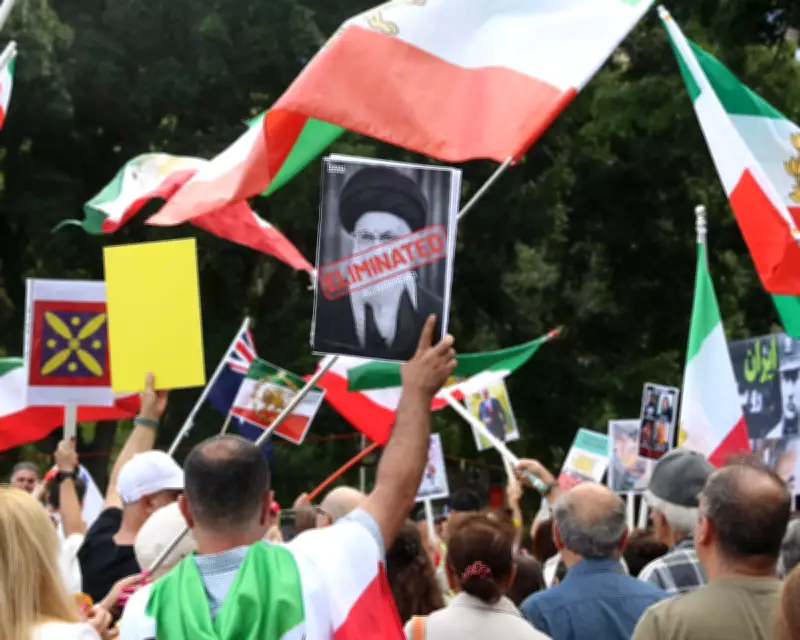
Iranian Australians Divided Over Memorials for Deceased Supreme Leader
Members of Australia's Iranian diaspora have expressed profound distress and anger after discovering that a small number of Shia mosques and Islamic centers in Melbourne and Sydney hosted memorial vigils for Iran's late supreme leader, Ayatollah Ali Khamenei. The 86-year-old leader was confirmed dead by Iranian state media on Sunday following coordinated missile strikes by Israel and the United States, an event that has plunged the Middle East into heightened volatility and conflict.
Community Reactions: Celebration Versus Mourning
While thousands of Iranian Australians attended celebratory events marking Khamenei's death, viewing it as potential liberation from a repressive regime, other segments of the community organized religious observances. Guardian Australia reviewed social media posts and screenshots revealing that five Shia Muslim institutions in Sydney and Melbourne hosted memorials, with some beginning special three-night sittings known as majlis from Sunday evening.
In Melbourne, the El Zahra Islamic community center, a Shia institution, held a memorial service described by a mosque representative as honoring a "respected scholar of the Islamic faith who was murdered yesterday." This characterization sparked immediate controversy within the broader Iranian Australian community.

Trauma and Political Condemnation
Dr. Rana Dadpour, founder of advocacy group AusIran, articulated the emotional impact these vigils have had on community members who fled Iran's regime. "Seeing this kind of vigil for a terrorist is actually bringing up a lot of trauma back into our community," Dadpour stated. "He's responsible for killing tens of thousands of people, including my own family and friends."
Nos Hosseini from the Iranian Women's Association expressed concern about community members mourning someone she described as responsible for "brutality unleashed across the world." Hosseini emphasized that Khamenei "leaves behind a legacy that's tainted with the blood of his victims and his institution's victims" and noted the profound disappointment that he would never face legal accountability for alleged crimes against humanity.
New South Wales Premier Chris Minns offered unequivocal condemnation of the vigils, describing them as "atrocious" and stating that "by an objective measure, the Ayatollah was evil." Minns referenced the regime's alleged responsibility for killing approximately 30,000 protesters who demonstrated against governmental practices.
Religious Perspectives and Community Defense
The Shia Muslim Council of Australia issued a joint statement from directors Ali Alsamail and Julie Karaki explaining that Iran holds "profound religious significance" for many Shia Muslims who sought refuge there before settling in Australia. They described Khamenei as "regarded by millions of Shia Muslims worldwide as a senior religious authority and spiritual guide" whose death represents a "religious and communal loss."
"Whatever one's political position, acknowledging grief is not an endorsement of policy," the statement continued. "It is a recognition of humanity. Our community's mourning deserves to be understood in that light." The council directors also noted that the Middle East strikes had triggered "real fear, anxiety and grief" among Australia's Shia Muslim community concerned for loved ones abroad.
Dr. Rateb Jneid, president of the Australian Federation of Islamic Councils, defended the religious practice, stating that funeral prayers constitute "a religious obligation performed for any deceased Muslim" and represent "a matter of faith and ritual, not a political endorsement."
Historical Context and Academic Analysis
Khamenei ascended to power in 1989 following the death of Ayatollah Ruhollah Khomeini, founder of the Islamic Republic of Iran. Professor Shahram Akbarzadeh, director of the Middle East Studies Forum at Deakin University, provided nuanced analysis of the divergent perceptions within global Shia communities.
"Some Shia Muslims around the world see the supreme leader as their mentor, as their role model, as their guide," Akbarzadeh explained. "They're looking at Khamenei as a religious scholar and a symbol of resistance against the west. For the Iranians, Khamenei is a symbol of state despotism and dictatorship."

The professor further noted the Iranian regime's complicated relationship with religion, suggesting it had "pushed people away from religion" through coercive enforcement of Islamic practices.
Security Context and Recent Designations
The controversy occurs against the backdrop of Australia's November designation of Iran's Islamic Revolutionary Guard Corps (IRGC) as a state sponsor of terrorism. Khamenei served as commander-in-chief of Iranian armed forces, including the IRGC. Australian security agencies have linked the Iranian government to at least two antisemitic attacks on Australian soil: a firebombing at the Adass Israel Synagogue in Melbourne and an arson attack at Lewis's Continental Kitchen in Sydney.
This complex intersection of religious practice, political allegiance, trauma, and security concerns continues to reverberate through Australian Iranian communities as they navigate conflicting responses to a watershed moment in Middle Eastern politics.





