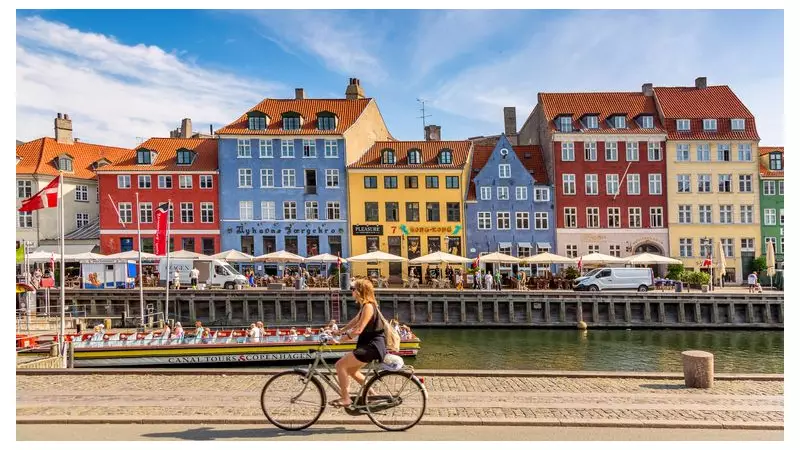
Labour Looks to Denmark for Migration Solutions
The Labour government has quietly begun exploring Denmark's stringent migration model, a move that has exposed significant divisions within the party. Since her appointment two months ago, Home Secretary Shabana Mahmood has been examining Danish policies across the board, with particular interest in their tight restrictions on family reunification and the use of temporary visas for successful asylum seekers.
The Danish Approach: Tough Policies from a Centre-Left Government
Denmark, despite its international reputation as the home of hygge and Lego, has developed some of Europe's toughest illegal migration policies under centre-left Prime Minister Mette Frederiksen. Her 'zero refugees' policy has proven remarkably popular, enabling her to successfully face down right-wing opponents. The number of successful asylum claims in Denmark has fallen to a 40-year low, with 95% of failed claimants being deported.
Facing explosive public anger over small boat crossings and asylum hotels, alongside plummeting approval ratings and a rampant Reform UK, Sir Keir Starmer's team appears desperate to learn from the Danish example. Home Office officials recently travelled to Copenhagen to study their approach ahead of a major shake-up of the UK asylum system expected later this month.

Internal Labour Conflict Over 'Draconian' Policies
The focus on the Danish model has created a deep split within the Labour Party. While Red Wall MPs like Jo White from Bassetlaw have enthusiastically welcomed the approach, many on the left are deeply alarmed. MPs including Nadia Whittome and Clive Lewis have described Danish ideas as 'hardcore', 'dangerous', 'far right' and in some cases 'racist'.
Some of Denmark's most controversial policies include confiscating valuable jewellery from migrants crossing the border and demolishing apartment blocks where more than 50% of residents are of what they define as 'non-Western' backgrounds. However, it appears vanishingly unlikely these more extreme measures will be considered by Ms Mahmood and her team.
The political implications are significant. Reform UK and the Conservatives have remained notably quiet about the government's new direction, with sources suggesting right-wing parties thoroughly agree with the home secretary's robust approach. If successful in reducing migration numbers, Labour could neutralise one of Reform's key attacks on the government.
Critics argue the Danish approach may not translate effectively to the UK context. Steve Smith of Care for Calais commented: 'The deterrence isn't going to work, because you're dealing with people who are fleeing something far worse. These are desperate people and trying to put in desperate measures isn't going to work.' Nevertheless, Ms Mahmood has promised to do 'whatever it takes' to control migration, indicating she's prepared to consider increasingly radical solutions.