

Lebanese Australians Endure Psychological Toll as Relatives Flee Conflict in Homeland
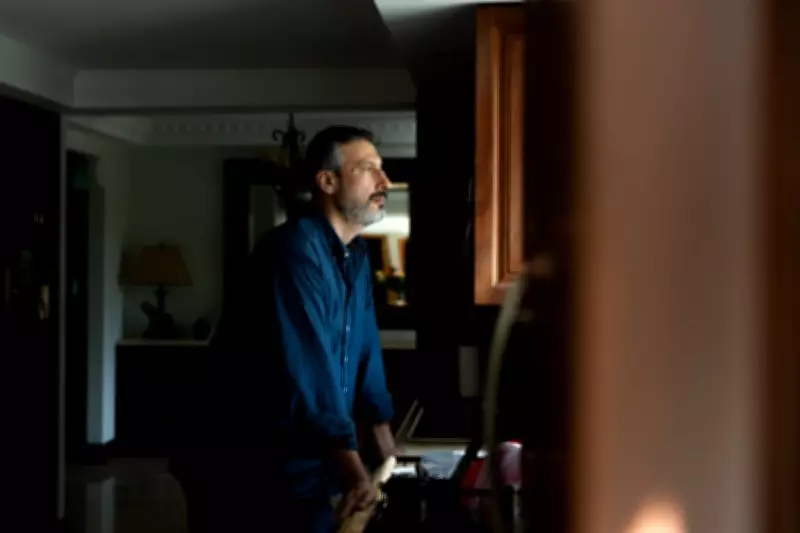
For Dr Saad Ramadan, the holy period of Ramadan should be a time of spiritual reflection and prayer. Instead, he is consumed by worry for his family in Lebanon, who are facing what he describes as "chaos and fear" amid indiscriminate Israeli attacks. In the early hours of a Monday morning, his elderly parents and five siblings were forced to flee their village in southern Lebanon, packing their belongings in just an hour and a half as bombs threatened their safety.
A journey to Beirut that typically takes ninety minutes stretched into a grueling twenty-five-hour ordeal, with families crawling through gridlocked traffic on roads packed with vehicles heading north. Ramadan, who migrated to Australia in 1991, observes that south Lebanon has become a ghost town, emptied of its people. He is part of a diaspora caught in a painful liminal space, where daily life in Australia is now punctuated by constant WhatsApp notifications and news bulletins about a homeland once again engulfed in conflict.
From Catastrophe to Catastrophe: A Community in Distress
The conflict erupted after Hezbollah, a Shia Islamist organisation considered a proxy for the Iranian regime, launched a volley of rockets at Israel in retaliation for the US-Israeli killing of Iranian supreme leader Ayatollah Ali Khamenei. Israel responded with strikes on the southern suburbs of Beirut, the Bekaa valley, and south Lebanon, forcing tens of thousands to flee their homes. Ramadan's family managed to find a two-bedroom apartment in Beirut, where five families now live under one roof. He notes that they are fortunate, as rentals are scarce and many lack any shelter at all.

Gamel Kheir, secretary for the Lebanese Muslim Association, a Sunni organisation representing communities from north Lebanon, emphasizes that the conflict occurring during Islam's holiest month compounds the community's pain. He states, "We're beyond resilience at the moment. We've gone from one catastrophe to another catastrophe." This distress is exacerbated by a rise in Islamophobia in Australia, including death threats at mosques, adding layers of anxiety and fear for diaspora members.
Mental Anguish and Displacement from Afar
Fatima Hassoun, a 39-year-old living in Australia with her husband and children, describes living in two places simultaneously. She says, "Mentally, I'm not here," as she barely sleeps and remains hypervigilant, constantly checking her phone for updates on her family in Lebanon. Her immediate family, including eight siblings and her parents, joined the mass exodus from the south, fleeing first to Saida and then to Beirut, only to find the capital overwhelmed with no available shelter.
For four days, her brother, his wife, and their five children, including a four-month-old baby, lived out of their car on the streets of Beirut. Exhausted and desperate, they made the difficult decision to return to the south, back towards the danger they had fled. Hassoun expresses a heavy psychological toll, feeling exhausted and guilty for being safe in Australia, which affects her ability to be a present mother to her children.
Stranded and Abandoned: Stories of Limbo
Fadl, a 57-year-old who requested his last name not be used, was diagnosed with aggressive leukaemia in March 2025. He collapsed while visiting family in Australia who had been evacuated from Lebanon by the Department of Foreign Affairs and Trade in October 2024. After spending months in a Sydney hospital, including two and a half months in a coma, he decided to fly back to Lebanon to see his family and seek medical treatment. However, halfway to Beirut on February 28, the pilot announced the plane was turning back to Doha due to closed airspace as the US-Israel and Iran war escalated.
Stranded in Qatar with his infant granddaughter, Fadl spent nine hours in the airport without proper accommodations, relying on blankets and floor space—an impossibility for a terminal cancer patient. His family is now paying out-of-pocket for accommodation and critical medical care, stuck in limbo between Australia and Lebanon. Fadl expresses disappointment with the Australian government, accusing it of turning a "blind eye" to the plight of Lebanese civilians.

Calls for Government Acknowledgment and Support
Dr Saad Ramadan highlights a "clear disparity in how the government acknowledges the suffering of different communities," feeling abandoned by Australian authorities. He urges the government to stand behind the Lebanese Australian community and advocate for peace, stating, "We want more peace. We don't want to wake up to the news to find more people being killed." The Shia Muslim Council echoes these sentiments, noting that community members are carrying the emotional burden of watching their homeland trapped in recurring conflict, which is deeply personal and distressing.
Many in the diaspora remain in constant contact with loved ones in Lebanon, providing what support they can while feeling overwhelming helplessness from afar. This situation underscores the ongoing struggle of living between two worlds: one of physical safety in Australia and another of mounting grief and instability in Lebanon. As the conflict continues, the psychological toll on Lebanese Australians only deepens, with calls for greater recognition and assistance growing louder.





