Community Outcry Over Proposed Immigration Detention Centre
In the Arizona town of Marana, where generations have cultivated life from arid soil, proposed plans to transform a shuttered prison into an immigration detention centre have ignited significant local resistance. Residents view the potential conversion as another unwelcome emblem of the Trump administration's substantial expansion of immigration enforcement measures.
The facility, situated north of Tucson in a community of approximately 63,700 people, spans a flat desert landscape. Having been closed for nearly two years, the private company that owns it, the Management and Training Corporation (MTC), notified the town manager of its intention to operate a detention centre within the former prison walls.
Town Hall Meeting Reveals Deep-Seated Opposition
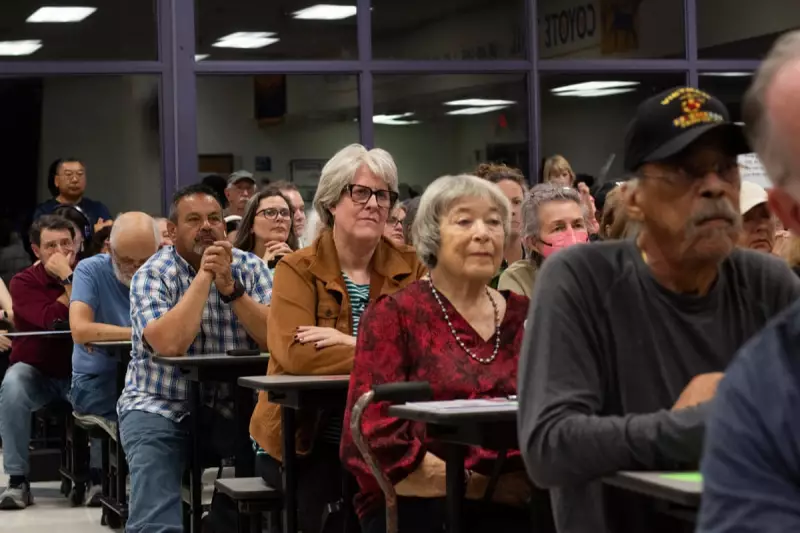
On 23 October, the community's concerns came to a head during a town hall meeting. The school auditorium was packed as residents sought information from local government and advocacy group representatives. The prevailing sentiment among attendees was strong opposition to the incarceration of immigrants, particularly amidst former President Donald Trump's drive to deport as many undocumented individuals as possible.

Karla Jones, one resident present, expressed her profound dislike for the idea of a nearby detention centre holding immigrants, whose primary offence is often simply lacking legal status—a civil matter. "That's breaking up families," she stated. "And it's people who are paying taxes, it's people who are working. So I don't want my community to support that."
Financial Backing and a Checkered Corporate History
This push for expanded detention capacity is backed by substantial federal funding. Legislation passed in July allocated $45 billion to US Immigration and Customs Enforcement (ICE) specifically for building more detention centres for adults and children. This was part of a larger $75 billion, four-year package for the agency, with the government heavily relying on for-profit private prison companies to achieve this expansion.
MTC, based in Utah, is one such company. It originally constructed the Marana prison in the mid-1990s when the local population was around 2,000. It was Arizona's first private prison. The state purchased the facility in 2013 for $150,000 but closed it in December 2023, citing high operational costs and a declining prison population.
After state lawmakers rejected a bill that would have leased the prison to the federal government for $1 per year to serve as an immigration detention centre, MTC repurchased the property from the state for $15 million this past summer.
MTC's operational history in Arizona raises further concerns. In 2015, the state terminated a contract with the company following a riot at its Kingman prison that left more than a dozen inmates and guards injured. An official investigation concluded MTC had fostered "a culture of disorganization, disengagement and disregard" for state policies. The company has previously disputed these findings.
Limited Local Power and National Immigration Shifts
Marana's town manager, Terry Rozema, has indicated the town possesses limited power to block the project. In a statement, he clarified that "the facility is privately owned by MTC and is already properly zoned for use as a prison or an ICE facility." Consequently, the town cannot restrict its future use as long as it complies with existing zoning regulations.
Emily Lawhead, MTC's communications director, declined an interview but confirmed via email that the company is "in discussions with several public agencies that may have a need for additional bed space." ICE did not respond to specific questions but a spokesperson cited a need for "greater detention capacity" due to a high volume of arrests.

The national context of immigration detention has shifted dramatically. Under the current administration, policy has moved away from the previous practice of generally releasing immigrants with strong community ties and no serious criminal history. Jennifer Ibañez Whitlock, senior policy counsel at the National Immigration Law Center, explained that now, "everybody gets arrested, everybody gets detained." This expansion of mandatory detention means more people are held in confinement during removal proceedings, leading many to simply agree to deportation rather than fight their case from jail.
Data from Syracuse University's Transactional Records Access Clearinghouse underscores this shift. As of September, a striking 71.5% of the 59,762 immigrants in detention had no criminal conviction, with many of the recorded convictions being for minor offences like traffic violations.
A Determined Community Vows to Fight Back
At the town hall, the federal government's aggressive immigration agenda faced significant criticism. Protest signs bearing messages like "Stop the kidnappings, protect your neighbors" highlighted community fears about forceful immigration arrests.
Resident Tom Flynn left the meeting clutching one such sign, clearly stating his objections. "No 1, it's morally objectionable," he said. "No 2, it's a detriment to the overall economy; it reduces the number of people who have been in the area, it depresses home values. And it's so obviously politically driven."
Another attendee, Marlis Dinning, found the discussions disturbing and criticised the lack of transparency, noting it seemed everything had "happened behind closed doors." Despite feeling unsettled, Karla Jones vowed to join the growing community effort to prevent the detention centre from opening. "I really hope we can stop it," she affirmed, capturing the determined spirit of her neighbours.