

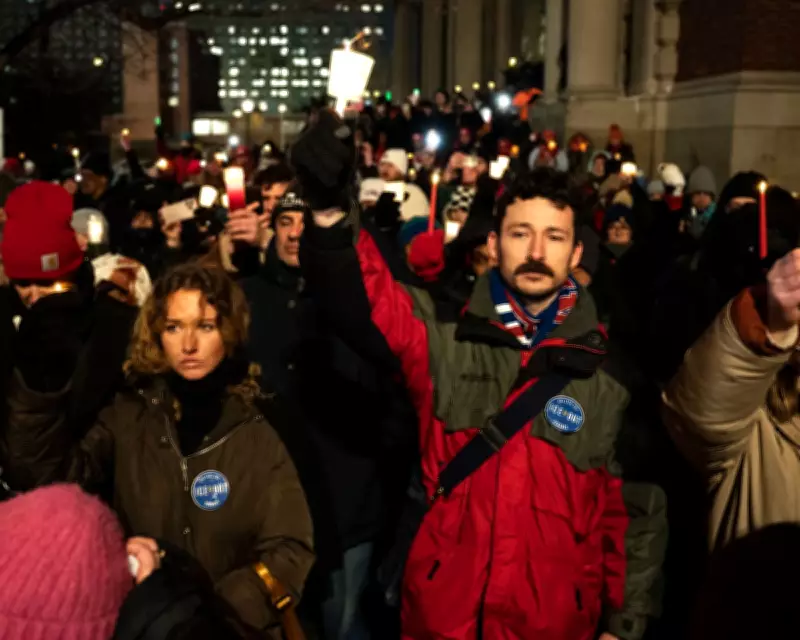
Activists across the United States have issued a powerful call for a nationwide shutdown this Friday, urging citizens to participate in a "no work, no school, no shopping" protest. This coordinated action represents a direct challenge to the Trump administration's sweeping immigration crackdowns and the aggressive enforcement tactics employed by Immigration and Customs Enforcement (ICE).
A Growing Movement Against ICE Enforcement
Organisers are describing Friday's event as a "blackout" or general strike, positioning it as a significant escalation within a burgeoning non-violent movement. The protest aims to combat what many perceive as excessively harsh ICE operations, which have faced intensified scrutiny following a series of fatal shootings involving federal agents.
"We are calling for this strike because we believe what we have been doing in Minnesota should go national," explained Kidus Yeshidagna, president of the Ethiopian Students Union at the University of Minnesota and one of the student organisers. "We need more people and lawmakers across the country to wake up to these issues."

Political Developments Amidst Growing Tensions
In a separate political development, Democrats and the White House have reached a crucial agreement to avert a government shutdown. Senate minority leader Chuck Schumer's office confirmed the deal to the Guardian on Thursday. The arrangement will advance a package of spending bills while strategically separating the Department of Homeland Security spending bill from the broader package.
The agreement includes funding for DHS at current levels for a two-week period, allowing Democrats additional time to negotiate further constraints on immigration agents. These negotiations have gained urgency in light of recent fatal shootings in Minneapolis that have sparked nationwide concern.
Trump's Legal Action and Executive Measures
In a remarkable legal move, Donald Trump has filed a lawsuit against the US Treasury and Internal Revenue Service, seeking $10 billion (approximately £7.9 billion) over what he claims was an unauthorised disclosure of his tax returns during his first term. Bloomberg News reported this development on Thursday evening, noting that the lawsuit places Trump in the unusual position of suing government agencies that are part of the executive branch he leads.
This legal action follows Trump's unprecedented decision not to release his tax returns while running for and then attaining the presidency, breaking with longstanding political tradition.
Border Czar Addresses Minneapolis Situation
Trump's "border czar" Tom Homan held a news conference in Minneapolis today, where he acknowledged that "no agency is perfect" but notably avoided mentioning the fatal shootings of US citizens by immigration agents that occurred there this month. During Thursday's press conference, Homan stated that the administration has "recognised that certain improvements could and should be made" in the ongoing immigration enforcement operation in Minnesota.
However, he declined to specify what these improvements might entail or when they would be implemented. The border czar also refused to comment on newly published video footage from earlier this month showing officers grabbing Alex Pretti and bringing him to the ground during intense protests that have gripped Minneapolis. "We'll let the investigation play out and let it go where it goes," Homan added cautiously.
Expanding Economic Pressure on Cuba
In another significant development, Trump signed an executive order on Thursday that lays the groundwork for imposing tariffs on goods from countries that provide oil to Cuba. The White House announced that this order, which escalates Trump's pressure campaign to topple the Communist government, declares a national emergency.
It establishes a formal process for the US secretaries of state and commerce to assess tariffs against nations that sell or otherwise provide oil to the island nation. While the White House has yet to specify exact tariff rates for violating this new policy of blocking Cuba from purchasing oil, the move represents a substantial escalation in economic measures against the Caribbean nation.






