

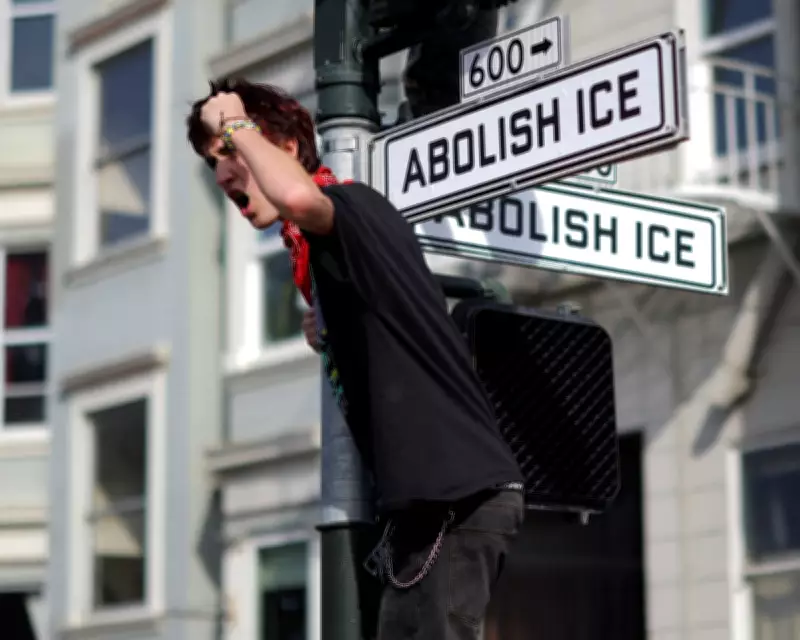
Nationwide Demonstrations Demand ICE Removal Amid Political Tensions
Organisers coordinated a significant wave of protests across the United States over the weekend, with more than three hundred demonstrations anticipated in all fifty states and the District of Columbia. The movement, branded as 'ICE Out of Everywhere', represents a substantial public response to current immigration enforcement policies.
Presidential Directive Limits Federal Involvement in Democratic Cities
President Donald Trump issued a clear directive to Homeland Security Secretary Kristi Noem, instructing federal personnel to avoid involvement in protests occurring within cities governed by Democratic leadership unless those local authorities explicitly request assistance. This order comes amidst escalating criticism of the administration's approach to immigration enforcement.
Through his social media platform, Trump stated emphatically: "under no circumstances are we going to participate in various poorly run Democrat Cities with regard to their Protests and/or Riots unless, and until, they ask us for help." The president provided limited details regarding how this instruction would affect operations conducted by US Customs and Immigration Enforcement, the Department of Homeland Security, or other federal agencies.

However, Trump added a significant caveat regarding federal property protection: "We will, however, guard, and very powerfully so, any and all Federal Buildings that are being attacked by these highly paid Lunatics, Agitators, and Insurrectionists." This statement suggests a selective approach to federal intervention based on location and circumstance.
Chicago Mayor Escalates Jurisdictional Conflict with Federal Authorities
In a move that intensifies existing tensions between local and federal jurisdictions, Chicago Mayor Brandon Johnson has instructed the Chicago Police Department to investigate and document alleged illegal activities by federal immigration agents operating within the city. This action represents a direct challenge to federal authority and highlights the deepening divide between municipal and national approaches to immigration enforcement.
Broader Political Context and Additional Developments
The weekend's events occurred against a backdrop of multiple political developments. President Trump revealed that Iran is engaged in diplomatic discussions with the United States, hinting at potential agreements to avoid military confrontation. Meanwhile, Democratic lawmakers have accused the Department of Justice of failing to release millions of documents related to the Jeffrey Epstein investigation, despite legal requirements to do so.
In architectural news, reports indicate President Trump envisions constructing a monumental 250-foot arch in Washington DC that would significantly exceed the height of the Lincoln Memorial. The proposed structure would occupy land near the Memorial Bridge crossing the Potomac River.
The US government experienced a partial shutdown on Saturday due to congressional disagreements over funding restrictions for federal agents involved in deportation operations. This budgetary impasse followed the tragic killings of two US citizens in Minneapolis.
International and Domestic Responses
Germany's football federation has explicitly rejected calls to boycott the World Cup as a political statement against the Trump administration. Domestically, a federal judge has ordered the release of a five-year-old child and his father from a Texas detention facility by Tuesday, while another judge denied Minnesota's request to terminate federal immigration operations in Minneapolis.
Additional developments include reports of inappropriate remarks by a demoted border patrol official regarding the Jewish faith of Minnesota's US attorney, growing international admiration for Greenland's Prime Minister following his criticism of Trump, and the arrest of a Customs and Border Protection employee in Minnesota during the ongoing immigration enforcement operations.
The weekend's events demonstrate the complex interplay between federal immigration policy, local governance, and public protest, creating a multifaceted political landscape with significant implications for enforcement approaches and intergovernmental relations across the United States.






