

New polling has exposed a dramatic chasm between public perception and the official statistics on immigration to the United Kingdom. Despite a sharp and sustained fall in net migration, a large majority of voters incorrectly believe the numbers are rising, while confidence in the government's ability to manage borders has hit new lows.
A Stark Perception Gap on Migration Numbers
Exclusive research shared with the Guardian by the group More in Common reveals that 67% of those polled think immigration to the UK has increased. This belief persists in direct contradiction to official data from the Office for National Statistics (ONS), which shows net migration fell by more than two-thirds to a post-pandemic low.
The figures show net migration peaked at a record 944,000 in the year to March 2023, before plummeting to 204,000 in the year to June 2025. Visa applications also saw significant declines in 2025, with skilled worker applications down 36% and health and care applications down 51%.

Luke Tryl, Executive Director of More in Common, stated: "The Labour government is facing a growing credibility gap on migration … That tells us that numbers alone are not enough. Until that credibility gap closes, Labour’s migration migraine will persist."
Public Confidence in Border Control Plummets
The polling indicates that the government's tough rhetoric and policy proposals have failed to reassure the public. Three-quarters (74%) of voters said they had little or no confidence in the government on immigration, a rise from 70% in May of the previous year. Only 18% expressed confidence.
The decline in trust was most pronounced among those who backed Labour in the 2024 election, where confidence dropped by 17%. Furthermore, when presented with the accurate falling figures, fewer than one in five voters credited the current government for the decline, with a similar number attributing it to the previous Conservative administration.
Home Secretary Shabana Mahmood had promised "the most substantial reform to the UK’s asylum system in a generation" in November, putting forward a series of hardline measures. These included potentially making refugees wait 20 years for citizenship, confiscating assets from asylum claimants, curbing family reunions, and returning refugees if conditions improve at home.
The Enduring Impact of the Small Boats Issue
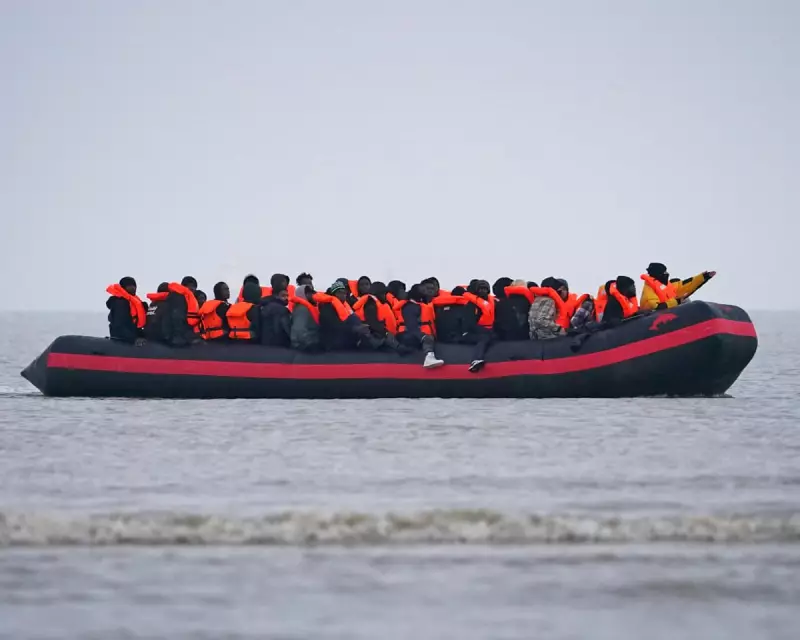
Analysts point to the highly visible issue of small boat crossings as a critical driver of public perception. The poll found that 79% of voters want the government's focus to be on stopping the vessels, with only 10% believing reducing legal net immigration should be the top priority.
In the year ending June 2025, 43,000 people arrived on small boats, a 38% increase on the previous year but below the 2022 peak of 46,000. However, Guardian analysis confirms these arrivals constitute less than 5% of overall immigration to the UK.
Marley Morris from the Institute for Public Policy Research (IPPR) noted a "broad public cynicism" around migration, suggesting perception may lag behind reality. "Labour have been doing a lot to emphasise a tough line on migration because they want to try to challenge that perception, but it’s quite ingrained," he said.
Migration Minister Mike Tapp pointed to the falling statistics as evidence that Labour's plans were "paying off." He stated: "Net migration is at its lowest level in half a decade, and has already fallen by more than two-thirds under this government after it was allowed to explode to nearly one million in recent years."
Conversely, Labour MP Kim Johnson for Liverpool Riverside warned of the "cost of mimicking Reform," citing a rise in racism and a steep drop in work visas that risks crippling health and social care. She urged the government to present a positive vision supporting migrants' rights, warning that divisive rhetoric is fuelling support for Reform UK.






