

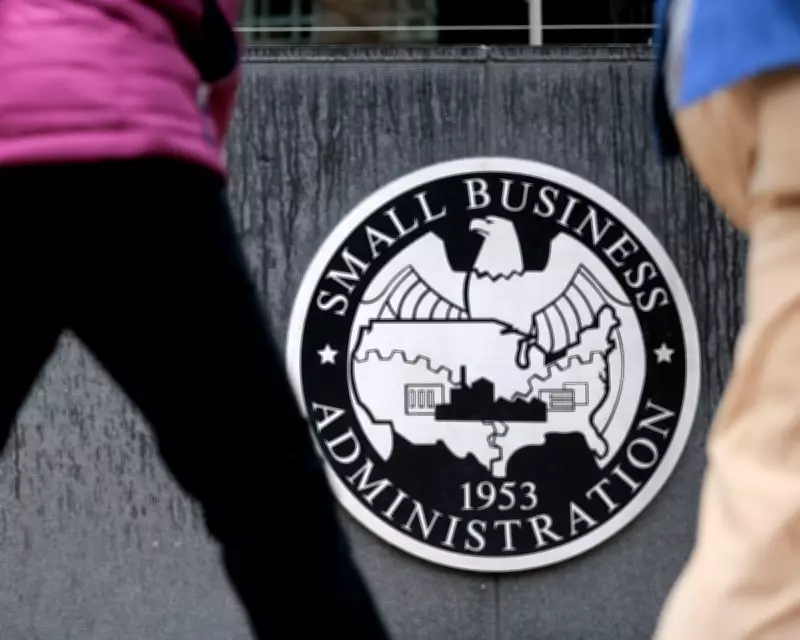
Historic Policy Shift: SBA Eliminates Loan Access for Immigrant Entrepreneurs
The US Small Business Administration has implemented a groundbreaking policy change that has left immigrant entrepreneurs across the nation reeling. For the first time in the agency's 71-year history, legal permanent residents holding green cards have been declared ineligible for SBA-backed loans, effectively cutting off a crucial funding source for thousands of small business owners.
'America First' Agenda Drives Controversial Decision
The policy shift, first announced in February and now fully implemented, represents a significant departure from decades of SBA practice. Under the leadership of Administrator Kelly Loeffler, a billionaire Trump loyalist appointed last February, the agency has embraced former President Donald Trump's "America First" economic agenda with unprecedented vigor.
"I'm really shocked," says Aneesa Waheed, restaurateur and chef behind Tara Kitchen's five Moroccan cuisine locations across New York and New Jersey. A naturalized citizen who was crowned the SBA's New York state small business person of the year in 2024, Waheed expressed disbelief at the policy change. "I've been in the SBA world for a long time. You think of the SBA as a source of support and strength for small businesses. So you never really think of it in terms of political affiliation."

How SBA Loans Work and Who They Serve
Established in 1953, the Small Business Administration primarily assists entrepreneurs through its loan guarantee program. Rather than providing direct loans, the agency underwrites portions of loans issued by banks, credit unions, and other financial institutions, making capital more accessible to businesses that might otherwise struggle to secure financing.
The SBA classifies businesses with 500 or fewer employees as small businesses, with loans typically ranging from $50,000 to $5 million. In fiscal year 2025 alone, the agency facilitated over $44 billion in thousands of loans to small enterprises nationwide. These loans have traditionally supported "main street" businesses including retail shops, restaurants, cafes, and franchises, as well as business-to-business services across manufacturing, transportation, and other sectors.
Evolving Eligibility Requirements
While support for small businesses has historically been a bipartisan issue, the SBA under Loeffler has implemented increasingly restrictive policies. Last June, Loeffler changed the rules for the agency's loan program, requiring that 100% of a business must be owned by US citizens or green card holders to receive SBA backing. This represented a significant tightening from the previous requirement of 51% ownership by citizens or legal residents.
"Trump has restored confidence and opportunity to Main Street with a commonsense economic agenda designed to put hardworking families and small businesses – not Washington bureaucrats, illegal aliens or coastal elites – in the driver's seat," Loeffler declared in an op-ed posted to the SBA's website in February.
Practical Consequences for Entrepreneurs
The new eligibility requirements have created significant challenges for those working with immigrant entrepreneurs. "SBA loans are really only meant to be issued in situations where folks wouldn't be able to get access to credit on similar terms without the government guarantee," explained Keegan McBride, co-founder of SBA Source, a company specializing in securing SBA loans, primarily for franchise sector clients.
"It's challenging because SBA is kind of designed to fill that gap," McBride continued. "For most people, you're not going to be able to get an unsecured line of credit, or at least not a sizable one. You either need to have home equity that you can use, or an investment portfolio that you can use, or something to secure the line of credit."
Many franchisees are immigrants, McBride noted, representing a mix of green card holders and naturalized US citizens. Under the new rule, even married couples hoping to launch a business together cannot obtain SBA loans unless both partners are US citizens.

Broader Implications and Community Impact
Green card holders, who are lawful permanent residents, typically must wait at least five years (three if married to a US citizen) to become citizens, with additional processing time for applications. Some immigrants choose to remain permanent residents because their home countries don't allow dual citizenship, and they're unwilling to relinquish their original citizenship. These entrepreneurs now face permanent exclusion from SBA loan programs under the new policy.
Aissatou Barry-Fall, CEO of the Lower East Side People's Federal Credit Union, a non-profit SBA lender in New York City, called the new policy nonsensical. "I think it's discrimination," Barry-Fall stated bluntly. "That's all it is."
In response to inquiries, SBA spokesperson Maggie Clemmons issued a statement emphasizing the agency's commitment "to driving economic growth and job creation for American citizens" and ensuring that "every taxpayer dollar goes to support US job creators and innovators."
Economic Concerns and Community Response
Waheed, who moved to the US from India as a teenager, warned that barring green card holders from SBA loans could harm communities economically. Flourishing businesses serve as employers who pay taxes and contribute to neighborhood vitality, she noted.
"Somebody who's here on a green card, they've made a commitment to this country," Waheed emphasized. Despite Trump's promises of economic improvement, she pointed to current challenges facing small businesses: "Look at the number of closures, job losses, and a record number of restaurants closing and small businesses closing. It seems like it doesn't even matter to them, all that matters is the S&P and the Dow."
The policy change represents a fundamental shift in how the federal government supports small business development, with immigrant entrepreneurs now facing unprecedented barriers to accessing the capital that has helped build American communities for generations.





