

Spain's Landmark Amnesty for Undocumented Migrants
The Spanish government has announced a historic decree that will regularise approximately 500,000 undocumented migrants, offering them legal status and protection from deportation. This bold move by Prime Minister Pedro Sánchez's administration represents one of the largest amnesty programmes in recent European history, sparking both celebration and political controversy.
A Personal Perspective on Undocumented Life
As someone who once lived as an undocumented migrant in Spain, I understand the profound impact this decision will have. When I arrived from New York with romantic notions of adventure, I never anticipated the challenges of navigating life without legal papers. The constant fear of police encounters, the limitations on employment, and the psychological toll of living in the shadows create an exhausting reality for hundreds of thousands of people.
I recall a particularly harrowing morning when I found myself caught in a police raid targeting street vendors. Speaking English with my US passport provided immediate protection that my companions from sub-Saharan Africa didn't receive. That moment highlighted the stark inequality between different migrants' experiences based on nationality and documentation status.

Economic Contributions and Political Backlash
This regularisation drive comes at a time when migrants constitute approximately 16% of Spain's new workforce, contributing significantly to the country's economic success story. The entrepreneurial spirit and labour of undocumented workers have become essential to key sectors including agriculture, construction, domestic services, and hospitality.
However, the announcement has faced fierce opposition from right-wing political parties. The People's party leader Alberto Núñez Feijóo has criticised the measure as rewarding illegality, while the far-right Vox party continues its anti-immigration rhetoric. This represents a notable shift from Spain's historical approach, where between 1986 and 2005, governments of various political stripes implemented six separate regularisation programmes.
Transforming Vulnerable Lives
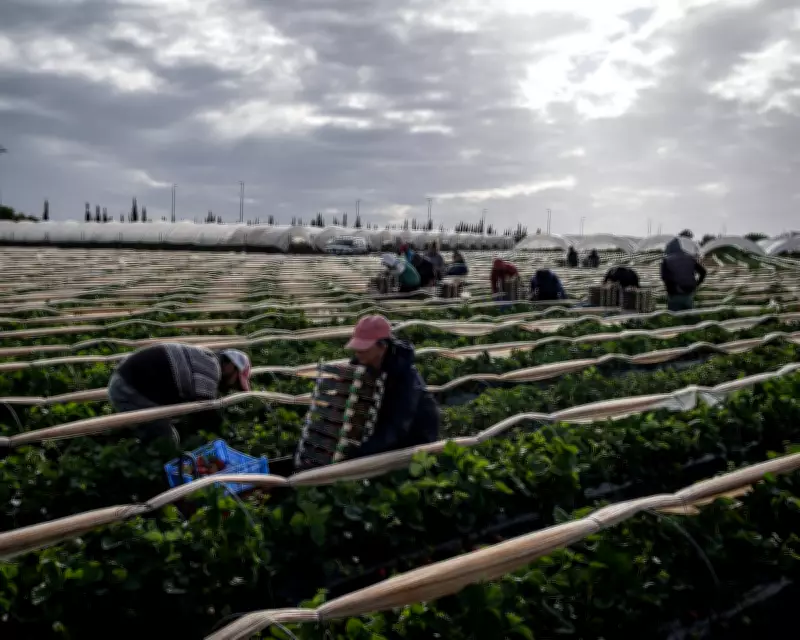
The new legislation promises to fundamentally change the circumstances of Spain's most vulnerable workers. Undocumented migrants frequently find themselves in precarious employment situations with minimal legal protection, particularly in agricultural regions where they harvest fruits and vegetables destined for European markets.
While the decree won't immediately solve issues of institutional racism or poor working conditions, it provides a crucial foundation for building more stable lives. Regularisation offers access to proper employment contracts, social services, and the ability to participate fully in Spanish society without constant fear of deportation.
A Legacy of Migration and Resilience
Migration stories form an integral part of Spain's social fabric, just as they do across Europe. My own family's journey from the Caribbean to Puerto Rico and eventually to New York involved sleeping in a morgue during initial arrivals, working tirelessly to establish businesses, and creating new community networks across generations.
This regularisation recognises that migrants deserve dignity and stability after contributing to Spain's economy and society. It acknowledges that people who have established their lives in Spain should have the opportunity to participate openly and legally in the country they now call home.
The Spanish government's decision represents both humanitarian progress and economic pragmatism. By bringing half a million people out of the shadows, Spain strengthens its social cohesion while ensuring that those who contribute to its prosperity can do so with legal protection and recognition of their fundamental rights.






