

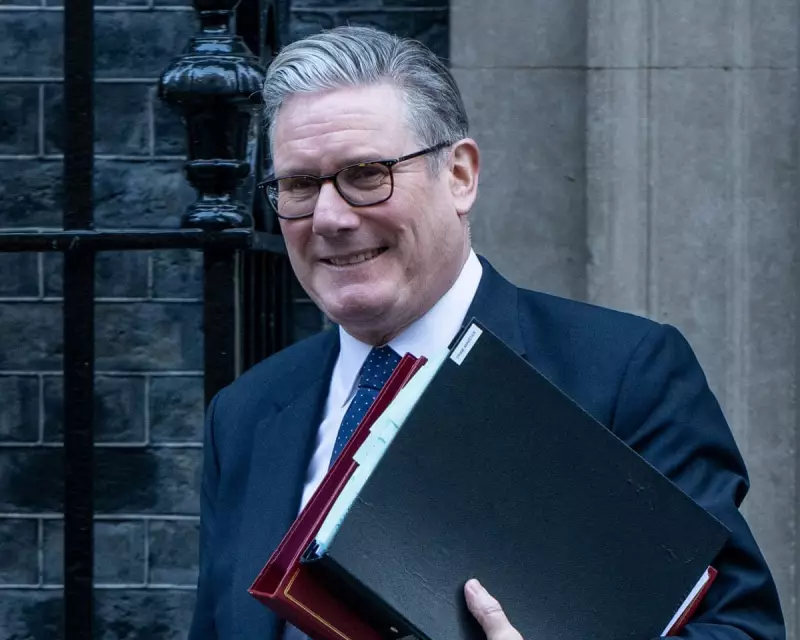
Prime Minister Keir Starmer has firmly rejected accusations that a key change to his government's digital identity plans constitutes another policy reversal. The controversy erupted after it was revealed that a proposal to make a specific digital ID document mandatory for proving the right to work had been dropped.
What Changed in the Digital ID Plan?
Late on Tuesday, the government announced it was rolling back a central element of its controversial digital ID scheme. The original plan included a requirement for individuals to show a singular digital ID document to prove their eligibility to work in the UK. This has now been altered to allow other forms of digital identification, such as a passport with a digital chip or an e-visa.
While Downing Street has portrayed this shift as a technical tweak, it effectively removes the only compulsory element of the scheme, significantly watering down its initial impact. The change follows a series of other recent policy adjustments on issues including inheritance tax for farms and business rates for pubs.

'The Key Point is Still There,' Insists Starmer
In a broadcast interview on Wednesday, the Prime Minister defended the move, arguing the core principle remains intact. "You will be checked. Those checks will be digital. And they will be mandatory," Starmer told ITV. He emphasised that the overriding goal is to prevent people from working illegally in the country.
"What we’re now doing is consulting on exactly what that might look like," he added. When pressed on whether the change represented a U-turn, Starmer replied, "No." He stated his determination to stamp out illegal work, which he said is happening too frequently.
Tory Opposition Seizes on 'Chaos'
The Conservative leader, Kemi Badenoch, used Prime Minister's Questions to ridicule Starmer over the policy shift. She welcomed what she called the Prime Minister's "latest U-turn," claiming she feels she says that every week.
Badenoch labelled the digital ID plan a "rubbish policy" and accused Starmer's government of having "no sense of direction whatsoever," saying he was "blowing around like a plastic bag in the wind."
Senior government ministers have sought to downplay the significance of the alteration. Chancellor Rachel Reeves argued that as long as people must show some form of digital ID to work, the specific format is less critical. Business Secretary Peter Kyle clarified that the system's essence is linking biometric data to identity for instant government checks on work eligibility.
Kyle indicated that by the time digital-only checks are fully implemented in 2029, the digital ID system would be operational, with the exact forms of acceptable ID to be clarified nearer the time.






