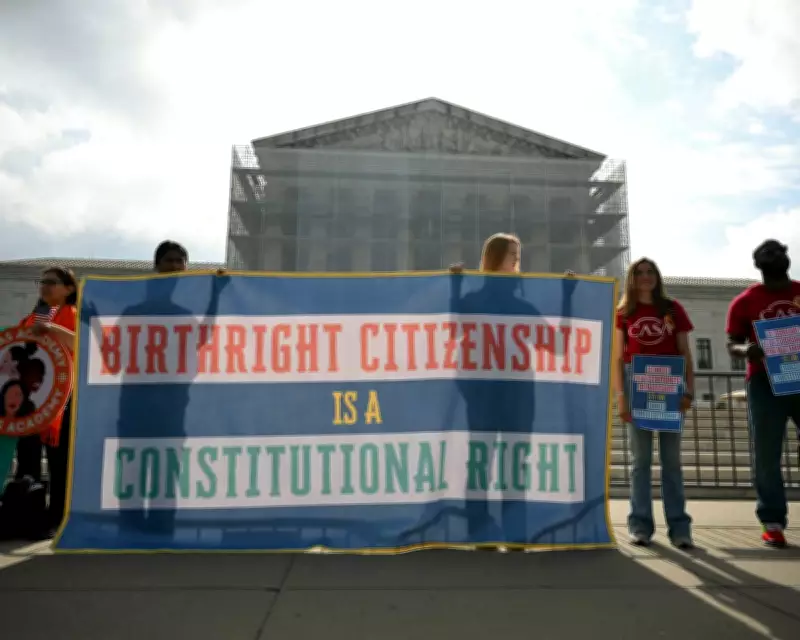
The United States Supreme Court has agreed to hear a landmark case that directly challenges the long-standing constitutional principle of birthright citizenship. This legal battle, which has been propelled into the national spotlight by former President Donald Trump and his allies, questions the interpretation of the 14th Amendment, which grants citizenship to "all persons born or naturalized in the United States."
The Core of the Legal Dispute
At the heart of this case is a contentious argument that birthright citizenship, as traditionally understood, should not apply to the children of undocumented immigrants. Proponents of this view, including Trump, have long advocated for a reinterpretation or executive action to alter this practice, claiming it encourages illegal immigration and strains public resources. The case presents a fundamental test of constitutional interpretation, pitting originalist readings against broader societal implications.
Historical and Political Context
Birthright citizenship has been a cornerstone of American law since the ratification of the 14th Amendment in 1868, originally intended to secure citizenship for formerly enslaved people. Over the decades, it has been consistently upheld by courts, including the Supreme Court in key rulings. However, in recent years, it has become a flashpoint in immigration debates, with Trump famously vowing to end it via executive order during his presidency—a move widely criticized by legal scholars as unconstitutional without a constitutional amendment.

The current case emerges from a lower court ruling that upheld birthright citizenship, setting the stage for a high-stakes Supreme Court review. Legal experts anticipate intense scrutiny of the amendment's language, particularly the phrase "subject to the jurisdiction thereof," which some argue could exclude certain groups.
Potential Implications and Reactions
If the Supreme Court were to rule in favor of restricting birthright citizenship, it could have profound consequences. Millions of individuals born in the U.S. to undocumented parents might face uncertainty regarding their legal status, potentially leading to widespread administrative and social upheaval. Advocacy groups warn that such a decision could undermine the rights of vulnerable populations and set a precedent for further erosion of citizenship protections.
On the political front, the case has galvanized both supporters and opponents. Conservative factions view it as a necessary step to curb illegal immigration, while progressive and civil rights organizations decry it as an attack on fundamental American values. The outcome could significantly influence upcoming elections and immigration policy debates, making it a pivotal moment in U.S. legal and political history.
Looking Ahead
As the Supreme Court prepares to hear arguments, all eyes are on the justices' approach to this divisive issue. The decision will not only shape the future of citizenship in America but also reflect the court's role in interpreting constitutional principles amidst evolving political landscapes. Regardless of the ruling, this case is poised to leave a lasting impact on the nation's identity and legal framework.