

Trump's Immigration Claims Clash with Historical Reality
In a striking assertion, Donald Trump's White House has framed immigration as a modern crisis of "open borders," but historical evidence reveals a different truth. The recent National Security Strategy (NSS) document, published late last year, demonises immigrants and calls for an end to mass migration, citing it as a threat to civilisation. However, this perspective overlooks the fact that nation states in the Americas, including the United States, have a long and documented history of open borders, often as a default or intentional policy.
The NSS and Its Flawed Historical Narrative
The NSS, which has raised alarms for its dismissive stance on European alliances and interventions in Latin America, also targets immigration in a particularly contentious manner. It claims that "unchecked migration" is leading to social problems such as strained resources, distorted labour markets, increased crime, weakened social cohesion, and undermined national security. To support this, the document references a reinterpretation of history, stating that sovereign nations have traditionally prohibited uncontrolled migration and granted citizenship rarely. Yet, as a historian of border policy, I find this version of events to be fundamentally nonsensical.
My research indicates that, contrary to the NSS's claims, many countries in the Americas have spent more time with open borders than with closed ones. In Latin America, for instance, nations often enshrined the right to immigrate in their constitutions, viewing open borders as a demonstration of sovereignty. The Central American constitution of 1824, for example, declared the region a "Sacred Asylum for all," highlighting a proactive embrace of migration rather than a fear of it.

The US Experience with Open Borders
In the United States, open borders were the norm for nearly the first 150 years of the country's existence. Immigrants were generally presumed admissible, with no federal immigration restrictions until the late 19th century, when laws targeted Chinese immigrants. Even then, borders remained largely open, and it was not until the 1920s that a fully closed-border system was implemented. This shift represented a significant expansion of federal power, yet enforcement varied, and large-scale amnesty programs, such as those in the 1980s, were possible due to the flexibility of these policies.
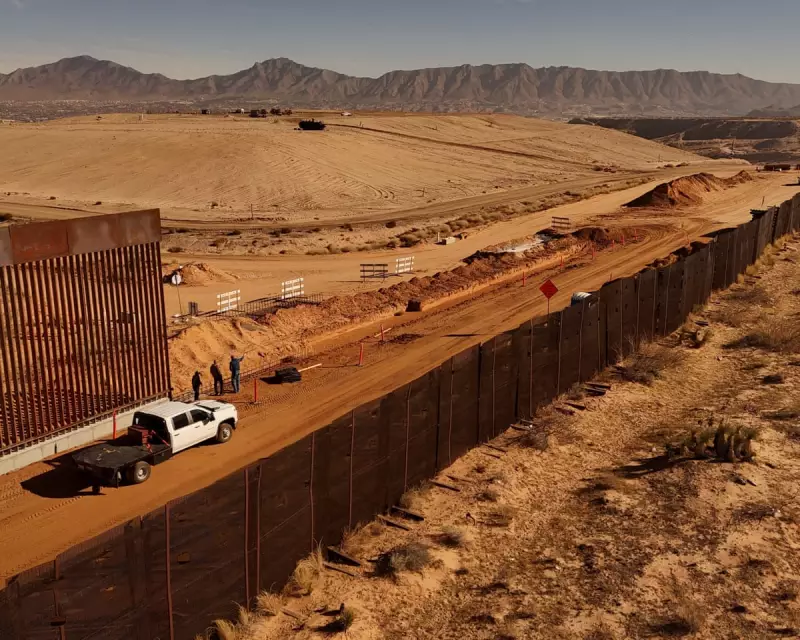
The true historical deviation, therefore, is not the "past decades" of open borders, but rather the militant closure that accelerated in the 1990s under the Clinton administration and intensified post-9/11. This trend has led to increased border security, fencing, and deportation efforts, which the NSS erroneously blames for issues actually caused by closed borders.
The Real Consequences of Closed Borders
Evidence overwhelmingly shows that the problems attributed to open borders by the NSS are, in fact, exacerbated by closed borders. For example:

- Resource Strains: Immigrants do not cost governments more than citizens; instead, the costly processes of detention and deportation strain resources. Opening borders could alleviate these financial burdens.
- Labour Market Distortions: Closed borders trap workers, while corporations exploit cheap labour pools. Open borders would allow for freer movement, reducing these distortions and benefiting workers on all sides.
- Organised Crime: By forcing vulnerable people to migrate illegally, closed borders incentivise cartels to profit from the situation. Studies show immigrants commit fewer crimes on average, so opening borders could reduce criminal activity.
- Social Cohesion: Divisive rhetoric around immigration, often propagated by media, weakens social ties. Positive contact with immigrants reduces negative views, suggesting that informed discussions on open borders might strengthen cohesion.
- National Security: Heavy-handed enforcement tactics, such as family separations and violent raids, undermine security by targeting peaceful communities, making no one safer.
A Call for a Serious Conversation
It is perplexing that policymakers continue to blame "open borders" for systemic failures when the evidence points to closed borders as the root cause. The logic of our current immigration system is backwards, and as protests in cities like Minneapolis show, there is growing public readiness to address this issue. We must move beyond surrealist absurdities and engage in a meaningful dialogue about embracing the "enduring wisdom" of open borders, as history in the Americas has long demonstrated.
Daniel Mendiola is a professor of Latin American history and migration studies at Vassar College, offering a critical perspective on US immigration policy and its historical context.





