

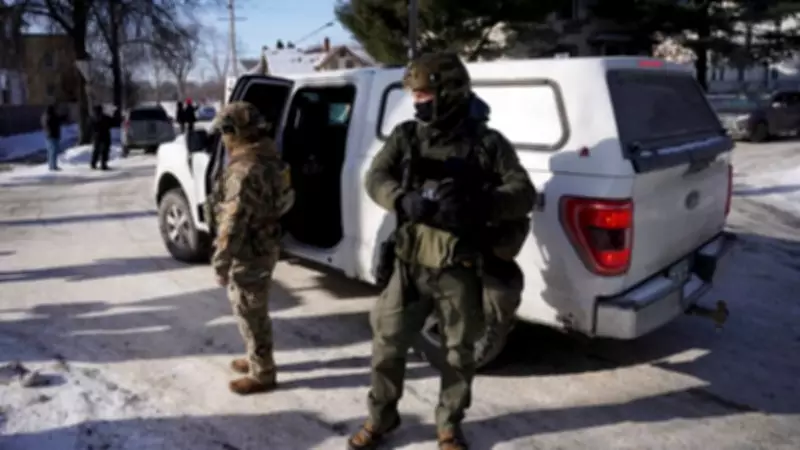
Trump Confirms Withdrawal of Hundreds of Immigration Officers from Minnesota
President Donald Trump has confirmed the partial withdrawal of federal immigration officers from Minnesota, ordering approximately 700 personnel to leave the state. This move comes in the wake of intense public fury following the tragic deaths of two protesters in altercations with federal officials. However, a significant contingent of around 2,000 officers will remain stationed in Minnesota, continuing enforcement operations.
Deaths of Protesters Spark Outcry and Policy Shift
The decision to reduce the federal presence follows separate incidents last month in Minneapolis, Minnesota's largest city, where protesters Renee Good and Alex Pretti were shot and killed. Both individuals were demonstrating against the actions of masked federal agents deployed by the Trump administration. Mr. Pretti, a nurse by profession, and Ms. Good lost their lives during these protests, which have galvanised local opposition to the heavy-handed tactics employed by Immigration and Customs Enforcement (ICE) officers.
Local officials, including Minnesota Governor Tim Walz and Minneapolis Mayor Jacob Frey, have been vocal in their criticism, attacking what they describe as aggressive methods that have seen ICE officers apprehending individuals directly from the streets. They have made it unequivocally clear that they want the federal operation to cease entirely. In a statement on social media, Governor Walz, a Democrat, acknowledged the reduction as a start but insisted on a more rapid and extensive drawdown. He also called for state-led investigations into the killings and an end to what he termed a "campaign of retribution."

Trump's Announcement and Continued Enforcement Stance
President Trump confirmed the order to cut numbers in an interview with Sky News' US partner, NBC News, though he notably stated, "But it didn't come from me because I just wanted to do it." He elaborated on his administration's broader immigration policy, criticising the previous Biden administration for what he called an open-border policy that allowed millions to enter the country. "We allowed to come into our country people the likes of which no country would accept. And we're getting 'em out," Trump asserted, underscoring his commitment to deportations.
Despite this firm stance, President Trump hinted at a potential moderation in approach, telling NBC News, "maybe we can use a little bit of a softer touch - but you still have to be tough." This comment reflects a slight softening in language amid the ongoing controversy.
Federal Officials Vow to Continue Deportation Efforts
Border czar Tom Homan announced the withdrawal on Wednesday, specifying that about 700 officers would depart immediately after local officials agreed to hand over arrested immigrants. However, Mr. Homan emphasised that the Trump administration remains resolute in its enforcement objectives. "Let me be clear, President Trump fully intends to achieve mass deportations during this administration, and immigration enforcement actions will continue every day throughout this country," he declared, indicating that the pullback is not a cessation of operations.
Vice President JD Vance echoed this sentiment, clarifying that the officers being withdrawn were primarily tasked with protective roles for those conducting arrests. "We're not drawing down the immigration enforcement," he stated in an interview on The Megyn Kelly Show, reinforcing the administration's ongoing commitment to immigration control.
Background and Wider Context of Operation Metro Surge
The operation in Minnesota, known as Operation Metro Surge, was escalated in January as part of President Trump's efforts to fulfill election promises regarding the deportation of illegal immigrants and individuals lacking proper documentation. This deployment saw thousands of federal agents sent to the state, sparking widespread protests and condemnation from local leaders.

ICE, a component of the Department of Homeland Security, has also been active in other major US cities such as Los Angeles and Chicago, where their presence has similarly ignited anger among officials and prompted significant public demonstrations. The situation in Minnesota highlights the ongoing national debate over immigration enforcement tactics and federal overreach in local jurisdictions.
As the standoff continues, the partial withdrawal marks a pivotal moment, yet with 2,000 officers remaining and federal vows to persist with deportations, the conflict between state and federal authorities shows no signs of abating. The calls for justice for Renee Good and Alex Pretti add a poignant human dimension to this politically charged issue.





