

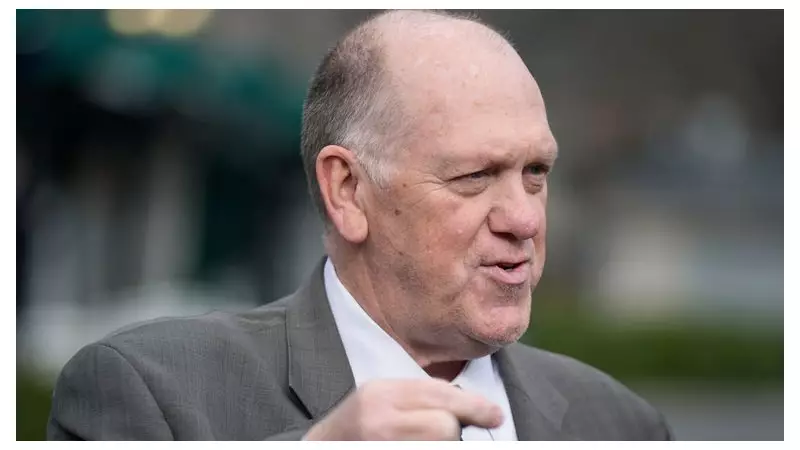
Tom Homan: Trump's 'Border Tsar' Deployed to Minneapolis Amid Immigration Unrest
Donald Trump has dispatched his appointed 'border tsar' Tom Homan to Minneapolis, a city grappling with significant unrest following the fatal shootings of two individuals by federal immigration agents. Homan arrived in the midwestern city on 27 January 2026, replacing US Border Patrol commander Gregory Bovino, who was overseeing Immigration and Customs Enforcement (ICE) operations at the time of the incidents.
A Strategic Shift in Enforcement Approach
This personnel change signals a potential recalibration of the White House's strategy, moving from Bovino's known robust tactics to Homan's perceived emphasis on restraint and moderation. President Trump himself characterised the appointment as part of an effort to 'de-escalate a little bit', framing it as a 'little bit of a change' rather than a full-scale policy reversal. The administration's objective appears to be resetting strained relations in a city where tensions have escalated dramatically.
Four Decades of Law Enforcement Experience
Tom Homan brings over forty years of extensive experience to his new role. His career began as a police officer in West Carthage, New York, before he joined the Border Patrol in 1984. He transitioned to ICE upon its establishment within the Department of Homeland Security in 2003, ultimately rising to become acting director from 2017 to 2018. Notably, Homan declined the permanent directorship after being nominated by President Trump.

During the Obama administration, Homan operated as a relatively low-profile yet influential figure, leading the agency's enforcement and removal operations. His tenure in 2013 coincided with the United States executing its highest recorded number of deportations. Initially planning to retire in 2017, Homan was persuaded to remain at ICE by incoming chief of staff John Kelly, continuing his service into Trump's presidency.
Advocate of Trump's Immigration Policy Framework
Homan is widely associated with the controversial immigration policies implemented during Trump's first term, including the practice of family separations at the border—a policy later challenged successfully in court by the American Civil Liberties Union. In the lead-up to Trump's second term, Homan articulated a focused approach, emphasising prioritisation of 'public safety threats and national security threats' as the primary targets for enforcement actions.
In discussions with media outlets, including Sky News, Homan has reiterated that operations are not designed as broad 'neighbourhood sweeps' but acknowledged that non-criminal individuals encountered during targeted missions would be taken into custody. This stance exists alongside documented cases of legal residents, asylum seekers, and even US citizens being detained across the country.
Controversies and White House Support
The Trump administration has consistently defended Homan amidst controversies, including allegations from 2024 that he accepted $50,000 from undercover FBI agents posing as businesspeople seeking government contracts. A subsequent bribery investigation was terminated by the US Justice Department, with White House press secretary Karoline Leavitt characterising the incident as a political entrapment attempt by the preceding administration.
Homan's Minneapolis Strategy and Local Engagement
Homan's mandate in Minneapolis involves shifting away from the widespread neighbourhood sweeps conducted under Bovino in cities like Los Angeles, Chicago, and Minneapolis itself. According to senior administration officials, the new strategy embraces a more traditional, targeted methodology. Discussions have included potentially reducing the number of federal agents deployed in Minnesota, narrowing the mission's focus to deportation priorities, and enhancing coordination with state authorities.

Upon arrival, Homan engaged in meetings with key local figures, including Minneapolis Mayor Jacob Frey and Minnesota Governor Tim Walz. Mayor Frey reiterated his request for the conclusion of Operation Metro Surge, while Governor Walz emphasised the state's priorities: ensuring impartial investigations into the shootings and reducing the substantial federal agent presence in the city. Homan described these initial discussions as a 'productive starting point' for future dialogue.
While community tensions remain elevated, some political observers, including House Republican Mark Amodei, view Homan's deployment as an 'encouraging indicator that a pivot is happening' in the federal government's approach to immigration enforcement in Minneapolis. The coming weeks will reveal whether this change in leadership translates into tangible policy shifts and reduced hostilities in a deeply divided city.





