

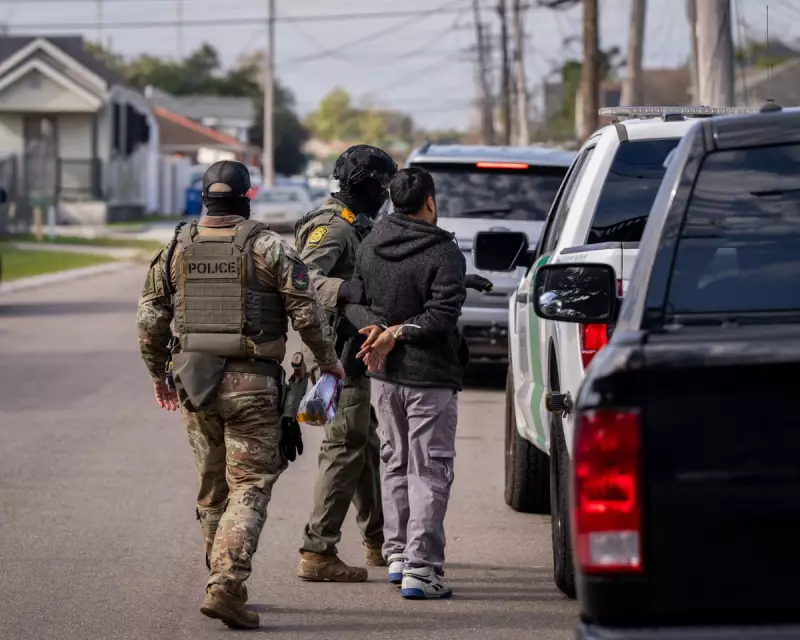
In a significant and sudden strategic shift, US federal immigration authorities have pulled officers out of a major enforcement operation in Louisiana to redeploy them to Minneapolis. The move marks an abrupt pivot from the controversial 'Catahoula Crunch' crackdown around New Orleans.
Operation 'Catahoula Crunch' Winds Down
According to documents obtained by the Associated Press, the Louisiana deployment, which began in December with the arrival of more than 200 federal officers, is being scaled down. The operation, led by Border Patrol chief Gregory Bovino, had been expected to last into February. It swiftly raised fears within immigrant communities across the state.
The stated target for 'Catahoula Crunch' was a staggering 5,000 arrests. However, as of 18 December, the Department of Homeland Security (DHS) confirmed the operation had resulted in approximately 370 arrests. Documents reviewed earlier by the AP indicated that a majority of those arrested in the initial days lacked criminal records.

Redeployment to Minneapolis Amid Rising Tensions
The officers from Louisiana are being sent to bolster a sweeping new crackdown in Minneapolis, Minnesota. The Trump administration has surged thousands of federal officers to the city, partly linked to allegations of fraud involving Somali residents. The DHS has described it as the biggest immigration enforcement operation ever, with over 2,000 officers taking part.
This redeployment comes as tensions in Minneapolis are high. Officers there have been met with demonstrations and public anger following an incident on Wednesday where an Immigration and Customs Enforcement (ICE) officer fatally shot a woman. The Minneapolis mayor has accused federal authorities of 'hiding facts' surrounding the killing.
When questioned about the Louisiana withdrawal, DHS stated on Friday, "For the safety of our law enforcement, we do not disclose operational details while they are under way." Gregory Bovino, who headed the Louisiana operation, has been seen in Minneapolis this past week.
Local Impact and Political Divide in Louisiana
The Louisiana operation drew sharp criticism and protests in New Orleans. Democratic leaders in the city called the 5,000-arrest target unrealistic and criticised aggressive arrest tactics. They highlighted videos showing agents, including masked individuals, chasing residents—one of whom was a US citizen—near their homes.
In contrast, Louisiana's Republican governor, Jeff Landry, welcomed the federal crackdown. He had previously requested help from Donald Trump to fight crime, leading to a separate deployment of National Guard troops to New Orleans just before the New Year.
The operation had a tangible chilling effect on local immigrant communities. In the Latino enclave of Kenner, near New Orleans, many immigrant-run businesses temporarily closed for over a month to protect customers from potential racial profiling. Some restaurants have only recently announced they are reopening.
Carmela Diaz, a US citizen from El Salvador who owns Taqueria La Conquistadora in Kenner, kept her restaurant shuttered. "I'm going to wait and see this week," she said, expressing ongoing concern about a possible return of immigration officers. "I have a lot of clients who want to eat here."
Documents also revealed that authorities involved in the Louisiana operation tracked online criticism and protests against their deployment.






