

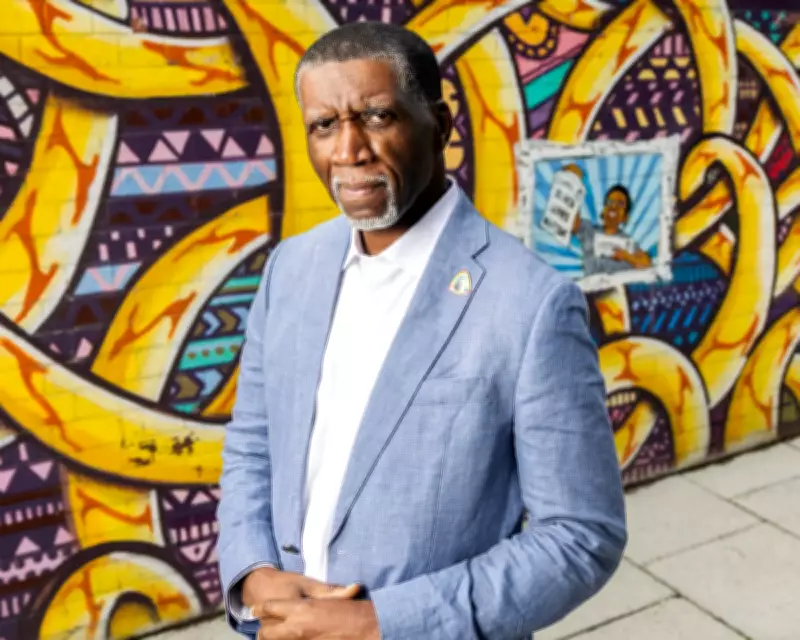
The Windrush commissioner has issued a stark warning about the urgent need for justice, revealing that victims of the scandal are dying without receiving proper redress. Reverend Clive Foster emphasised that immediate action is required to deliver justice for British residents whose lives were devastated after being incorrectly classified as illegal immigrants.
Growing Concerns Over Delayed Justice
Speaking at a people's inquiry symposium in north London for those affected by the Windrush scandal, Reverend Foster stressed that time is running out for many victims. "We are sadly losing many of that generation who suffered and time is not on our side," he stated. "I am a man in a hurry for justice."
The commissioner, whose parents arrived in the UK from Jamaica in 1959, was appointed to oversee the government's response to the scandal. He highlighted that the prolonged duration of the situation itself should serve as motivation for faster progress toward resolution.

Compensation Scheme Challenges
Government schemes established to provide immigration status and compensation to those affected have granted documentation to 17,000 people as of July 2024. However, only 2,600 of 8,800 compensation claims have received payments, revealing significant gaps in the redress process.
Six months into Foster's appointment, the Labour party has adopted many of his recommendations for reforming the Windrush compensation scheme. Despite these efforts, numerous individuals continue to struggle with what many describe as an inefficient, bureaucratic system that often retraumatises victims.
Personal Stories Highlight Systemic Failures
The symposium brought together survivors, campaigners, and advocates determined to establish clearer pathways to justice with victims' voices at the forefront. Among those still affected is Deborah, who has been supporting her brother in Barbados for decades since he became unable to return to the UK after arriving as a Commonwealth citizen in 1966.
"He didn't leave with the intention of not coming back," explained Deborah, who requested her surname be withheld. Her family's compensation claim was rejected due to insufficient evidence, despite recent efforts to gather supporting documents from Barbados.
"There's so much negligence," Deborah asserted. "There's got to be a public inquiry and the voices of the victims heard and listened to and tangible things, not just apologies."
Calls for Legislative Changes
Campaigners at the symposium expressed concerns that a potential Reform government could stall progress toward justice. Garrick Prayogg emphasised that legislative change represents the only lasting solution, calling for modifications to the hostile environment policy that originally led to the scandal.
"If we don't get legislation before the next general election in place, what will happen if Reform come in?" Prayogg questioned, highlighting the precarious nature of current progress.
Demands for Systemic Reform
Patrick Vernon, founder of Windrush Day, pointed to disparities in treatment compared to other national scandals. "Why is it black people are given less money, no legal aid, less support?" he asked, referencing the Post Office and infected blood scandals. "Why are we being treated differently?"
Vernon advocated for multiple changes beyond legislation, including a statutory public inquiry and moving the compensation scheme away from Home Office administration. His criticism extended to service quality comparisons, noting that "you get a better service with Ryanair than the Home Office."
The Windrush scandal first gained public attention through Guardian investigations in 2017, which revealed thousands of legal UK residents had been mistakenly labelled as immigration offenders. The second people's inquiry symposium continues to press the government for a comprehensive statutory public investigation into the systemic failures that caused this ongoing injustice.






