

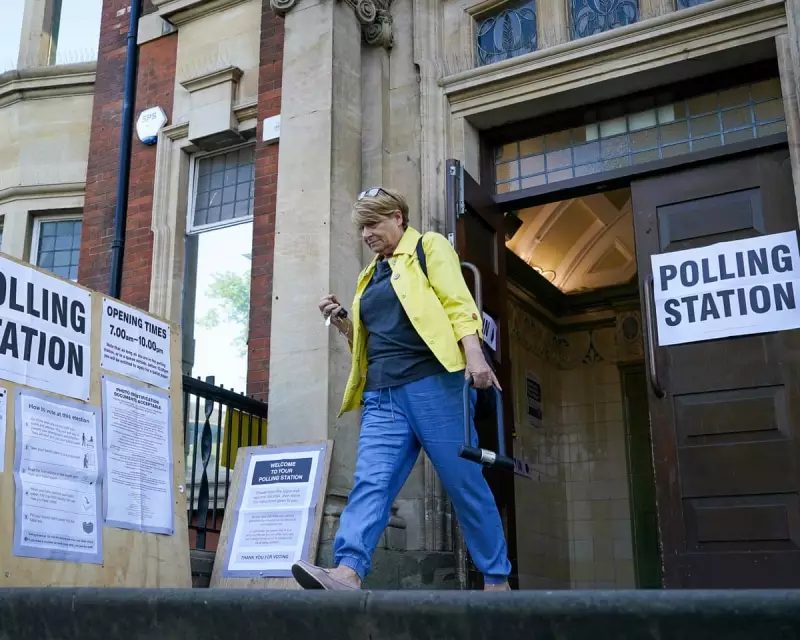
The government is poised to approve requests from at least 22 local authorities in England to postpone elections scheduled for this May, a move that has ignited a fierce political debate and accusations of denying millions their democratic voice.
The 'Zombie Council' Rationale
Before Christmas, ministers wrote to 63 councils undergoing local government reorganisation, offering them the chance to delay their May 2024 votes. The rationale, as explained by Housing, Communities and Local Government Secretary Steve Reed, is to avoid holding expensive and disruptive elections for authorities that will soon be abolished.
In an article for the Times, Reed argued that "running a series of elections for short-lived zombie councils will be costly, time consuming and will take scarce resources away from frontline services like fixing potholes and social care." Councils had until midnight on 15 January to respond to the offer from Local Government Minister Alison McGovern.

A BBC survey indicates that 23 councils have opted to request a delay, while 34 will proceed with elections as planned. The status of the remaining seven is unclear. Journalist Max Kendix, who conducted a similar analysis for the Times, expects the final number of delay requests to reach 27, all of which he believes ministers will approve.
Political Fallout and Accusations
The decision has drawn sharp criticism from opposition parties. The Conservatives have condemned the postponements, with some accusing Labour of being "scared of voters." Notably, two-thirds of Labour councils asked chose to delay, compared to just under a third of Tory councils.
Reform UK, which is performing strongly in recent local by-elections, plans to seek a judicial review to force all May elections to go ahead. The party stands to benefit from a larger electoral contest.
Secretary Reed hit back at the criticism, labelling it hypocritical. He pointed out that the Conservatives themselves delayed elections during reorganisations in North Yorkshire, Somerset, Buckinghamshire, and Northamptonshire. He also noted that Liberal Democrat leader Sir Ed Davey called delays a "breach of human rights" despite his party requesting one in Cheltenham.
"They want pointless elections, Labour wants to fix potholes. Outside of Westminster it’s obvious what’s more important," Reed stated.
The Scale of the Democratic Delay
The impact of the postponements is significant. The councils seeking a delay represent over 5.2 million people and 3.7 million registered voters who will not choose their local councillors this year. Consequently, almost 600 sitting councillors, including nearly 200 from Labour, will not have to defend their seats in May.
The controversy has also prompted the Daily Telegraph to campaign for the repeal of the clause in the Local Government Act 2000 that permits ministers to delay elections via secondary legislation. Previously, such a move required a full Act of Parliament.
As the political argument continues, the government's final decision on the postponements will directly affect democratic accountability in dozens of areas, setting a precedent for how restructuring is managed alongside the electoral calendar.






