

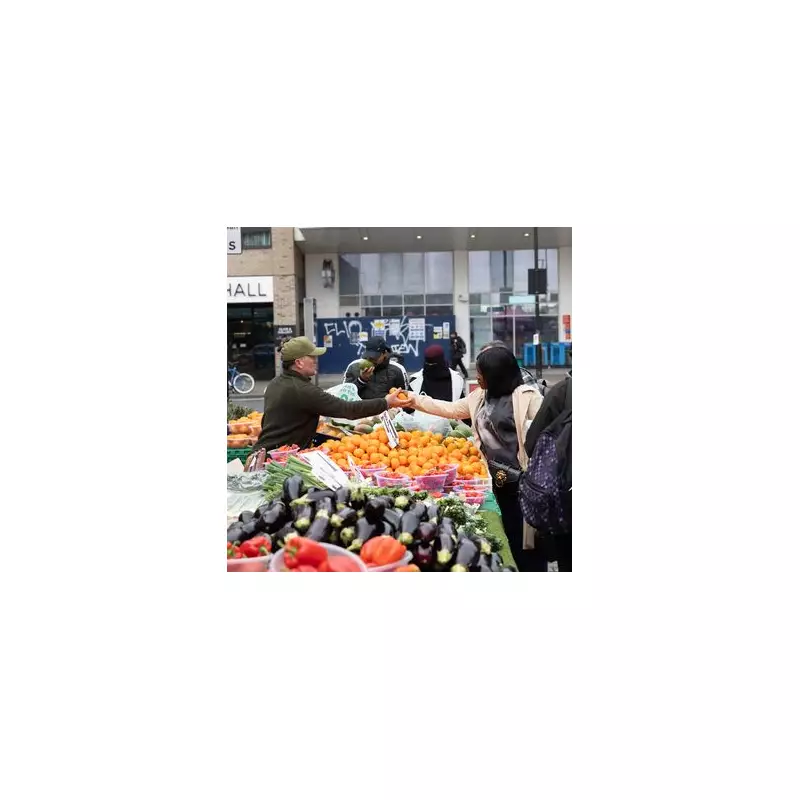
Hackney Council presses ahead with market fee increases despite opposition warnings
Hackney Council has confirmed it will proceed with controversial fee increases for street market traders across the borough, following a formal review triggered by opposition councillors who argued the policy risked "breaking" the historic Ridley Road Market. The decision comes after Green and Independent Socialist groups challenged the legality and evidence behind the fee hikes, warning they could force local businesses to close.
Substantial fee increases for market traders
This year, the local authority officially increased costs for traders operating at key street markets including Chatsworth, Broadway, and Ridley Road. The latter faces particularly steep rises of between 7-20%, with most traders experiencing daily increases of £1-4 per day according to council figures. This marks the first fee adjustment since 2019, with the council citing rising operational costs including waste collection and market management as justification.
Council officials maintain they must implement these increases to ensure market services break even financially, as they are legally prohibited from subsidising operations through council tax or reserves. However, opposition councillors argue the policy lacks clarity and proper evidence, with particular concern for its impact on Ridley Road Market's diverse community.

Ridley Road Market described as "community anchor" under threat
Green Councillor Zoë Garbett described Ridley Road as a "community and commercial anchor" that provides affordable fresh food to economically disadvantaged residents. She warned the fee increases would disproportionately affect the market's Black and Global Majority traders and customers, many of whom are migrants or from low-income backgrounds.
Independent Socialist Councillor Claudia Turbet-Delof echoed these concerns, suggesting the fee hikes could represent the "final push that forces them out" for struggling traders. Both councillors called for policy adjustments that would account for the market's unique socioeconomic role in the community.
Council defends policy amid trader concerns
Despite opposition criticism, Hackney Council maintains its position. Cabinet Member for Community Safety and Regulatory Services, Susan Fajana-Thomas (Labour), defended the policy while addressing concerns about its impact on Black entrepreneurs specifically. "I'm from that community and sometimes it is actually patronising. Black people are entrepreneurs - they go into the market like any other people," she stated during discussions.
Head of Hackney Markets Daniel O'Sullivan provided context for the increases, noting a £400,000 rise in waste collection costs across the borough's markets. He argued Hackney offers more comprehensive support services than other London boroughs, including stall setup and takedown, waste management, business support, and social media promotion.
Traders express fears for business viability
Local Democracy Reporting Service interviews with Ridley Road traders in October 2025 revealed significant anxiety about the fee increases. Clothes merchant Mohammed Shafique urged the council to reduce staffing costs instead of raising trader fees, while fruit and vegetable seller Scott Lomax - facing the steepest waste collection charge increases - expressed frustration with council communication. "I just don't understand how the projections could be cut like that. We can't get a straight answer out of the council," he reported.
The council conducted two consultations with traders about the fee increases, pausing the initial process after warnings that proposed rates would make businesses unaffordable. Revised plans subsequently reduced the total amount traders would pay for waste collection by approximately £500,000.
Market performance and payment challenges
Opposition councillors criticised the council for not including footfall data in its policy documentation, with traders reporting visitor numbers had halved over the past five years. They attributed this decline partly to the closure of nearby Colvestone Primary School and the implementation of low-traffic neighbourhoods.

However, O'Sullivan countered that "that one particular street" attracted over 4 million visitors in 2024/25, presenting significant opportunities for market stalls. He also noted that approximately half of Ridley Road traders still refuse to use digital payment devices despite council encouragement, while UK-wide figures show only 9% of transactions were made with cash in 2024.
Council scrutiny panel upholds fee increases
Following Monday's scrutiny meeting, the council panel - comprising four Labour members and one Green councillor - ultimately ruled that the policy had been correctly formulated and implemented. The decision means fee increases will proceed as planned, despite continued opposition concerns about their potential impact on one of East London's most historic markets.
Ridley Road Market has operated in Dalston since the late 1880s, serving generations of Londoners with affordable produce and goods while maintaining its cultural significance as a community hub.





