Government Announces Postponement of Local Elections Across England
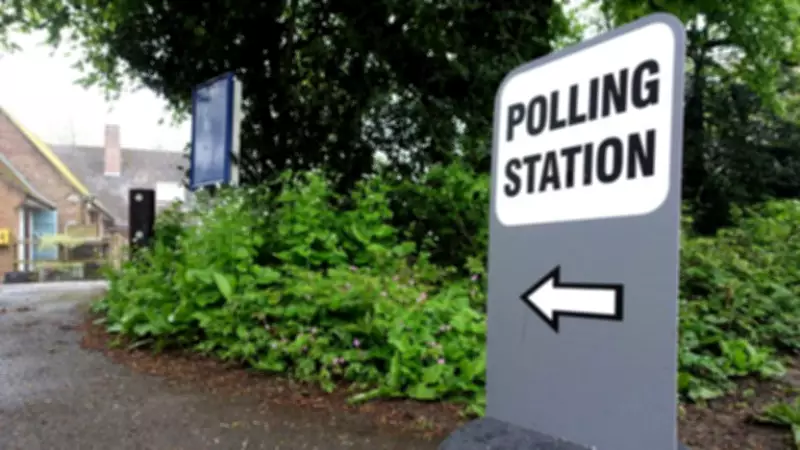
The government has confirmed plans to postpone local elections for 29 councils in England that were scheduled to take place in May. Local Government Secretary Steve Reed made the announcement, revealing that of the 136 councils originally due for elections on 7 May, nearly a fifth will see their votes delayed. This decision is intended to allow councils additional time to concentrate on a significant programme of council mergers and reorganisation efforts across the country.
Details of the Postponement and Affected Areas
Among the 29 postponements, five councils—East Sussex, West Sussex, Norfolk, Suffolk, and Thurrock—were initially meant to hold elections last year, which were already postponed to this year. Consequently, these areas will experience election delays for two consecutive years, resulting in councillors serving terms of almost seven years, far exceeding the standard four-year terms. These councils collectively represent regions with populations exceeding three million people.
Mr Reed indicated that he is still reviewing one additional case, potentially increasing the total number of postponements to 30. The government has stated that it will present an order in parliament to officially postpone the elections as soon as possible, a necessary step to formalise the delay.

Legal Challenges and Political Reactions
Reform UK has launched a legal challenge in an attempt to prevent the postponement of these elections. The party argues that it would have secured victories in many of the elections that are now being cancelled. The High Court is set to hear the case on 19 and 20 February, following a court order that required the government to provide Reform with its reasons for the delay by 4pm on 29 January.
A spokesperson for Reform UK expressed determination to win the case, accusing the Labour government of attempting to undermine democracy. In response, a government spokesperson explained that the postponement addresses exceptional circumstances where councils are struggling to prepare for resource-intensive elections for authorities that will soon be abolished, while simultaneously reorganising into more efficient structures to better serve local residents.
Reasons Behind the Election Delays
The primary reason for postponing the elections is to enable councils to focus on local government reorganisation, a major initiative aimed at streamlining council structures across England. Ministers have also delayed elections for four new mayoral positions in Norfolk and Suffolk, Hampshire and the Solent, Sussex and Brighton, and Essex. The government contends that holding elections for councils slated for abolition would be a wasteful expenditure of time and resources.
In December, Mr Reed's team contacted the 63 councils affected by the reorganisation that were due for elections in May, offering postponements if they could demonstrate that it would aid the reorganisation process. Not all of these councils requested a delay. The government plans to hold elections for the new authorities in 2027, though these councils will not be fully operational until April 2028, leading to an additional eleven-month transition period for councillors.
Historical Context and Local Government Reorganisation
This is not the first instance of election delays to facilitate council mergers; similar actions were taken in North Yorkshire and Somerset in 2021. The current reorganisation stems from an announcement in December 2024 by then Local Government Secretary Angela Rayner, marking the most substantial overhaul of English councils since the 1960s.
Local government in England currently operates under a varied system, with some areas managed by single unitary authorities and others divided into two tiers, such as county or city councils and district councils. The government argues that this patchwork leads to confusion and inefficiency, wasting tens of millions of pounds in taxpayer money on duplicate administrative roles.

The reorganisation aims to establish one overarching council for each area, often involving the merger of neighbouring councils. For example, 12 existing councils in Surrey are being consolidated into two new entities—West Surrey and East Surrey—which will be the first of the new councils to hold elections this May, ahead of their official establishment in April 2027.