In the world of professional darts, a nickname is far more than a bit of fun. It can become a player's identity, a brand, and even a source of psychological power. The journey to finding the perfect moniker can be as competitive as the sport itself, as proven by a pivotal match in September 2017 at the Robin Park Leisure Centre in Wigan.
The Nickname Showdown: 'Cool Hand' vs 'Cool Man'
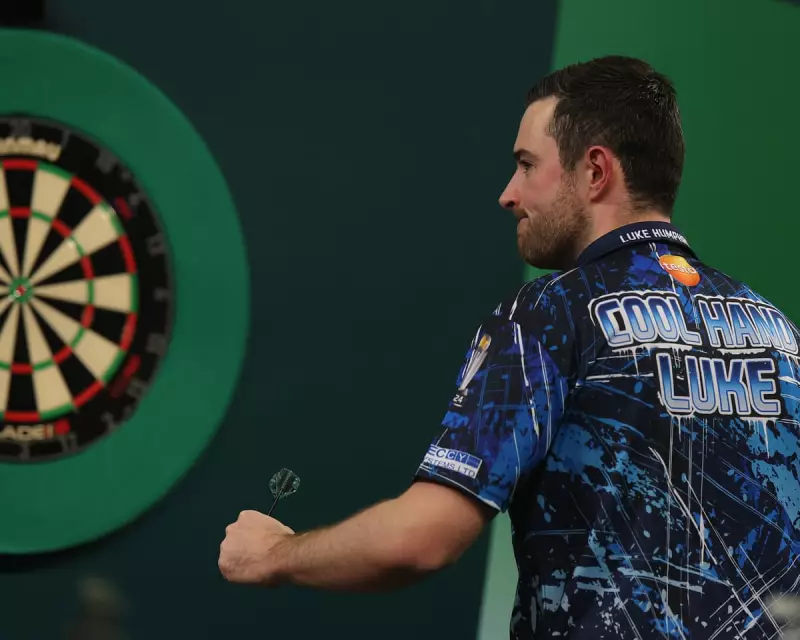
That day, two friends and aspiring professionals, Luke Humphries and Martin Lukeman, faced off in a Challenge Tour quarter-final. Both had chosen similar nicknames inspired by the idea of coolness. Humphries had styled himself 'Cool Hand', a nod to a Paul Newman film he had never seen. Lukeman had opted for 'Cool Man'. They made a pact: the winner of their best-of-nine match would keep the 'cool' nickname, while the loser would have to find a new one.
Humphries emerged victorious, securing the 'Cool Hand' alias that has since become synonymous with his unflappable, consistent style on the oche. Lukeman, now known as 'Smash', has enjoyed a fine career but has occasionally struggled with the very composure his former desired nickname embodied. This friendly wager underscores a deeper truth in darts: a well-chosen nickname can feel like fate, perfectly aligning with a player's public persona and approach to the game.

From 'The Ferret' to 'The Aubergenius': The Origins of Darts Aliases
When players register with the Professional Darts Players Association, they must choose a career nickname. The results range from the straightforward to the brilliantly inventive. Some, like Ross 'Smudger' Smith, are simple. Others have roots in a player's past life, such as Jonny 'The Ferret' Clayton, named for his days as a jackalling rugby scrum-half, or Chris 'Hollywood' Dobey, dubbed by friends for his sharp dress sense.
Puns are popular, like Beau 'Beau and Arrow' Greaves. Players from specific nations often find themselves with thematic tags, like Krzysztof 'The Polish Eagle' Ratajski or China's Xiaochen 'The Panda Man' Zong. The process has become more professionalised, with the PDC's publicity department collaborating with new players and their agents to brainstorm marketable identities and walk-on songs.
Broadcasters have also played a key role. A Sky Sports production manager, Peter Judge, coined Phil Taylor's legendary 'The Power' nickname after hearing the Snap! song. Commentator Dan Dawson created Dirk van Duijvenbode's 'the Aubergenius' due to his previous work on an aubergine farm.
Nicknames Too Hot for TV
Not every nickname makes the cut for a global family audience. The PDC has intervened to veto monikers deemed inappropriate. Australian player Tim Pusey was told he could no longer use 'The Magnet', while Devon's Owen Bates had his attempt to call himself 'The Master' swiftly rejected by authorities.
More Than a Name: The Nickname as a Commercial Brand
For legends like Eric 'The Crafty Cockney' Bristow or Ted 'The Count' Hankey, their nickname was an entire personality—a tool for intimidation and showmanship. In the modern era, for stars like Stephen 'The Bullet' Bunting and Luke 'The Nuke' Littler, it is a crucial commercial asset.
These aliases are emblazoned on replica shirts, children's lunchboxes, and pet bandanas, forming the core of a player's personal brand. Darts, a sport built on charismatic self-projection, understood the power of personal branding long before it became commonplace across all professional sports. A nickname, therefore, is not just a label but a legacy, a marketing strategy, and for the lucky few like 'Cool Hand' Luke Humphries, a self-fulfilling prophecy.