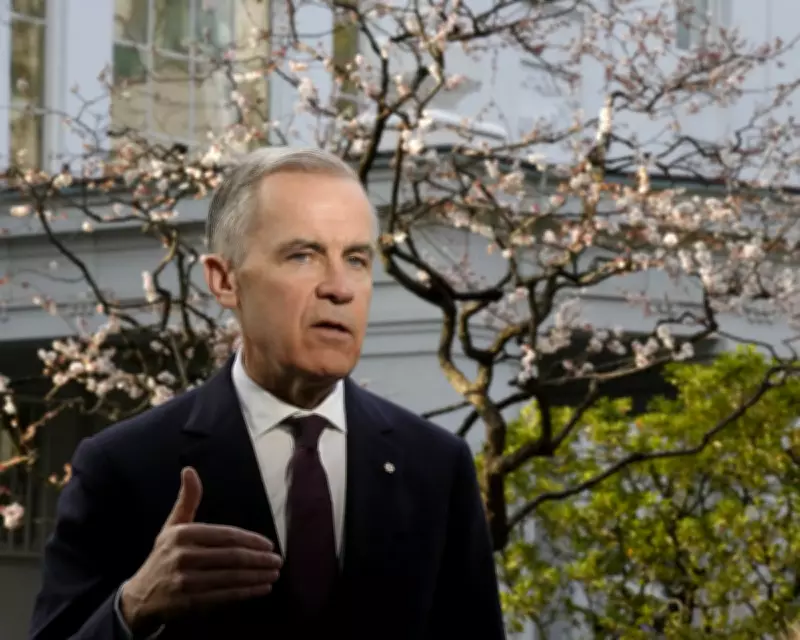
Canadian Prime Minister Mark Carney has made a significant intervention in royal affairs, declaring that Andrew Mountbatten-Windsor should be formally removed from the British royal line of succession. Carney described the alleged actions of the former prince as "deplorable" and stated they "necessitate" his exclusion from succession protocols.
International Pressure Mounts on Royal Family
Speaking to reporters in Tokyo during the final day of his three-country tour, Carney emphasized that despite Mountbatten-Windsor being "well down" the line of succession, the "point of principle stands" regarding his removal. This marks a notable escalation in international pressure on the British monarchy, coming from a Commonwealth nation where King Charles III serves as head of state.
Legal and Constitutional Implications
The process to remove Andrew Mountbatten-Windsor from the line of succession would require substantial coordination. An act of the UK parliament would need approval, along with support from all fourteen Commonwealth countries where Charles serves as monarch, including Australia and New Zealand. This constitutional mechanism has rarely been tested in modern history.

Mountbatten-Windsor, who was arrested on February 19th on suspicion of misconduct in public office, currently occupies the eighth position in the line of succession. This follows Princes William and Harry and their children. Despite relinquishing his royal titles in October following revelations about his connections to the late financier and convicted sex offender Jeffrey Epstein, he technically remains a counsellor of state.
Commonwealth Nations Align Positions
Carney's statement aligns with positions already taken by other Commonwealth governments. In February, both Australian Prime Minister Anthony Albanese and New Zealand authorities confirmed they would support any proposal to remove Mountbatten-Windsor from the succession line following his arrest.
Albanese wrote to British Prime Minister Keir Starmer stating, "In light of recent events concerning Andrew Mountbatten-Windsor, I am writing to confirm that my government would agree to any proposal to remove him from the line of royal succession." The Australian leader emphasized that "these are grave allegations and Australians take them seriously."
Background of the Controversy
The allegations against Mountbatten-Windsor originate from documents released by the US justice department concerning Epstein's network. Released emails appeared to show the former prince sharing reports of official visits to Hong Kong, Vietnam, and Singapore. Mountbatten-Windsor has consistently denied any wrongdoing and has not been charged with any criminal offense to date.
Buckingham Palace has indicated it would not obstruct plans to remove Mountbatten-Windsor from the succession line. Following his brother's arrest, King Charles stated that "the law must take its course," reflecting the monarchy's delicate position amid the scandal.
Historical Precedent and Modern Context
Mountbatten-Windsor's arrest represents what is believed to be the first instance in modern history where a member of the royal family has been detained by police. This unprecedented situation has created constitutional questions about the intersection of royal privilege and legal accountability.
As counsellor of state, Mountbatten-Windsor technically remains among the group of adult royals who could theoretically be called upon to fill in for King Charles during illness or absence abroad. However, in practice, only working royals typically fulfill such roles, making his current position largely symbolic yet constitutionally significant.
The growing international consensus for his removal from succession reflects broader concerns about the monarchy's reputation and the need for accountability, even among distant members of the royal family. Carney, a former governor of the Bank of England, emphasized there exists a proper process for removal that should be followed, highlighting the procedural aspects of this unprecedented situation.