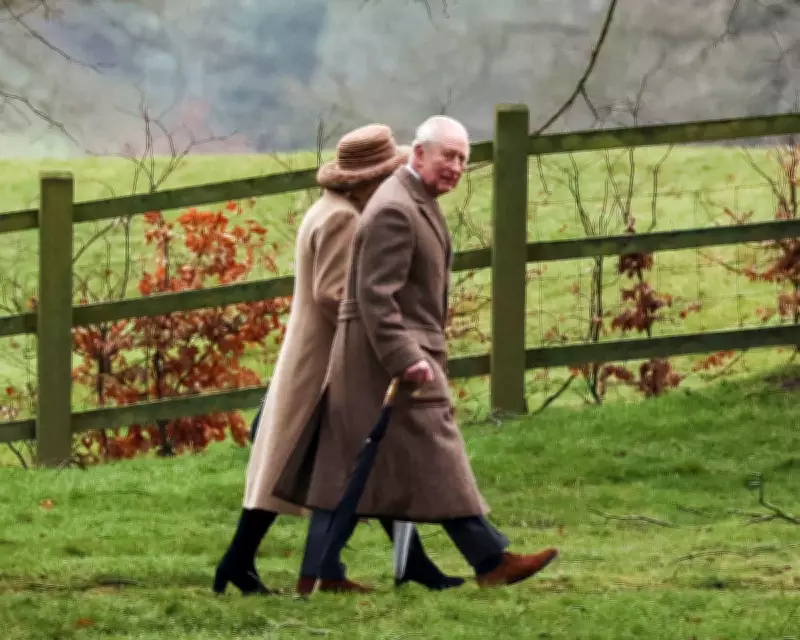
Royal Institution Rocked by Scandals and Internal Strife
The British monarchy finds itself embroiled in one of its most profound crises in modern history, as the lingering shadow of the Jeffrey Epstein scandal combines with deep-seated family divisions and leadership challenges. This perfect storm of difficulties has prompted serious questions about the institution's ability to navigate contemporary society's expectations while maintaining public confidence.
The Epstein Legacy Continues to Haunt the Palace
More than six years after Jeffrey Epstein's death, his association with Prince Andrew continues to cast a long shadow over the royal family. While there is no evidence connecting King Charles III or his heir to the disgraced financier, the scandal's persistent stain demonstrates how external controversies can fundamentally damage centuries-old institutions. The transactional nature of modern royal relationships has created vulnerabilities that earlier monarchs, who controlled both wealth and power distribution, did not face in the same manner.
Epstein's apparent fascination with aristocratic access and status created dangerous entanglements, while Prince Andrew and his former wife Sarah's financial circumstances made them susceptible to such connections. This dynamic reveals uncomfortable truths about how even immensely wealthy royals can be drawn toward even greater fortunes and the luxurious lifestyles they enable.

A Family Divided and Diminished
The institution faces multiple internal challenges simultaneously. King Charles, now in his late seventies, confronts health issues that may shorten his reign during what should be its defining period. Meanwhile, the once-promising relationship between Prince William and Prince Harry has deteriorated to non-communication, with little hope for reconciliation following Harry's public criticisms of his family.
This represents a dramatic reversal from a decade ago, when the brothers represented the monarchy's bright future. Their anticipated assumption of duties from older relatives now seems a distant memory, leaving a significant gap in the royal working roster. The next generation—George, Charlotte, and Louis—remains at least fifteen years from being able to shoulder meaningful responsibilities, assuming they even wish to pursue royal duties.
Structural Problems and Historical Complacency
Some observers trace current difficulties to the late Queen Elizabeth II's leadership approach, which maintained comfortable traditions but failed to address growing problems. While her remarkable longevity wasn't inherently problematic, her reluctance to rein in Prince Andrew's behavior despite decades of concerning patterns has contributed significantly to present challenges.
The monarchy now stands at a critical juncture where radical adaptation appears necessary for survival, yet such transformation contradicts its fundamental nature as an institution built on continuity and tradition. The combination of scandal fallout, family fractures, leadership uncertainty, and generational transitions creates unprecedented pressure for an organization already struggling to maintain relevance in modern Britain.
As the royal soap opera enters what may be its most consequential chapter, the institution must confront whether it can evolve sufficiently to meet contemporary expectations while preserving its essential character—a balancing act that grows increasingly difficult with each new revelation and conflict.