The End of an Era: Britain's Political Landscape Transformed
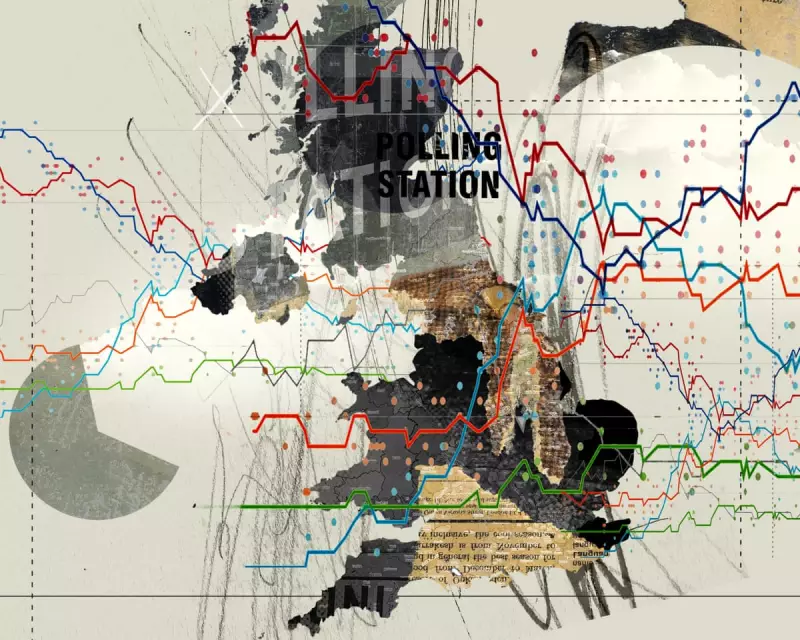
Britain's political establishment is experiencing its most dramatic upheaval in over a century. The traditional dominance of Conservative and Labour parties, which has defined Westminster politics since 1922, is rapidly disintegrating before our eyes. Where these two giants collectively secured 76% of the vote in the 2019 general election, they now struggle to reach 40% combined support in current opinion polls.
The seismic shift sees Reform UK surging past both major parties, while the Greens and Liberal Democrats frequently match or even exceed their support levels. This unprecedented four-way battle for political supremacy marks the most volatile political realignment in modern British history.
Electoral Chaos: Predicting the Unpredictable
The electoral consequences of this fragmentation are both explosive and nearly impossible to forecast accurately. According to Electoral Calculus, which translates poll ratings into election predictions, the potential outcomes span dizzying ranges: Reform could secure between 170 and 426 seats, Labour between 33 and 243, Conservatives between 14 and 200, Liberal Democrats between 29 and 93, and Greens between 7 and 70.

These wildly varying projections highlight how Britain's first-past-the-post electoral system, designed for two-party competition, struggles to cope with multiparty democracy. The website also predicts significant uncertainty for smaller parties including the Scottish National Party, Plaid Cymru, and emerging political vehicles like Zarah Sultana and Jeremy Corbyn's projects.
With the government preparing a painful budget this month and Labour's deep unpopularity continuing to drive instability, the question of which party or coalition will form the next government might remain unanswered until the latest possible election date in July 2029, potentially requiring days of tense negotiations afterwards.
Beyond Elections: The Wider Consequences
The fragmentation extends far beyond electoral mathematics into the very fabric of British political life. The concept of safe parliamentary seats could disappear entirely, taking with them long Commons careers that have traditionally provided experienced ministers and veteran rebels.
Traditional swing voters, easily identifiable in two-party contests, may be replaced by multiple fickle electoral groups pursued by half a dozen competing parties. Party heartlands that seemed permanent are crumbling - in Hackney, which has been Labour-controlled for 57 of its 60-year history, the Greens are increasingly expected to capture the mayoralty in next May's elections.
As parties lose dependable long-term support, their financial foundations weaken. Donations may dwindle, national structures become unaffordable, and mass memberships with networks of loyal activists could become historical relics. This creates a vicious cycle: when parties no longer appear as solid institutions with clear prospects, why should voters, donors, volunteers or politicians make lasting commitments to them?
A New Political Reality: Risks and Opportunities
Irish political scientist Peter Mair presciently observed in his 2013 book Ruling The Void that "the age of party democracy has passed." He argued that parties had become so disconnected from society and engaged in such meaningless competition that they could no longer sustain democracy in its present form.
Yet this fragmentation isn't necessarily entirely negative. A more unstable politics could become more responsive to voters and offer genuine choice. Britain's political spectrum is already widening to include everything from Nigel Farage's reactionary national rescue plan to Zack Polanski's radical green populism.
Politics might also become less complacent, corrupt and susceptible to lobbying. Ministers and MPs with shorter careers would be less attractive targets for bribery and manipulation, potentially fostering greater humility among politicians.

If the next general election produces results even more disconnected from the popular vote than previous contests, the case for proportional representation may finally become irresistible. Even without formal electoral reform, Britain could develop a culture of coalition government similar to much of Europe, ending the era where Labour and Conservatives could reliably secure Commons majorities.
The Darker Possibilities
However, significant risks accompany this political transformation. A less entrenched political class could enable other powerful, unelected interests - particularly big corporations and Whitehall mandarins - to gain greater influence over policy.
There's also danger that faster-changing, multiparty politics will accelerate current disillusionment cycles. Voters might rapidly work through an ever-lengthening menu of political choices without ever feeling satisfied, leading to deeper political alienation.
History suggests another possibility: that current fragmentation proves temporary, serving as both prelude and rationale for a new political order. In 1974, Britain experienced similar political and economic fragility with two general elections where both major parties won lower vote shares than for decades. Yet this pluralist moment quickly gave way to Margaret Thatcher's narrower politics. Somewhere on today's crowded electoral battlefield, Britain's next political overlord may be waiting for their moment.
What remains certain is that British politics as we've known it for generations is undergoing fundamental transformation. The comfortable assumptions about safe seats, party loyalties and predictable outcomes belong to a disappearing world. Whether this new era brings renewal or greater instability remains the central question facing British democracy.