The Resilience of Europe's Populist Right
While American Democrats enjoy recent electoral successes, a cautionary tale unfolds across Central Europe where defeated populist leaders are staging remarkable political comebacks. The pattern emerging from the Czech Republic, Slovakia and Poland suggests that even significant electoral victories may not permanently dismantle populist movements.
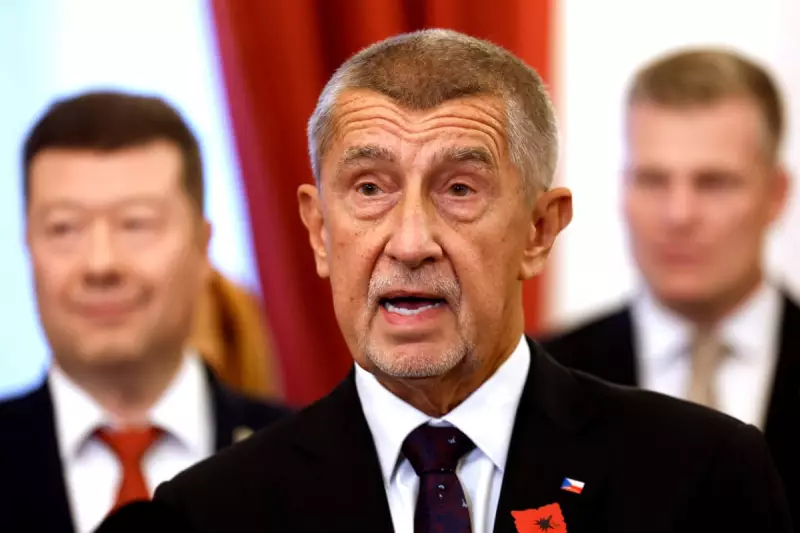
Andrej Babiš, the wealthy Czech oligarch, stands on the brink of returning to government just four years after his electoral defeat. His ANO party emerged as the largest bloc in last month's parliamentary election and now plans to form a coalition with a far-right anti-immigration party and a previously fringe anti-environmental group.
Parallel Political Resurgences
The Czech political landscape mirrors developments in neighbouring Slovakia, where Robert Fico has returned as prime minister. Fico, who spoke at this year's CPAC gathering in Maryland, has dramatically shifted his country's foreign policy by abandoning support for Ukraine in favour of closer ties with Vladimir Putin's Russia. His comeback in 2023 came five years after mass street protests forced his resignation following the murder of an investigative journalist.

In Poland, the right-wing Law and Justice party (PiS) has demonstrated similar resilience. Their candidate, Karol Nawrocki, narrowly won last June's presidential election against Warsaw's liberal mayor Rafał Trzaskowski. This victory occurred less than two years after PiS lost parliamentary power to a coalition led by the Civic Platform.
Albin Sybera, a Czech commentator, observes that while local conditions vary, all three cases demonstrate "the resilience of populism" driven by similar factors. "The resilience feeds on similar ingredients and polarization is one common theme," he noted.
Lessons for American Politics
Steven Levitsky, a Harvard University politics professor and co-author of How Democracies Die, identifies a crucial advantage for populist movements: "If you look at all the major political forces in western democracies, the only one with any real ideology, any real passion, any real project, is the far right."
The political landscape in most Western democracies has fundamentally shifted from traditional left-right divisions to a new cleavage between urban cosmopolitan secularism and rural traditional nationalism. This realignment provides fertile ground for populist movements to thrive even after electoral setbacks.
Eric Rubin, a former US ambassador, offers a sobering perspective: "One of the things I've learned from 40 years as an American diplomat is that some of the basic assumptions we grew up with are not necessarily true." He suggests that when faced with choices between freedom and economic security, many populations may prioritise stability over democratic ideals.
The experiences of Central Europe serve as a stark reminder that political victories can be temporary, and the underlying conditions that fuel populism - economic discontent, cultural polarization and institutional distrust - require more than electoral solutions to address permanently.