

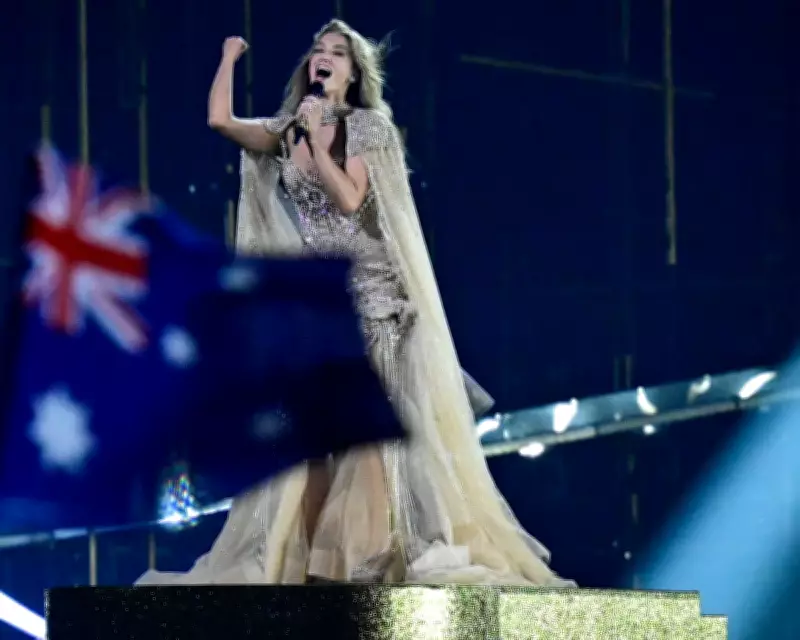
Delta Goodrem performed her song Eclipse in the semi-final of Eurovision 2026, representing Australia, which has been a participant in the contest since 2015. Following her performance, Australia's odds surged from fourth to second place, surpassing Greece and Denmark, and trailing only behind Finland, the current favorite.
Why Is Australia Included in Eurovision?
Australia's inclusion in Eurovision stems from its long-standing viewership and multicultural appeal. The European Broadcasting Union (EBU) allowed Australia to join in 2015 due to strong local ratings on SBS, which has aired Eurovision since 1983. Jess Carniel, an associate professor at the University of Southern Queensland and author of a book on Eurovision in multicultural Australia, notes that the viewership is driven by migrants from various backgrounds, including Asian Australians who appreciate the song competition format reminiscent of events in their home countries.
Eurovision Scoring System
The winner is determined by a 50% jury vote and 50% public televote. Each participating country has a jury of seven music industry professionals who evaluate vocal capacity, performance, song composition, and overall impression. The public votes via phone, SMS, or app, and cannot vote for their own country. Non-participating countries' votes are combined as the "rest of the world." Carniel predicts Goodrem will perform well with juries but is uncertain about public support.

Can Australia Win?
According to Spotify analysis, the ideal tempo for a Eurovision winner is 127 BPM, while Goodrem's Eclipse is 134 BPM. Carniel warns that overly formulaic entries may fail to connect with audiences. She cites Romania's unconventional entry as an example of a song that cannot be manufactured.
What If Australia Wins?
If Australia wins, it cannot host the event due to EBU rules. As an associate member, Australia must co-host with a full EBU member in Europe, likely the runner-up. The time difference also poses challenges, as Australian broadcasts occur at 5 am local time.
Will Juries Vote Against Australia?
Historical precedent suggests no. In 2016, Dami Im received the most jury votes but lost on public vote. Carniel believes the EBU is vigilant against bias, and juries are likely to reward quality performances regardless of geography.
Eurovision Asia and Australia's Future
With Eurovision Asia launching in Thailand, Australia must choose between the two contests. Carniel sees diplomatic benefits in both, but leaving the original Eurovision would be bittersweet.
Delta's Performance and Strategy
Goodrem's elaborate staging, including a levitating piano, reflects a deliberate strategy after Australia failed to qualify for the final in the previous two years. The federal government contributed funding, and Prime Minister Anthony Albanese expressed support. Carniel views this as a necessary show of force to affirm Australia's place in the contest.
The Eurovision grand final airs on SBS from 5 am AEST on Sunday, May 17.






