

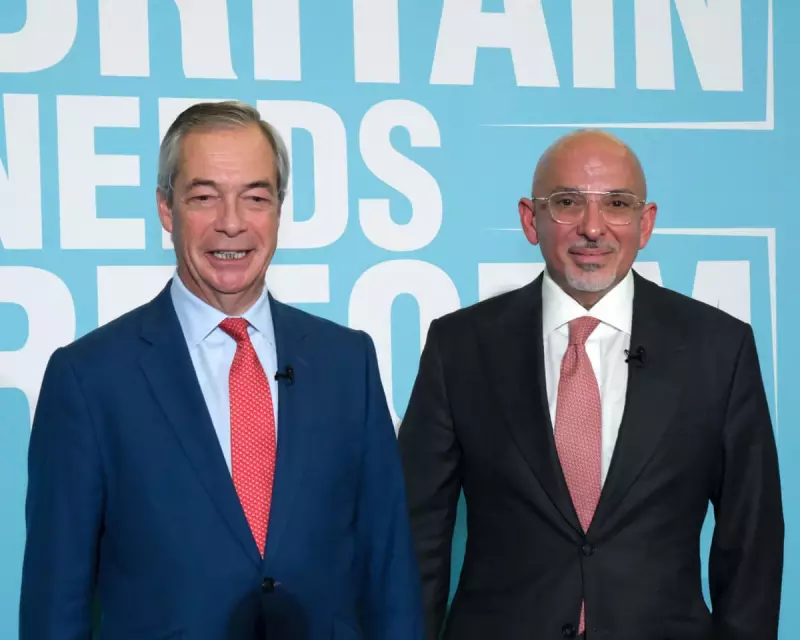
The political landscape was rocked this week as Nigel Farage unveiled former Conservative chancellor Nadhim Zahawi as Reform UK's newest high-profile recruit. However, the announcement was swiftly overshadowed by the resurfacing of a years-long, very public feud between the two men, revealing a history of bitter insults and deep-seated enmity.
A History of Hostile Exchanges
The acrimony dates back nearly a decade. In 2015, when Farage was leader of UKIP, Zahawi launched a fierce attack on him via social media and articles. In a tweet that remained live until the day of his defection announcement, Zahawi stated: "I'm not British Born Mr @Nigel_Farage I am as British as u r. Yr comments r offensive&racist. I wld be frightened 2live in country run by U."
This was in response to a broadcast interview where Farage said he would scrap laws banning racial discrimination in employment, a position he later claimed was misrepresented. Zahawi elaborated in a March 2015 article for Conservative Home, writing: "What's frightening is that in Farage's Britain people like me could be lawfully discriminated against." He also dismissed Farage's policy approach, saying it relied on "angry slogans" rather than serious thought.

During the 2015 general election, Zahawi took another swipe, tagging Farage and UKIP to declare he would "die a Conservative." He also labelled Farage as part of the political establishment.
Farage's Retorts and Zahawi's Downfall
Nigel Farage did not remain silent. His criticism of Zahawi focused on the former chancellor's character and political manoeuvring. In July 2022, after Boris Johnson appointed Zahawi as chancellor, Farage told GB News: "I thought Zahawi had principles, but tonight we learned all he's interested in is climbing that greasy pole."
Farage's most pointed remarks came in 2023 following Zahawi's sacking as Tory party chair. An ethics inquiry found Zahawi had failed to disclose an HMRC investigation into his taxes. In an online video, Farage stated: "It's been obvious for a week that Zahawi would be fired... if you're chancellor of the exchequer and you have to pay money to the taxpayer, it's not a good look."
Opportunism or Genuine Conversion?
The revelation of these past clashes has led to intense scrutiny of Zahawi's motives for joining Reform UK. Political commentators have been quick to label the move as naked opportunism, suggesting Zahawi's defection came after he failed to secure a peerage from the Conservative leadership.
The situation presents an immediate challenge for Reform UK. The party must now manage the narrative around a significant recruitment that is simultaneously undermined by a well-documented history of mutual contempt between the new recruit and its leader. It raises awkward questions about political consistency and the realities of building a coalition in modern British politics.
For Zahawi, the deleted 2015 tweet and archived articles serve as a permanent record of his past convictions, making his integration into a party led by the man he once feared would run Britain a deeply ironic political chapter.






