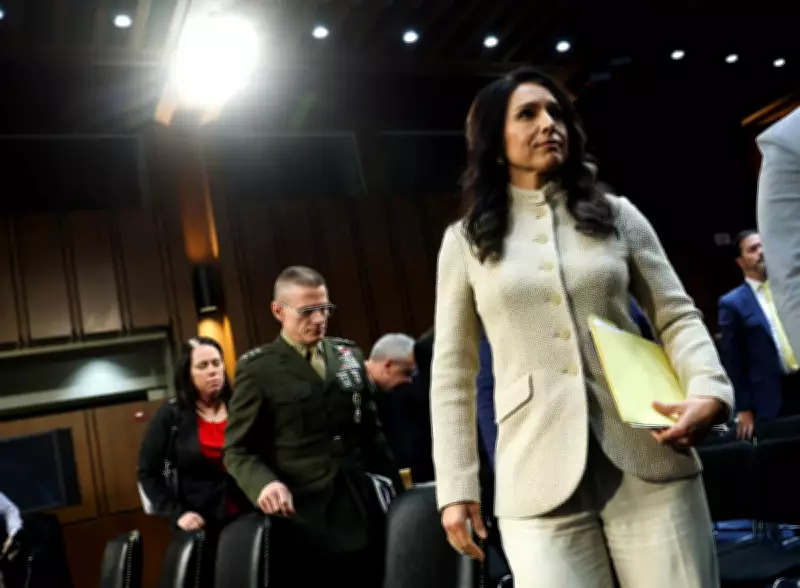
Tulsi Gabbard's tumultuous 15-month tenure as the nation's top intelligence official ended Friday when she submitted her resignation as director of national intelligence. The former Democrat, who lacked an intelligence background, took unusual measures to ingratiate herself to President Donald Trump, including vowing to root out politicization across US spy agencies and embracing his agenda of election denial.
Unconventional Appointment and Early Actions
Gabbard was an unconventional choice for the role. Her foreign policy views at times diverged with Trump, particularly on overseas military intervention. Yet she quickly moved to align herself with the president. In her January 2025 confirmation hearing, Republican Senator Tom Cotton told the former Hawaii representative that "the measure of your success will largely depend on whether you can return the ODNI to its original size, scope, and mission." The interagency coordination office had become bloated over its 20-year mandate, and the Heritage Foundation's Project 2025 pushed for its reform.
Gabbard told lawmakers she would "address efficiencies, redundancies and effectiveness" across the sprawling 2,000-person agency. She claims to have reduced her staff by 30% since assuming office, with at least 100 employees accepting early retirement programs offered at both the CIA and the ODNI in 2025.

Controversial Initiatives and Loyalty Demands
Gabbard introduced a taskforce to cut costs and investigate "weaponization" across the intelligence community. The Director's Initiatives Group (DIG) examined Trump's priority topics, including the origins of Covid-19, allegations of Russian interference in the 2016 elections, and anomalous health incidents like Havana syndrome. The DIG was dismantled in December following an interagency controversy and given a final termination date in June. It remains unclear whether the group achieved its goals.
Like Trump, Gabbard demanded loyalty within her office. Chief among her confidants was Alexa Henning, her acting chief of staff. Henning, a political appointee from Arkansas Governor Sarah Huckabee Sanders' office, referred to herself in a social media post as "one of the governor's henchmen." She aggressively defended Gabbard during the confirmation process, swatting off questions about Gabbard's ties to the Science of Identity Foundation and dismissing claims that Gabbard held sympathy for dictators like Vladimir Putin or former Syrian leader Bashar al-Assad.
Once in office, Henning adopted an aggressive stance toward media and other intelligence leaders, repeatedly deriding Senate Intelligence Committee Vice-Chair Mark Warner on X and calling out Republicans who didn't support Gabbard's bid. "She's treating a serious, policy-based job like she's working on a campaign," a seasoned congressional aide told the Guardian earlier this year. "It's unprecedented. This is historically not a partisan job." An ODNI spokesperson called Henning a "highly talented leader" and disputed claims of a partisan approach.
Growing Sidelining by Trump
Over time, Gabbard became increasingly sidelined by the president, who excluded her from key national security conversations on Iran and Venezuela, according to people familiar with the office. "She had been playing on the outskirts of the inner circle for a while," said Emily Harding, director of the Intelligence, National Security, and Technology program at CSIS. A spokesperson for Gabbard's office said these claims, as well as rumors that she had been forcibly ousted, were "100% false."
Trump first dismissed Gabbard's input in June 2025, amid a joint US-Israel mission to bomb Iran's nuclear facilities and assassinate nuclear scientists. When asked about Gabbard's previous Senate testimony that Iran was not building a nuclear weapon, Trump told reporters on Air Force One: "I don't care what she said. I think they were very close to having one." Shortly after, Gabbard did an about-face and said Iran could produce a nuclear weapon "within weeks," underscoring the tension between her skepticism of foreign intervention and Trump's more aggressive military stance.

In February, Trump defended Gabbard when she faced scrutiny for appearing at an FBI raid on an election polling center in Fulton County, Georgia. The raid seized ballots related to the 2020 election, which Trump has falsely claimed was rigged. Democrats expressed deep concern that Gabbard was present at a domestic law enforcement operation. Warner said, "When the nation's top intelligence official inserts herself into a matter with no connection to a foreign threat, it's hard to escape the conclusion that the objective was political." But Trump praised her, saying, "She took a lot of heat... because she went in and looked at votes that want to be checked out. Why is she doing it? Because she's smart."
Final Strains and Resignation
Weeks later, Gabbard strained her relationship with Trump by failing to condemn the resignation of her former deputy, Joe Kent, who quit over Trump's decision to wage war on Iran. In his resignation letter, Kent wrote: "Iran posed no imminent threat to our nation, and it is clear that we started this war due to pressure from Israel and its powerful American lobby." After that, Trump began questioning Gabbard's leadership and reportedly polled cabinet members on whether to fire her in March.
CIA Director John Ratcliffe allegedly eclipsed Gabbard as Trump's preferred national security adviser. "This White House has been selective in who they've looked to to participate in certain issues," said a former senior intelligence official. "They already made their call and were including Ratcliffe in everything."
Gabbard said Friday she was resigning because her husband had been diagnosed with a rare form of bone cancer. She will lead the ODNI until June 30. The White House named Aaron Lukas to succeed her as acting director. Trump said in a statement that Gabbard "has done an incredible job, and we will miss her."