

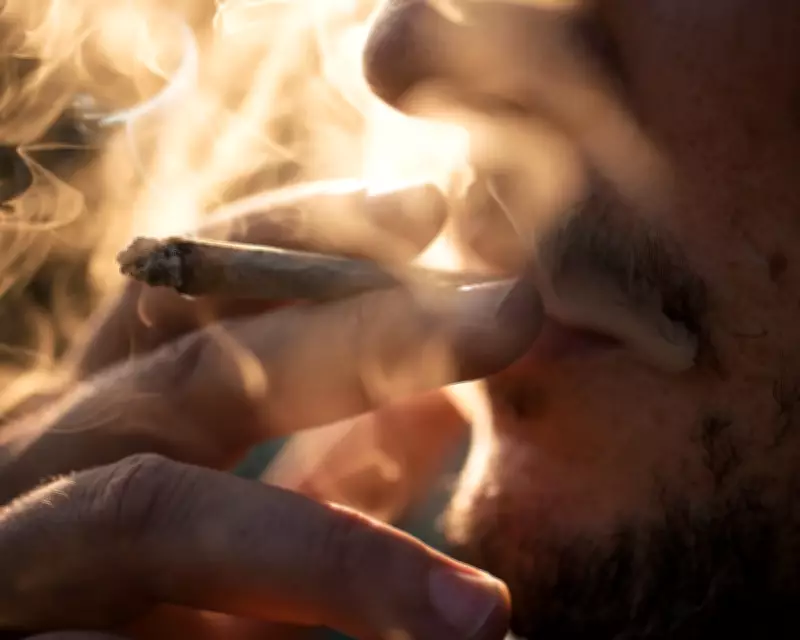
German Cannabis Legalization: Two Years Later, Debate Still Smolders
Two years after Germany implemented landmark legislation legalizing recreational cannabis for adults, the political and social debate continues to burn brightly. The policy, enacted by the previous center-left government in April 2024, remains deeply divisive, with proponents hailing its successes while critics warn of ongoing dangers to public health and safety.
A Policy Born from Controversy
The legislation, which allows adults over 18 to grow up to three plants privately and possess limited quantities, was designed as a pragmatic approach to regulate existing consumption patterns and undermine illegal drug markets. However, it faced fierce opposition from conservative parties who predicted a surge in usage, particularly among teenagers, and a boost to criminal organizations.
Now, preliminary findings from an ongoing government-commissioned study have provided ammunition for both sides of the argument, ensuring the controversy remains far from extinguished.

Conflicting Interpretations of New Data
Center-left Social Democrats (SPD) MPs Carmen Wegge and Christos Pantazis point to positive indicators. "The dramatic negative effects on consumption patterns or public health feared by critics have not materialized," they stated. "In fact, consumption among young people is declining and the burden on police and the judiciary has been significantly reduced."
In stark contrast, Health Minister Nina Warken of the conservative Christian Democratic Union (CDU) labeled the policy "a mistake." "Early intervention programmes designed to prevent children and young people from using drugs are in sharp decline," Warken warned. "Anyone turning a blind eye to this is putting the health of our youngest at risk."
The Black Market and Legal Supply
The research, conducted by experts from three major German universities, offers a nuanced view of the underground trade. Professor Jörg Kinzig, a criminologist at the University of Tübingen, explained: "Based on all our research and surveys, we assume that the black market has declined." The study found that consumption from legal sources is gradually increasing, thereby "slowly squeezing out" illicit suppliers.
However, the legal framework faces significant challenges. Non-commercial cannabis clubs, intended as regulated sources, play a minor role due to complex licensing requirements. Only 3.5% of consumers obtained cannabis from these clubs last year. Kinzig recommended relaxing the restrictive eligibility criteria to enhance their effectiveness.
Conservative critics like Alexander Dobrindt of the Christian Social Union (CSU) remain unconvinced. He called the legislation a "total flop" that is "harmful to young people and encouraging crime," claiming the black market is still booming.
Consumption Patterns and Medical Market Growth
The study estimates total annual cannabis demand in Germany at 670 to 823 tonnes, with approximately 5 million people using it occasionally. Crucially, researchers found no evidence of an overall consumption increase attributable to the legalization reform. Youth consumption has actually fallen steadily since 2019.
Simultaneously, Germany has developed Europe's largest legal commercial market for medical marijuana, with imports skyrocketing nearly 200% to 200 tonnes last year. Much of this medical cannabis contains high concentrations of THC, creating what some see as a loophole for recreational use that the government is now addressing.
Law Enforcement Impacts and Future Decisions
The policy has reshaped law enforcement dynamics. Police report difficulties prosecuting illegal trade amid complex regulations, while judges' associations welcome reduced caseloads. Early intervention programs for youth have declined, possibly because fewer violations now lead to criminal charges.
With the final report due in April 2028, the government will eventually decide whether to maintain or abolish the legislation. For now, Germany's cannabis experiment continues to generate more questions than definitive answers, leaving the nation in a haze of political disagreement and evolving social norms.






