

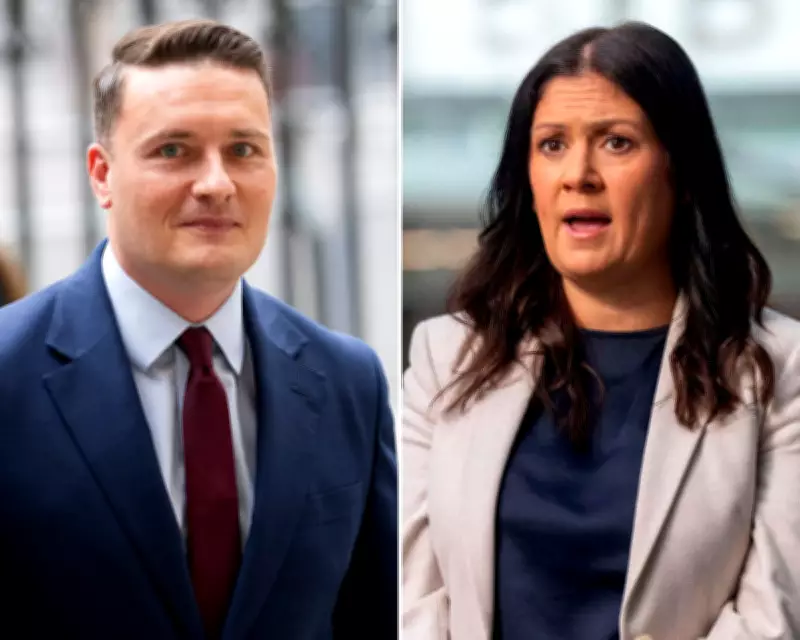
A significant internal dispute has erupted within the Labour Party regarding the United Kingdom's potential re-entry into the European Union, following comments made by former health secretary Wes Streeting. Streeting, who resigned from his position last week in protest against Keir Starmer's leadership, argued on Saturday that Britain's future ultimately lies in rejoining the EU. This stance has drawn sharp criticism from Culture Secretary Lisa Nandy, who described his remarks as 'odd,' triggering a war of words between the two senior Labour figures.
Streeting's Position on EU Membership
Streeting, a prominent Labour figure, stated that by 2026, the British public would increasingly recognize the need to collaborate with European allies to rebuild the economy, enhance trade, and strengthen defense against shared threats such as Russian aggression and an 'America First' policy. He emphasized that the largest economic opportunity for the UK lies within Europe, advocating for a new special relationship with the EU and eventual full membership. Additionally, Streeting confirmed his intention to stand in any future leadership contest, particularly if Greater Manchester Mayor Andy Burnham wins the upcoming byelection in Makerfield and challenges Prime Minister Keir Starmer.
Nandy's Response and Criticism
Lisa Nandy responded to Streeting's comments on Sunday, expressing confusion over the sudden focus on Europe. While she acknowledged that she also campaigned for Remain and considers Brexit a mistake, she criticized Streeting for reopening what she described as 'circular arguments' that have previously divided the country. Nandy argued that the government is already working pragmatically to repair the damage caused by the Brexit deal without revisiting the divisive debate on EU membership. Her remarks were seen as a rebuke to Streeting's more ambitious stance.

Allies Defend Streeting
In response to Nandy's criticism, allies of Streeting rallied to defend him, arguing that the government's reluctance to discuss EU membership reflects a broader unwillingness to take political risks. They contended that this cautious approach is a key reason for Starmer's unpopularity and the potential leadership challenge he faces. One ally stated, 'There is no point in trying not to upset anybody; that's what got us into this problem. Sometimes you have to be willing to upset people to get things done.' This internal debate underscores the deepening divisions within Labour as the party prepares for a critical byelection in Makerfield, which could determine the fate of the entire government.
Broader Policy Discussions
The argument over EU membership is part of a wider policy discussion within Labour, as potential leadership candidates begin to outline their visions for the party's future. Andy Burnham, who declared his intention to stand in Makerfield last week, has explicitly promised to challenge Starmer if he wins. Burnham's announcement came after days of resignations from the government and calls from Labour MPs for the prime minister to step down, leaving his premiership more precarious than ever. Burnham has secured permission from Labour's ruling National Executive Committee to stand as a candidate, and his allies suggest he would seek to change government policy on key issues such as the cost of living and the operation of major utility companies.
Potential Implications of the Byelection
The Makerfield byelection is seen as a pivotal moment for Labour, with potential implications for the party's leadership and policy direction. Josh Simons, the Labour MP vacating the seat to make way for Burnham, indicated that taking public ownership of utilities could be a central part of Burnham's pitch to voters. Simons argued that the privatization of essential services like energy, water, and social housing has led to increased costs for consumers, with bills often going to shareholders. Meanwhile, Starmer's allies insist he remains determined to stay in office and will enter any leadership race if triggered. Nandy, when asked whether she believed Starmer would run, stated that he has indicated he will, noting his past willingness to fight for his position.

The ongoing row between Streeting and Nandy highlights the deep-seated divisions within Labour as the party navigates a critical period. The outcome of the Makerfield byelection could not only determine the immediate future of the government but also shape the party's stance on key issues such as EU membership and public ownership for years to come.





