

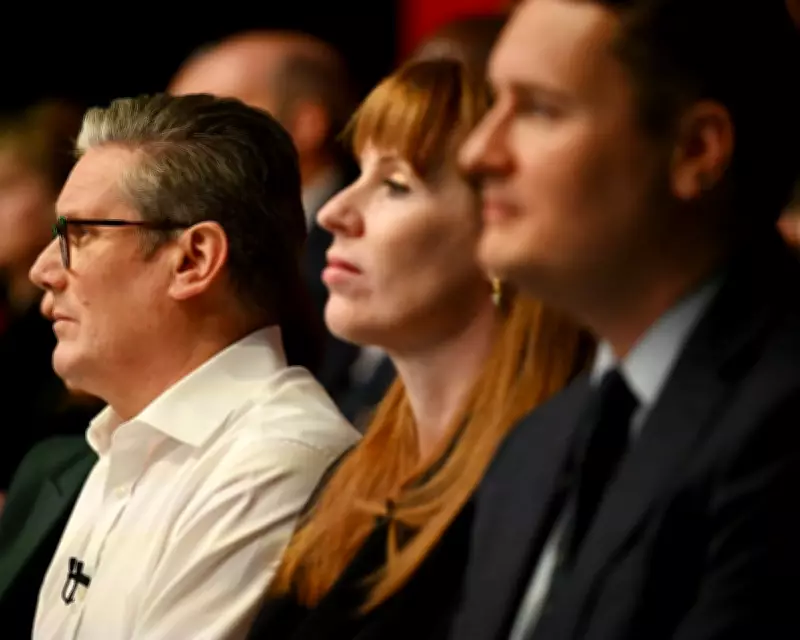
If Labour didn't exist, would you invent it? That is the question facing the party as it descends into internal turmoil, with Wes Streeting's resignation from the cabinet marking a dramatic escalation. Streeting's move, described as a frustrated attempt to break the stalemate, has exposed deep divisions over the party's direction and purpose. The central issue is no longer just about leadership but about the very reason for Labour's existence in 2026.
The Poker Game of Leadership
Thursday lunchtime was the moment when players were forced to show their cards. Was Wes Streeting holding all the aces, as his supporters claimed, or merely bluffing? Did Andy Burnham have any cards at all, unable to name an MP willing to surrender their seat for him until the 11th hour? Would Angela Rayner, late to the table after scraping together £40,000 in underpaid stamp duty, scoop the jackpot by default? Or does the house, in the shape of a prime minister stubbornly refusing to budge, ultimately always win?
In the end, Streeting simply kicked the table over. His resignation, in a blistering statement that failed to confirm he had the numbers for a formal contest, was a last-ditch attempt to break the stalemate by removing what he called 'personalities' and 'petty factionalism' from a revolt where both are deeply embedded. For now, let's leave aside whether Starmer has the authority to reshuffle and focus on one question: why does Britain need a Labour party in 2026?

What Is Labour For?
If it didn't exist, would you invent it? Who would lack a voice, what problems could not be resolved, what opportunities would be missed or injustices perpetrated? Should it still hanker after representing the huddled masses, or settle for the liberal middle classes who now vote for it? In practice, the financially secure tend to vote Labour or Tory, while the struggling go Green or Reform. And what can Labour uniquely do that all the smaller leftwing parties cannot?
The answer used to be simple: 'get elected' and 'keep Nigel Farage out.' But Labour's monopoly on both is crumbling. New analysis by the Persuasion thinktank finds that 62% of Labour-to-Plaid Cymru switchers were mostly motivated by wanting to beat Reform. Wherever Greens did well in England, they'll pitch themselves as the anti-Farage choice next time. So should Labour embrace this multiparty reality and learn to work in coalition, or fight back?
The Trapdoor Opens
If Labour is no longer seen as the left party of government, the trapdoor really opens. What was considered Labour's 'floor'—the baseline below which it couldn't fall—is now becoming a floor for the left in general. The need for the party to exist could start to look like one of those self-evident truths that nobody bothers to defend until the contrarians attack. Well, here come the contrarians. The next Labour leader must have an answer for them.
Starmer is not obliged to make things easy for Streeting or anyone else. He can stand in any contest and could feasibly win, as Jeremy Corbyn did, if members feel he has been wronged. But like Corbyn, he could then go on to lose the next election. He should not fight unless he has something genuinely new to say, something he has neglected to mention in two years.
Vision vs. Competence
Starmer has struggled in office partly because his answer to 'Why Labour?' was mostly about his own individual competence, intended to work magic where fumbling Tories had failed. Whether his current unpopularity shows that competence isn't enough or that he wasn't that competent is another column. For now, Streeting's argument that the lack of vision has led to a vacuum seems to echo the public's view. According to Persuasion, those who voted Labour in 2024 but wouldn't now most often blame the party becoming too 'Tory-lite' or say they don't know what it stands for, with cost-of-living anger further down the list.

Ironically, the visions of likely candidates aren't miles apart. Though bond traders react as if Burnhamites would set fire to all the money, they're mostly not that dumb. They believe there's more scope to borrow for long-term investment, as Louise Haigh set out in a recent essay. Burnham's own record in Manchester is pragmatic: he has worked with the private sector on regeneration, with former Tory mayor Andy Street on shared interests, and with the grassroots left. Not for nothing did he cut his teeth working for Tessa Jowell.
While Streeting gets caricatured as a crazed rightwinger, given half a chance he too would meet Labour members where they are. Having pointedly mentioned Starmer's 'island of strangers' speech in his resignation letter, he likely has more to say about immigration. Every candidate will describe meeting voters to whom life feels squeezed and joyless, but Streeting might also talk—as the Labour Growth Group did this week—about cutting the cost of housing, energy, and childcare, and shifting from taxing work to taxing wealth. This is politics for people who can pay the bills but have nothing left for the things that make them feel good. Is Labour's role to be less like the Greens' crusading social justice warriors and more the plausible party of ordinary desires for a good life? Maybe, in part. But values matter too.
The Battle of Ideas
To turn my own cards face up: I don't yet have a dog in this fight. I'm still looking for someone who seems up to the scale of the challenge, and worrying that I don't see them yet. But that's what the battle of ideas Streeting demanded should be about: the lightbulb moment where you suddenly think, 'ah, that's what was missing.' Without one, we really are in the dark.





